World Artifacts › Atlas › Afghanistan
Kandahar Pomegranate
The dark red pomegranate.

The pomegranate (Punica granatum) is a fruit-bearing, deciduous shrub or tree in the family Lythraceae, subfamily Punicoideae, that grows to between 1.5-5 metres (5-16 ft) tall. Rich in symbolic and mythological associations in many cultures, and mentioned in the Old Testament, it originated in the region spanning the Caucasus and the Iranian plateau - including modern-day Iran, Turkmenistan and Afghanistan - and down to Pakistan. Pomegranates were first domesticated by ancient Iranians in the Iranian plateau and nearby regions about 5,000 years ago. They are extensively cultivated for their fruit.

Pomegranate was exported from the Iranian plateau to other parts of Asia including all over the Middle East, Turkey, and India, as well as parts of Africa and Europe. It was also introduced into Spanish America in the late 16th century and into California by Spanish settlers in 1769.
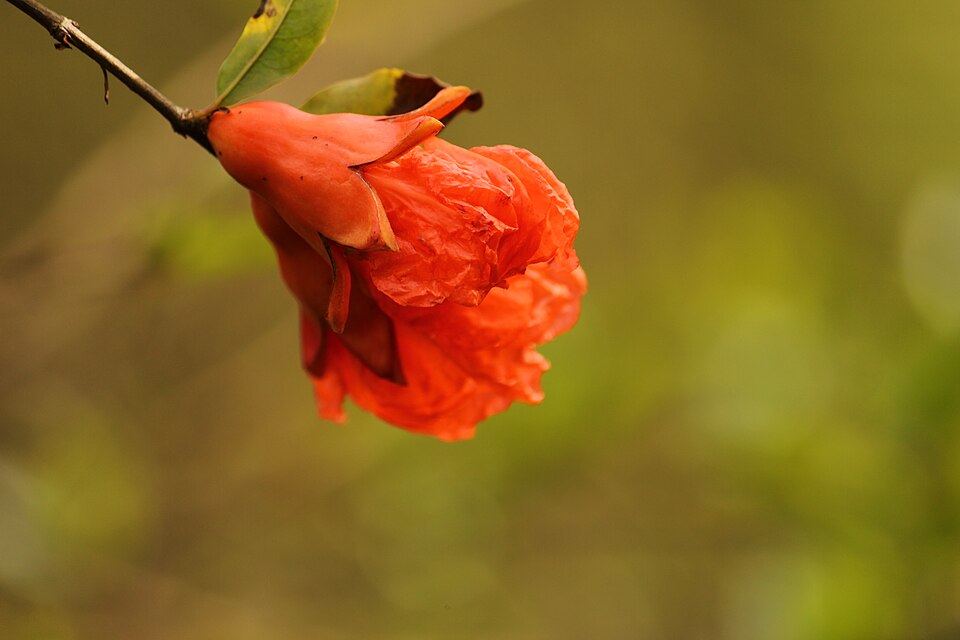
Although the pomegranate is indigenous to Iran and its nearby regions, it is also nowadays cultivated across West Asia, South Asia, Central Asia, north and Sub-Saharan Africa, the drier parts of Southeast Asia, the Mediterranean basin, United States and Chile. The fruit is typically in season in the Northern Hemisphere from September to February, and in the Southern Hemisphere from March to May.
Further reading
- Pomegranate · Damien Stone (2017)A book on the pomegranate covering its history, cooking, social aspects and appearances in art and literature.Find a copy: AbeBooks · Amazon · WorldCat
- Pomegranate Roads · Gregory Moiseyevich, Dr. Levin (2006)A biography of a botanist's pomegranate research, with the subject of pomegranate collection.Find a copy: AbeBooks · Amazon · WorldCat
Kandahar Pomegranate is one of the 3D puzzles in World Artifacts: turn a cloud of broken pieces until it lines up. For iPhone, iPad, Apple Vision Pro and Android.

