World Artifacts › Atlas › Argentina
Iguazu Falls
The falls are 275 separate drops spread over nearly three kilometres, with the Devil's Throat taking about half the water. Eleanor Roosevelt is supposed to have seen them and said, poor Niagara.
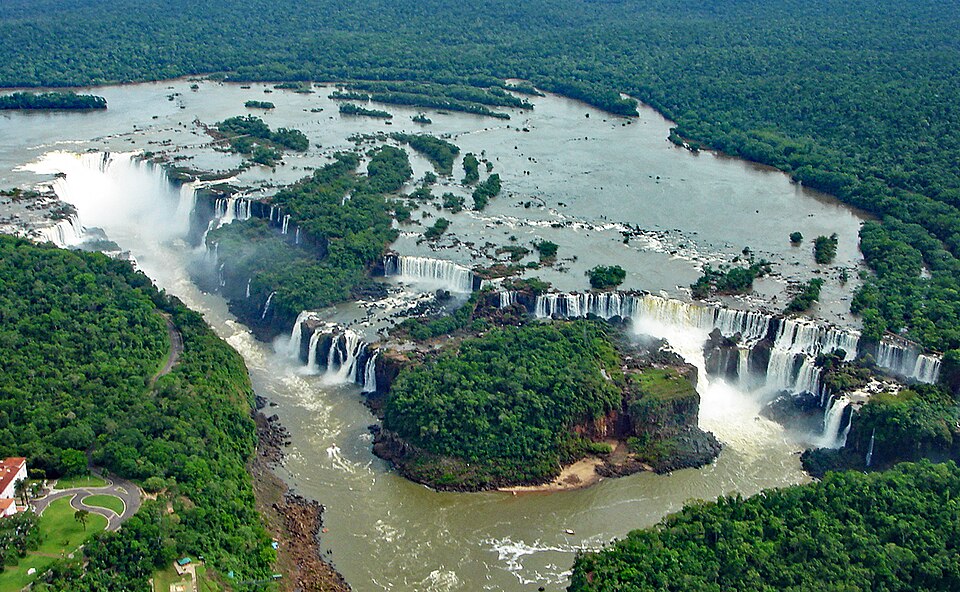
The Iguazú Falls or Iguaçu Falls are waterfalls of the Iguazu River on the border of the Argentine province of Misiones and the Brazilian state of Paraná. Together, they make up the largest waterfall system in the world. The falls divide the river into the upper and lower Iguazu. The Iguazu River rises near the heart of the city of Curitiba. For most of its course, the river flows through Brazil; however, most of the falls are on the Argentine side. Below its confluence with the San Antonio River, the Iguazu River forms the border between Argentina and Brazil.
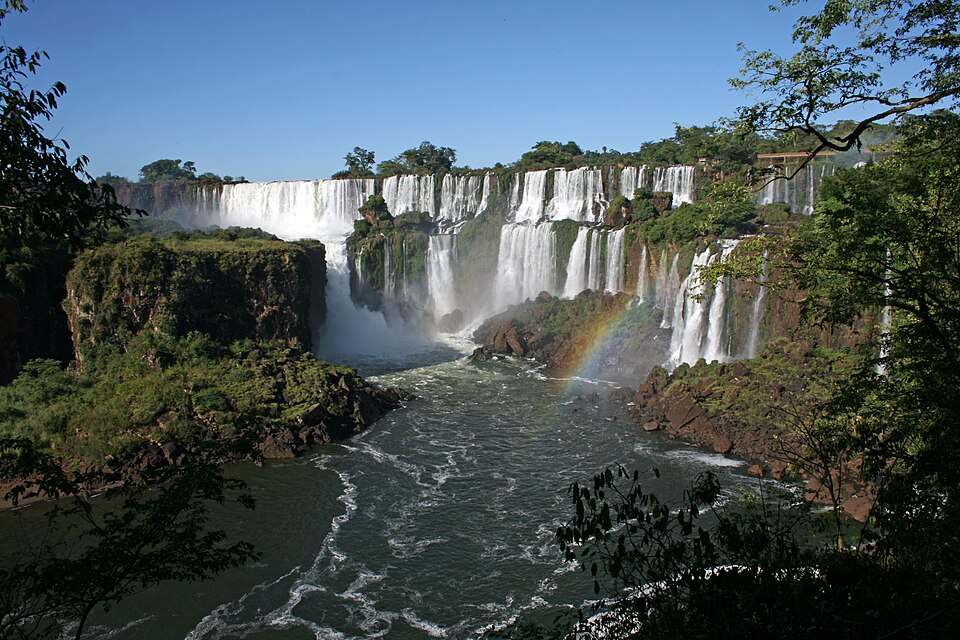
The name Iguazú comes from the Guarani or Tupi words y [ɨ], meaning 'water', and ûasú [waˈsu], meaning 'big'. Legend has it that a deity planned to marry a beautiful woman named Naipí, who fled with her mortal lover Tarobá in a canoe. In a rage, the deity sliced the river, creating the waterfalls and condemning the lovers to an eternal fall. The first European to record the existence of the falls was the Spanish Conquistador Álvar Núñez Cabeza de Vaca in 1541. The falls are protected within Iguazú National Park in Argentina and Iguaçu National Park in Brazil, inscribed on the UNESCO World Heritage List in 1984 and 1986 respectively.

Iguazu Falls is one of the 3D puzzles in World Artifacts: turn a cloud of broken pieces until it lines up. For iPhone, iPad, Apple Vision Pro and Android.

