World Artifacts › Atlas › Argentina
Mount Aconcagua
Aconcagua is the highest mountain outside Asia at 6,961 metres, and the ordinary route to the top requires no technical climbing at all. That is exactly why people die on it: it is a walk at an altitude where walking is dangerous.
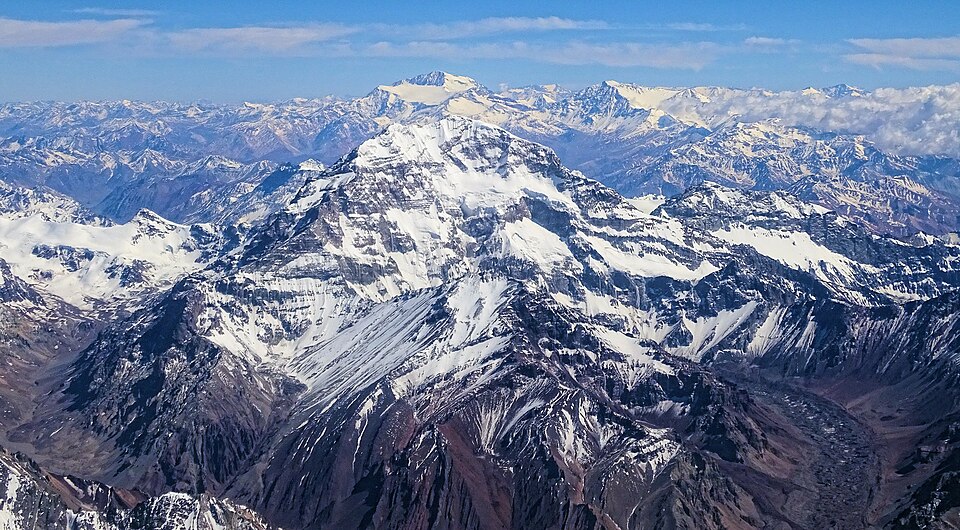
Aconcagua (Spanish pronunciation: [akoŋˈkaɣwa]) is a mountain in the Principal Cordillera of the Andes range, located in Mendoza Province, Argentina. With a summit elevation of 6,967.15 metres (22,858.1 feet), it is the highest mountain outside Asia. It is the second-most topographically prominent peak in the world and one of the Seven Summits, the highest mountains on each of the seven continents.
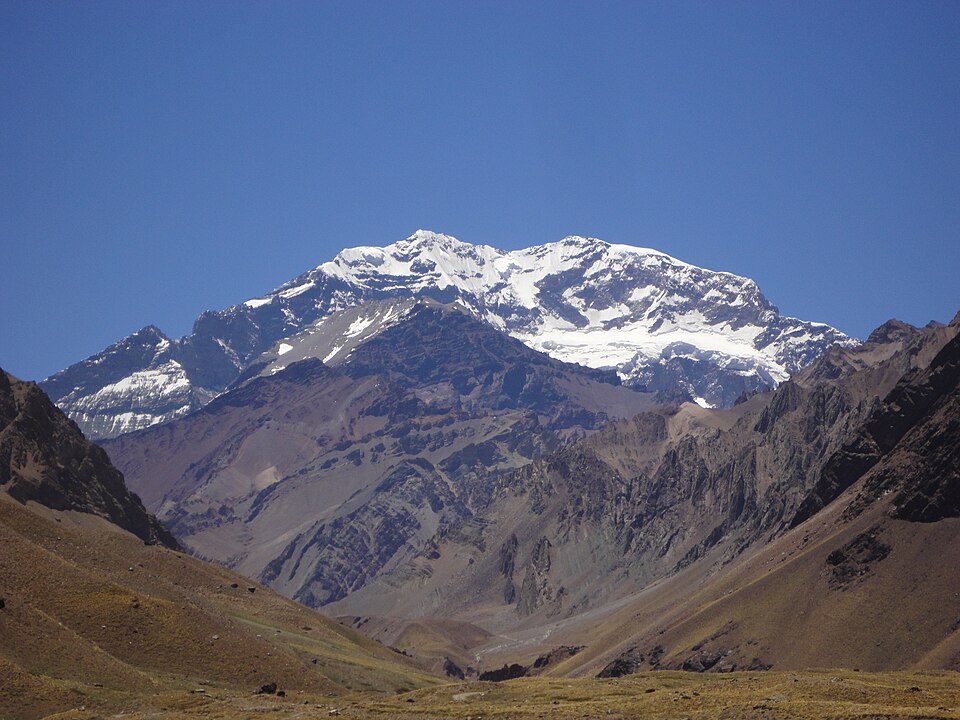
The mountain lies 112 kilometres (70 mi) northwest of Mendoza, approximately 15 kilometres (9.3 mi) from the Argentine-Chilean border. It is bounded by the Vacas Valley to the north and east and the Horcones Inferior Valley to the west and south, and is protected within Aconcagua Provincial Park. Several glaciers descend its flanks, the largest being the Horcones Inferior glacier (Ventisquero Horcones Inferior), at roughly 10 kilometres (6.2 mi) long.
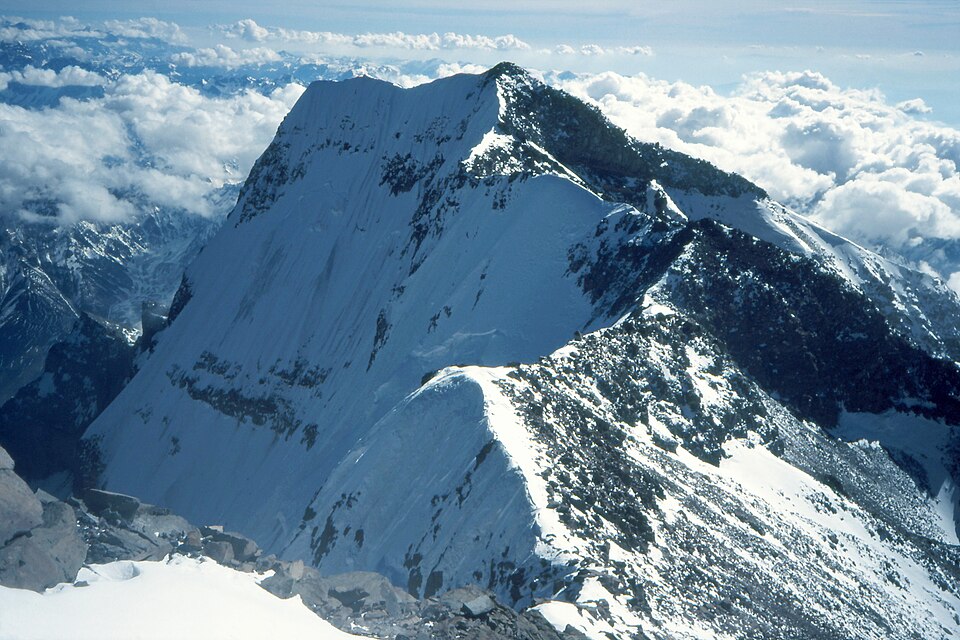
Aconcagua was formed by the subduction of the Nazca Plate beneath the South American Plate and was once an active stratovolcano, before tectonic shifts during the Miocene halted volcanic activity. The first recorded ascent was made on 14 January 1897 by Swiss guide Matthias Zurbriggen, as part of a British expedition led by Edward FitzGerald.
Further reading
Mount Aconcagua is one of the 3D puzzles in World Artifacts: turn a cloud of broken pieces until it lines up. For iPhone, iPad, Apple Vision Pro and Android.

