World Artifacts › Atlas › Argentina
Tango Dancers
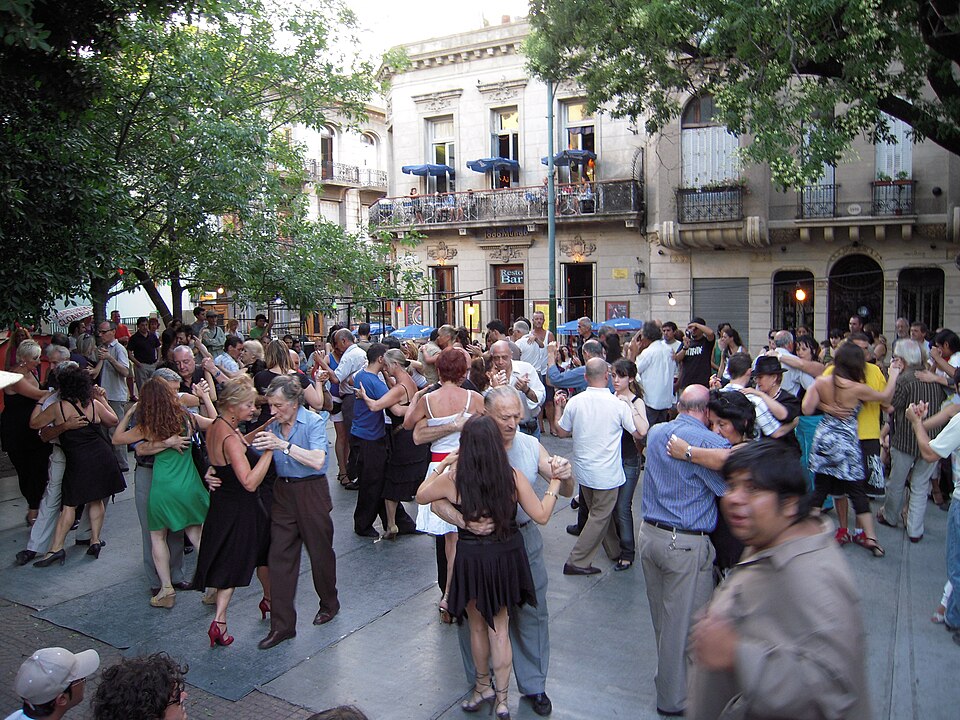
Tango came out of the port districts and the tenements, danced by immigrant men who outnumbered women several to one. It became respectable at home only after Paris took it up around 1910.
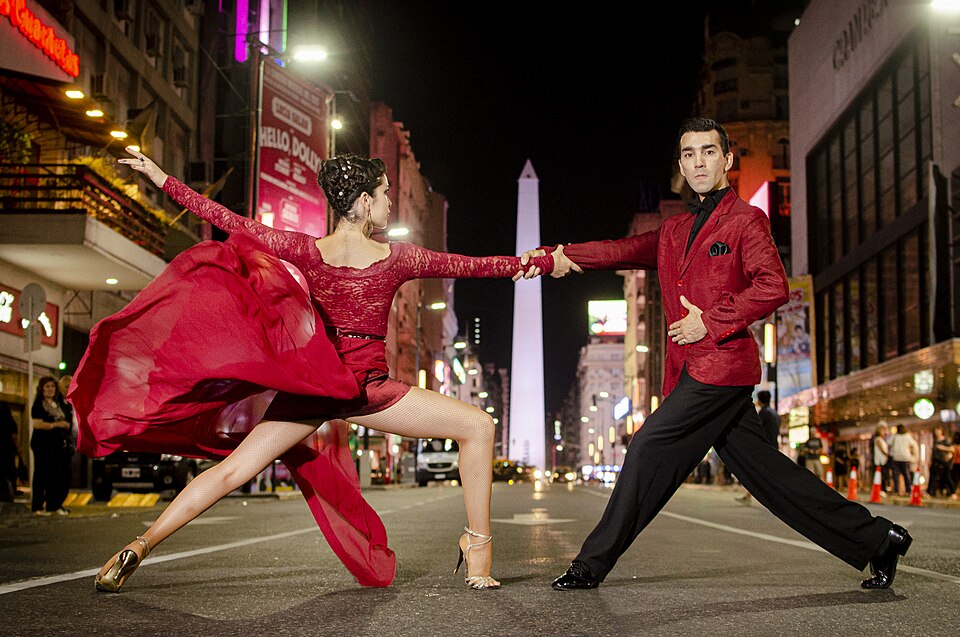
Argentine tango is a musical genre and accompanying social dance originating at the end of the 19th century in the suburbs of Buenos Aires. It typically has a 24 or 44 rhythmic time signature, and two or three parts repeating in patterns such as ABAB or ABCAC. Its lyrics are marked by nostalgia, sadness, and laments for lost love. The typical orchestra has several melodic instruments and is given a distinctive air by the bandoneon. It has continued to grow in popularity and spread internationally, adding modern elements without replacing the older ones. Among its leading figures are the singer and songwriter Carlos Gardel and composers/performers Francisco Canaro, Juan D'Arienzo, Carlos Di Sarli, Osvaldo Pugliese, Elvira Santamaría, and Ástor Piazzolla.
Further reading
Tango Dancers is one of the 3D puzzles in World Artifacts: turn a cloud of broken pieces until it lines up. For iPhone, iPad, Apple Vision Pro and Android.

