World Artifacts › Atlas › Austria
Pez Dispenser
Pez was invented in Vienna in 1927 as a peppermint sold to adults as an alternative to smoking, and the name is a compression of the German word for peppermint. The dispenser with a character head came twenty-five years later, aimed at children.

Pez (English: , German: [peːts]; stylised in all caps; from German Pfefferminz, meaning "peppermint") is the brand name of an Austrian candy and associated manual candy dispensers. The candy is a pressed, dry, straight-edged, curved-corner block 15 mm x 8mm x 5mm (5⁄8" x 5⁄16" x 3⁄16") (length x width x height), with each Pez dispenser holding 12 candy pieces.
Pez was invented in Austria and later exported worldwide. The all-uppercase spelling of the logo echoes the trademark's style on the packaging and the dispensers, with the logo drawn in perspective and giving the appearance that the letters are built out of 44 brick-like Pez mints (14 bricks in the P and 15 in each of the E and Z).
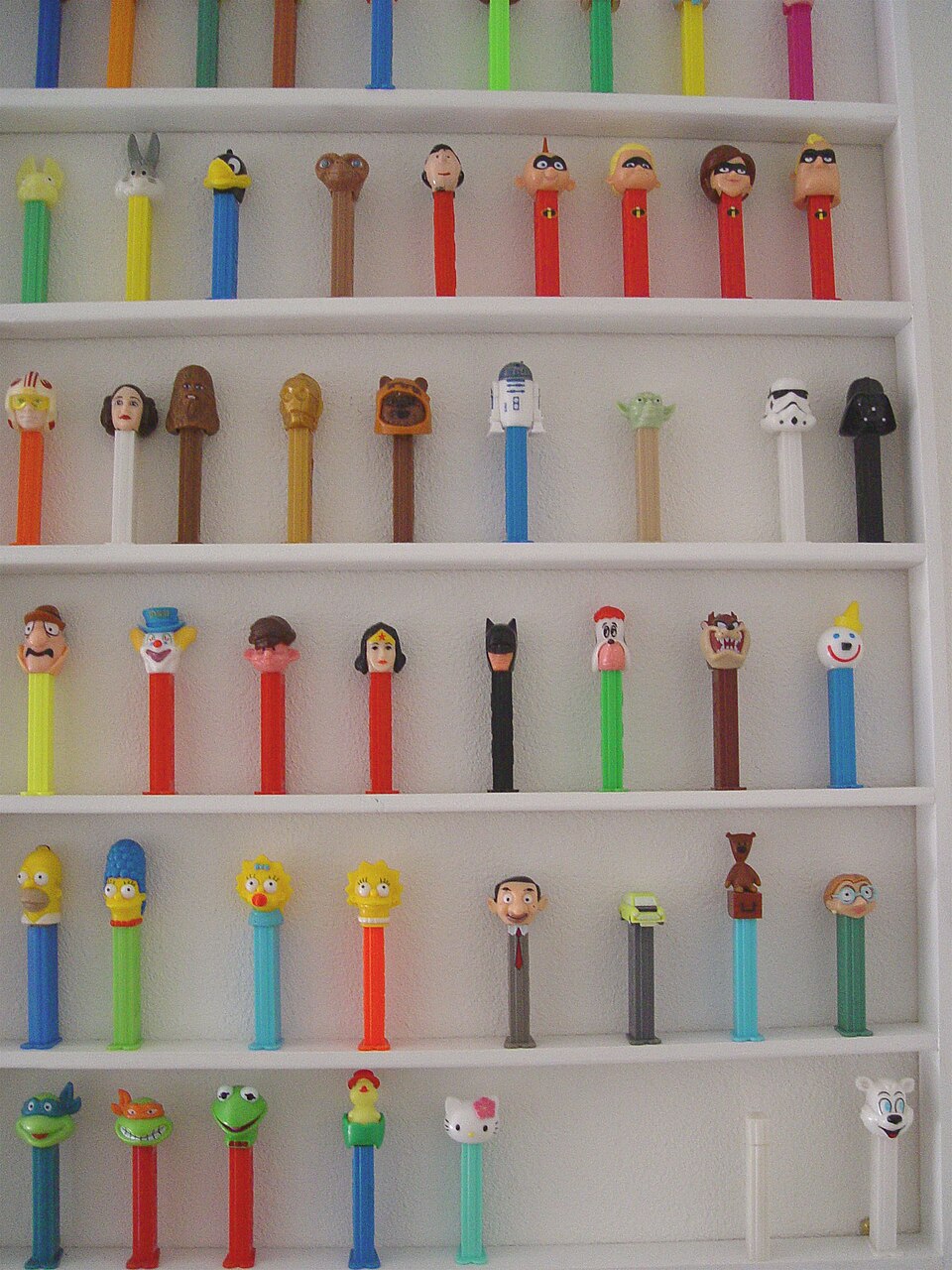
Despite the widespread recognition and popularity of the Pez dispenser, the company considers itself to be primarily a candy company, stating that "[t]oday, billions of PEZ candies are consumed annually in the U.S.A. alone". Pez dispensers are a part of popular culture in many nations, an example being "Soul Candy" in the Japanese manga series Bleach. Because of the large number of dispenser designs over the years, they are collected by many.
Further reading
Pez Dispenser is one of the 3D puzzles in World Artifacts: turn a cloud of broken pieces until it lines up. For iPhone, iPad, Apple Vision Pro and Android.

