World Artifacts › Atlas › Australia
Boomerang
Most Aboriginal boomerangs do not come back: the returning kind is lighter, and was used for practice, for play and for driving birds into nets. The heavy non-returning ones were serious weapons, and were also used as digging sticks and clapsticks.
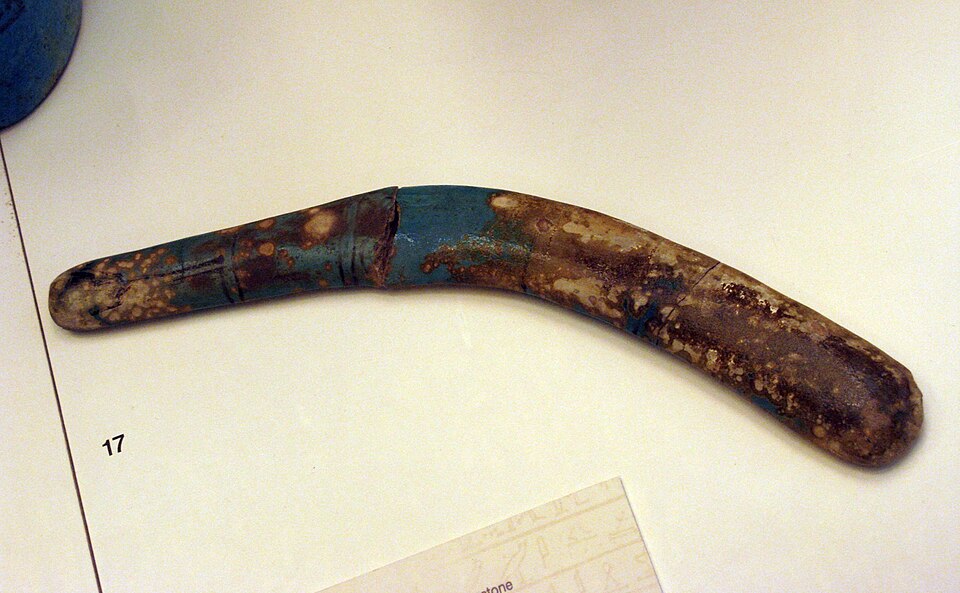
A boomerang () is a thrown tool typically constructed with airfoil sections and designed to spin about an axis perpendicular to the direction of its flight, designed to return to the thrower. The origin of the word is from an Aboriginal Australian language of the Sydney region. Its original meaning, which is preserved in official competitions, refers only to returning objects, not to throwing sticks, which were also used for hunting by various peoples both in Australia and around the world. However, the term "non-returning boomerang" is also in general use.
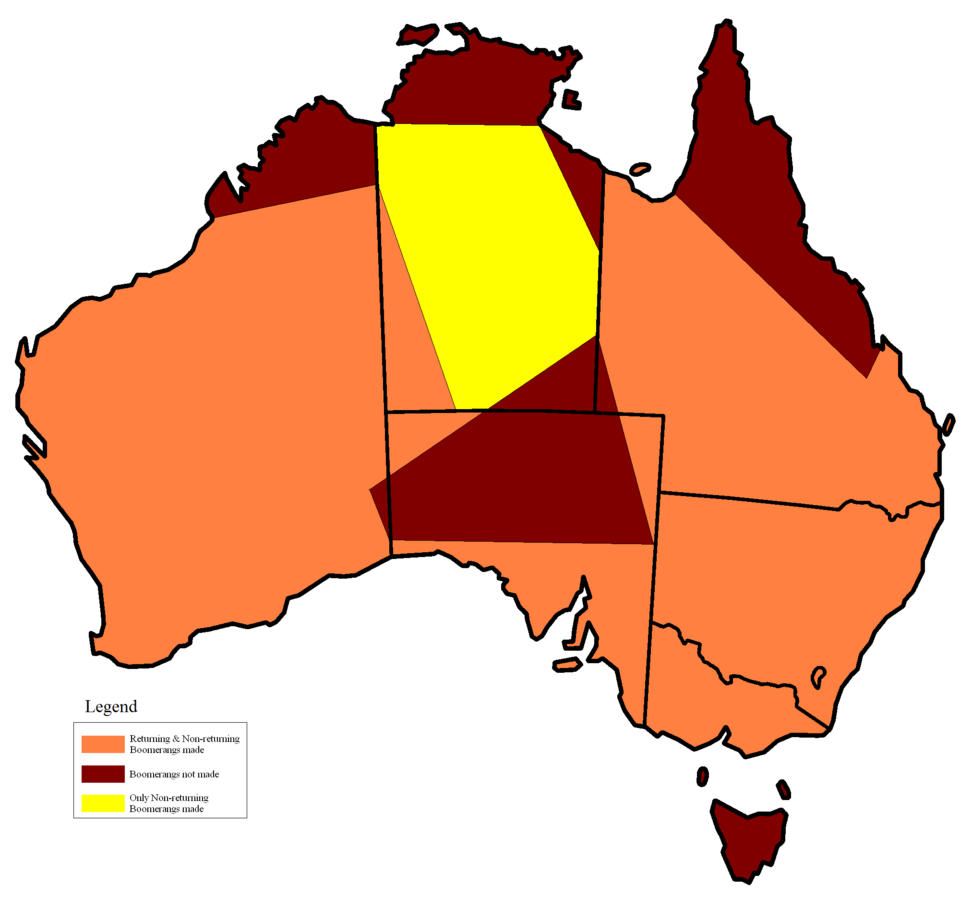
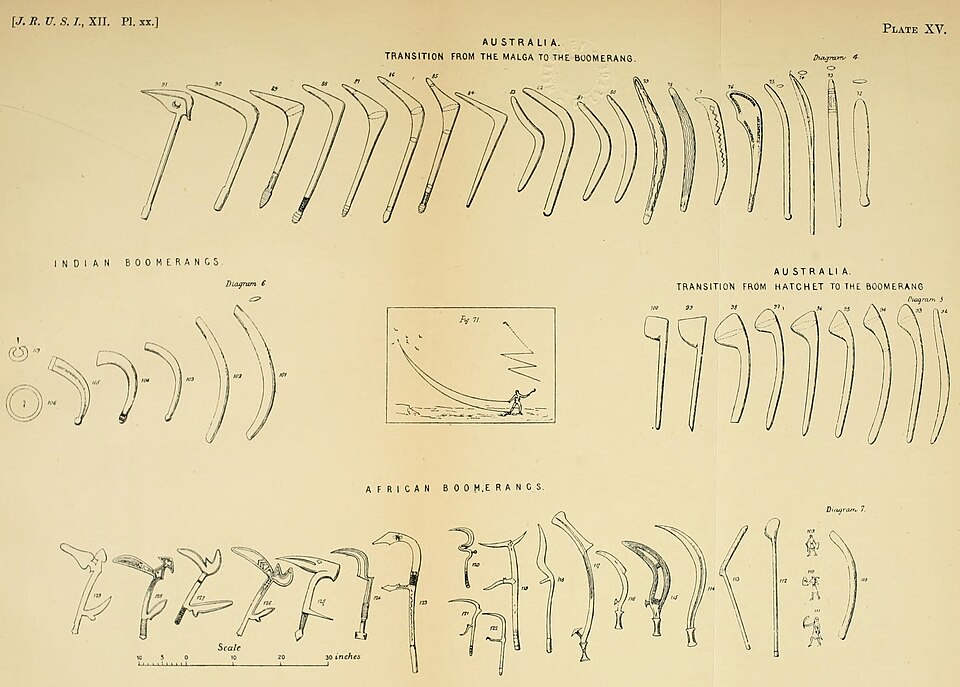
Various forms of boomerang-like designs were traditionally and in some cases are still used by some groups of Aboriginal Australians for hunting. The tools were known by various names in the many Aboriginal languages prior to colonisation. The oldest surviving Aboriginal boomerang, now held in the South Australian Museum, was found in a peat bog in South Australia, dated to 10,000 BC. Historically, boomerangs have been used for hunting, sport, and entertainment, and are made in various shapes and sizes to suit different purposes. Ancient "boomerangs", used for hunting, have also been discovered in Egypt, the Americas, and Europe, although it is unclear whether all or any of these were of the returning type.
Further reading
Boomerang is one of the 3D puzzles in World Artifacts: turn a cloud of broken pieces until it lines up. For iPhone, iPad, Apple Vision Pro and Android.

