World Artifacts › Atlas › Australia
Swagman
A swagman carried his bedroll, called a Matilda, and waltzing Matilda meant walking the roads with it. The song everyone sings is about a man who steals a sheep and drowns himself rather than be taken.
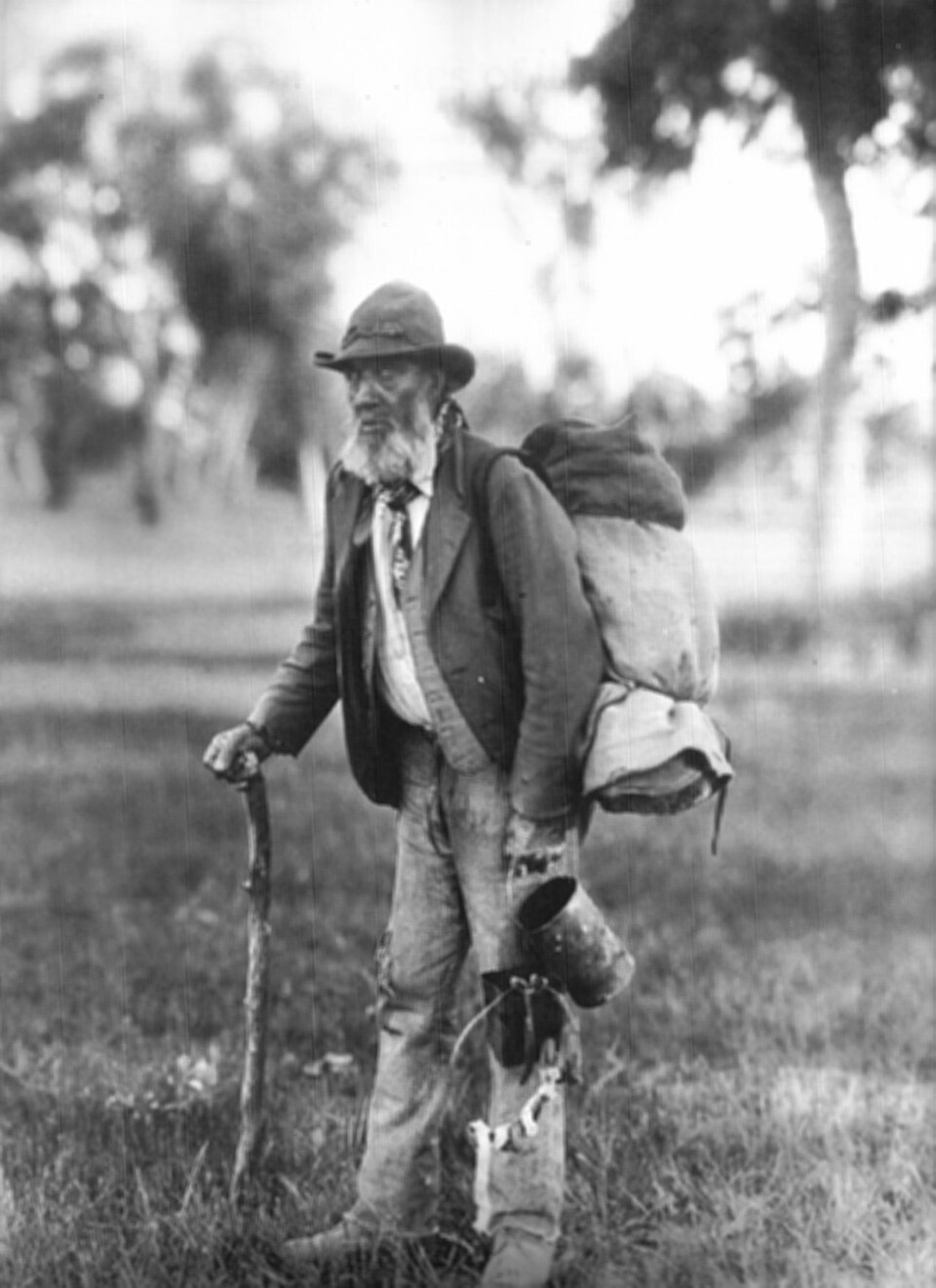
A swagman (also called a swaggie, sundowner or tussocker) was a transient labourer who travelled by foot from farm to farm carrying his belongings in a swag. The term originated in Australia in the 19th century and was later used in New Zealand.
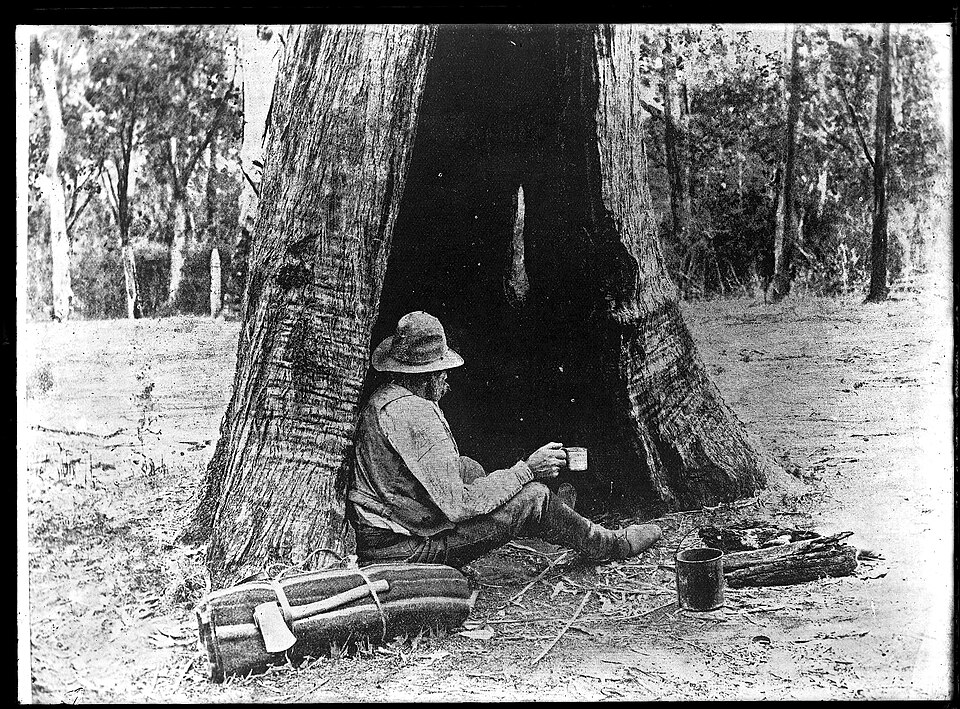
Swagmen were particularly common in Australia during times of economic uncertainty, such as the 1890s and the Great Depression of the 1930s. Many unemployed men travelled the rural areas of Australia on foot, their few meagre possessions rolled up and carried in their swag. Their swag was frequently referred to as "Matilda", hence "Waltzing Matilda" refers to walking with a swag. Typically, they would seek work in farms and towns they travelled through, and in many cases farmers, if no permanent work was available, would provide food and shelter in return for some menial task.
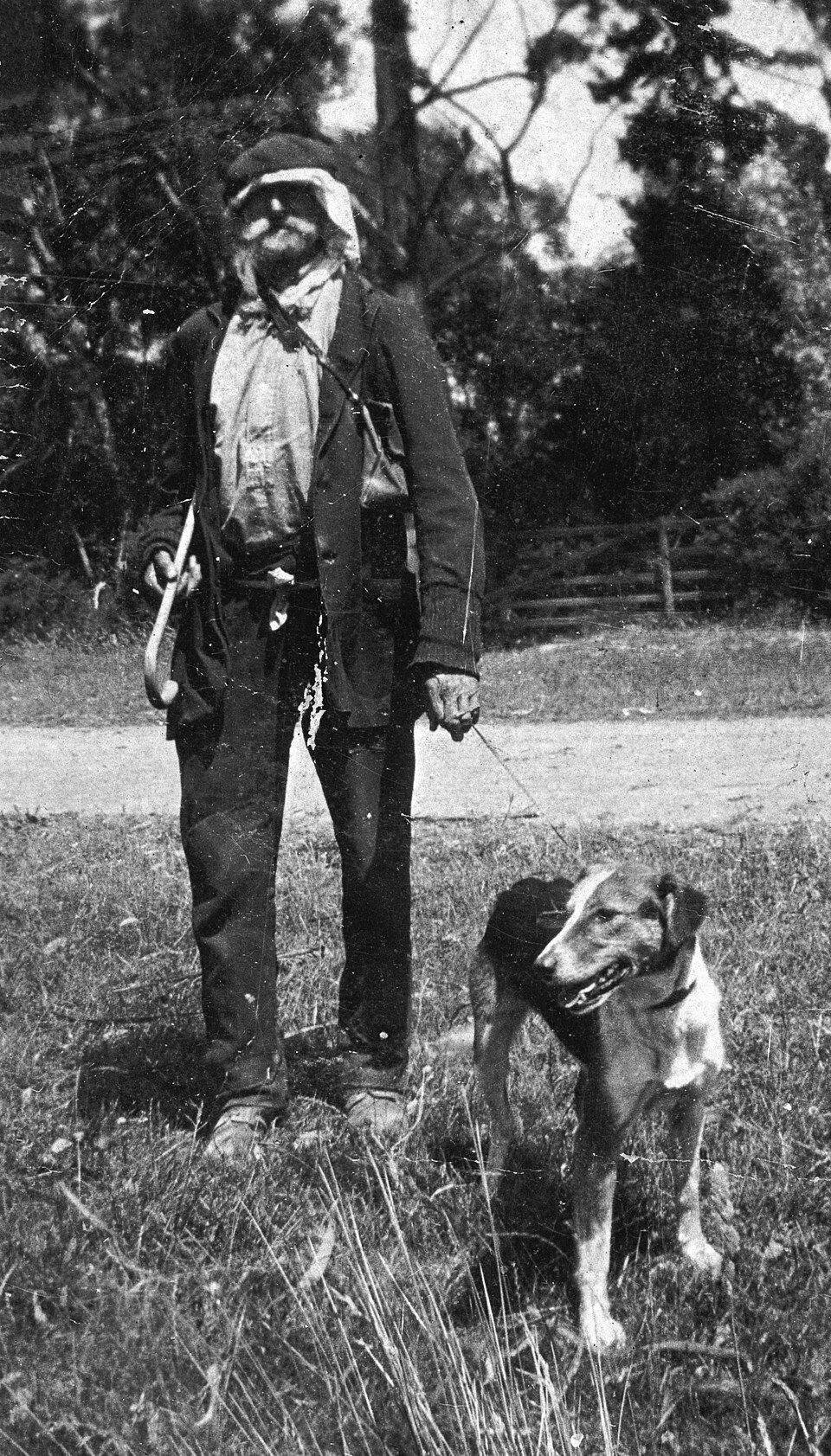
The figure of the "jolly swagman", represented most famously in Banjo Paterson's bush poem "Waltzing Matilda", became a folk hero in 19th-century Australia, and is still seen today as a symbol of anti-authoritarian values that Australians consider to be part of the national character.
Further reading
- Waltzing Matilda · Richard Magoffin (1987)A book about the song Waltzing Matilda and its place in Australian national songs and social life.Find a copy: AbeBooks · Amazon · WorldCat
- The Australian legend · Russel Braddock Ward (1958)A study of the Australian national legend and character.Find a copy: AbeBooks · Amazon · WorldCat
Swagman is one of the 3D puzzles in World Artifacts: turn a cloud of broken pieces until it lines up. For iPhone, iPad, Apple Vision Pro and Android.

