World Artifacts › Atlas › Australia
Wallaby
Wallaby and kangaroo are not separate scientific groups; the word wallaby just means the smaller ones. Where the two overlap, the small species browse on shrubs while the big ones graze grass.
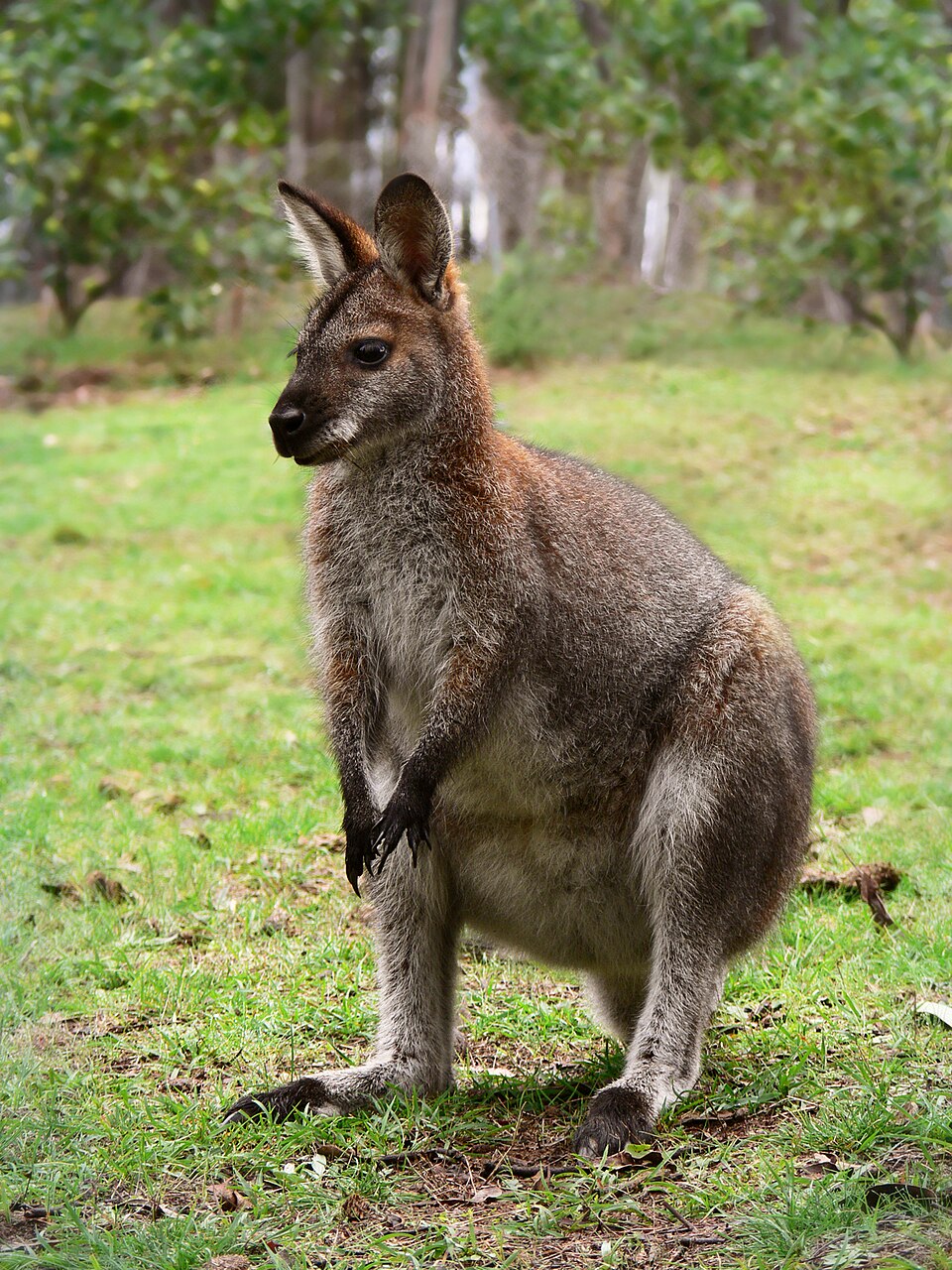
A wallaby () is a small or middle-sized macropod native to Australia and New Guinea, with introduced populations in New Zealand, Hawaii, the United Kingdom and other countries. They belong to the same taxonomic family as kangaroos and sometimes the same genus, but the common name "kangaroo" specifically refers to the four largest species of the family. The term "wallaby" is an informal designation generally used for any macropod that is smaller than a kangaroo or a wallaroo that has not been designated otherwise.
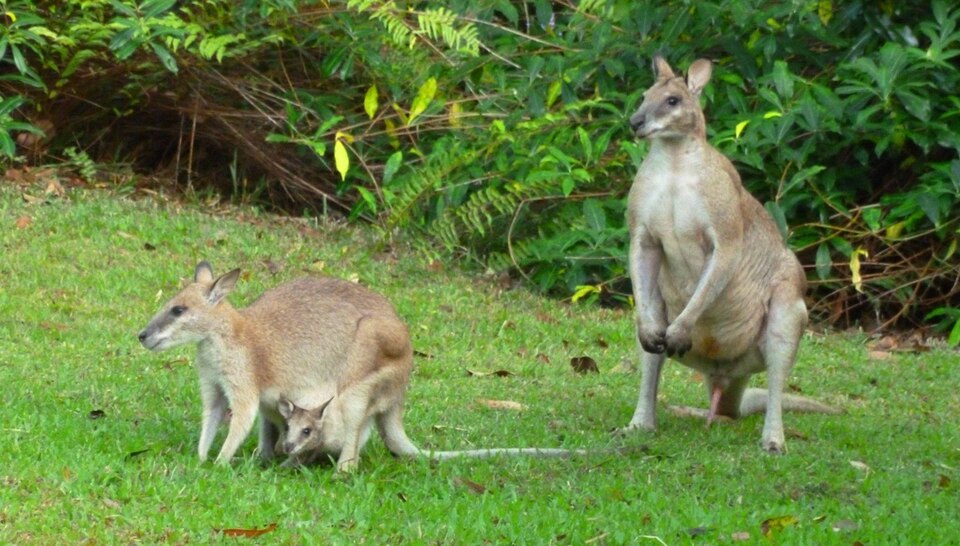
There are nine species (eight extant and one extinct) of the brush wallaby (genus Notamacropus). Their head and body length is 45 to 105 cm (18 to 41 in) and the tail is 33 to 75 cm (13 to 30 in) long. The 19 known species of rock-wallabies (genus Petrogale) live among rocks, usually near water; two species in this genus are endangered. The two living species of hare-wallabies (genus Lagorchestes; two other species in this genus are extinct) are small animals that have the movements and some of the habits of hares. The three species (two extant and one extinct) of nail-tail wallabies (genus Onychogalea) have one notable feature: a horny spur at the tip of the tail; its function is unknown. The seven species of pademelons or scrub wallabies (genus Thylogale) of New Guinea, the Bismarck Archipelago, and Tasmania are small and stocky, with short hind limbs and pointed noses. The swamp wallaby (genus Wallabia) is the only species in its genus.
Further reading
Wallaby is one of the 3D puzzles in World Artifacts: turn a cloud of broken pieces until it lines up. For iPhone, iPad, Apple Vision Pro and Android.

