World Artifacts › Atlas › Azerbaijan
Buta
The paisley teardrop motif.
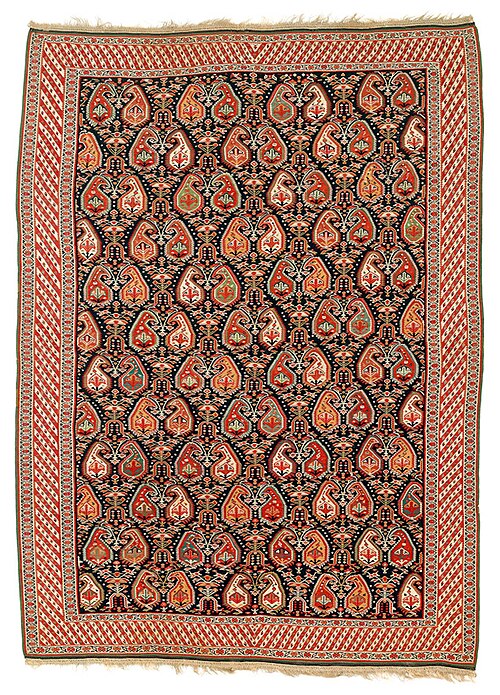
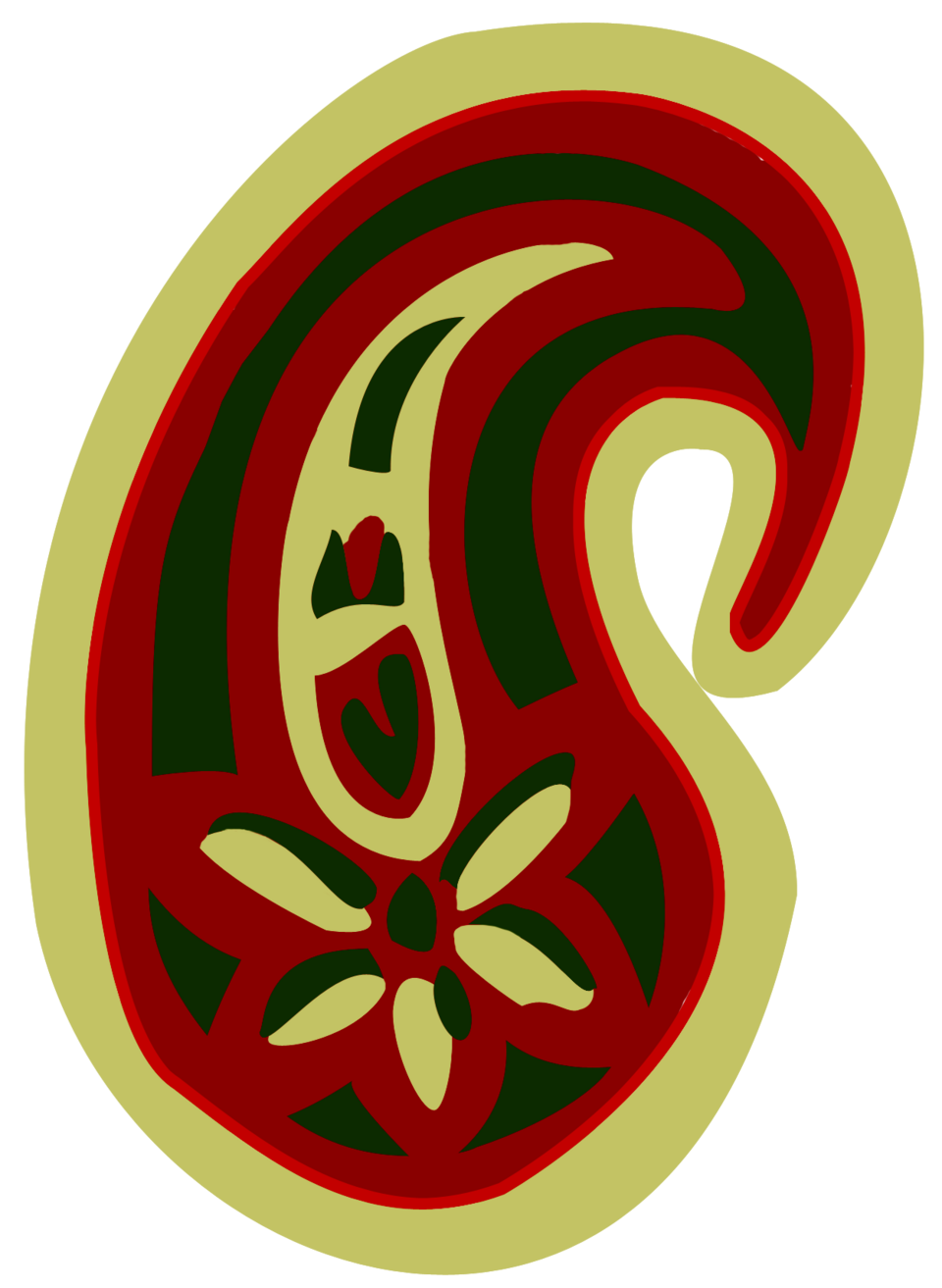
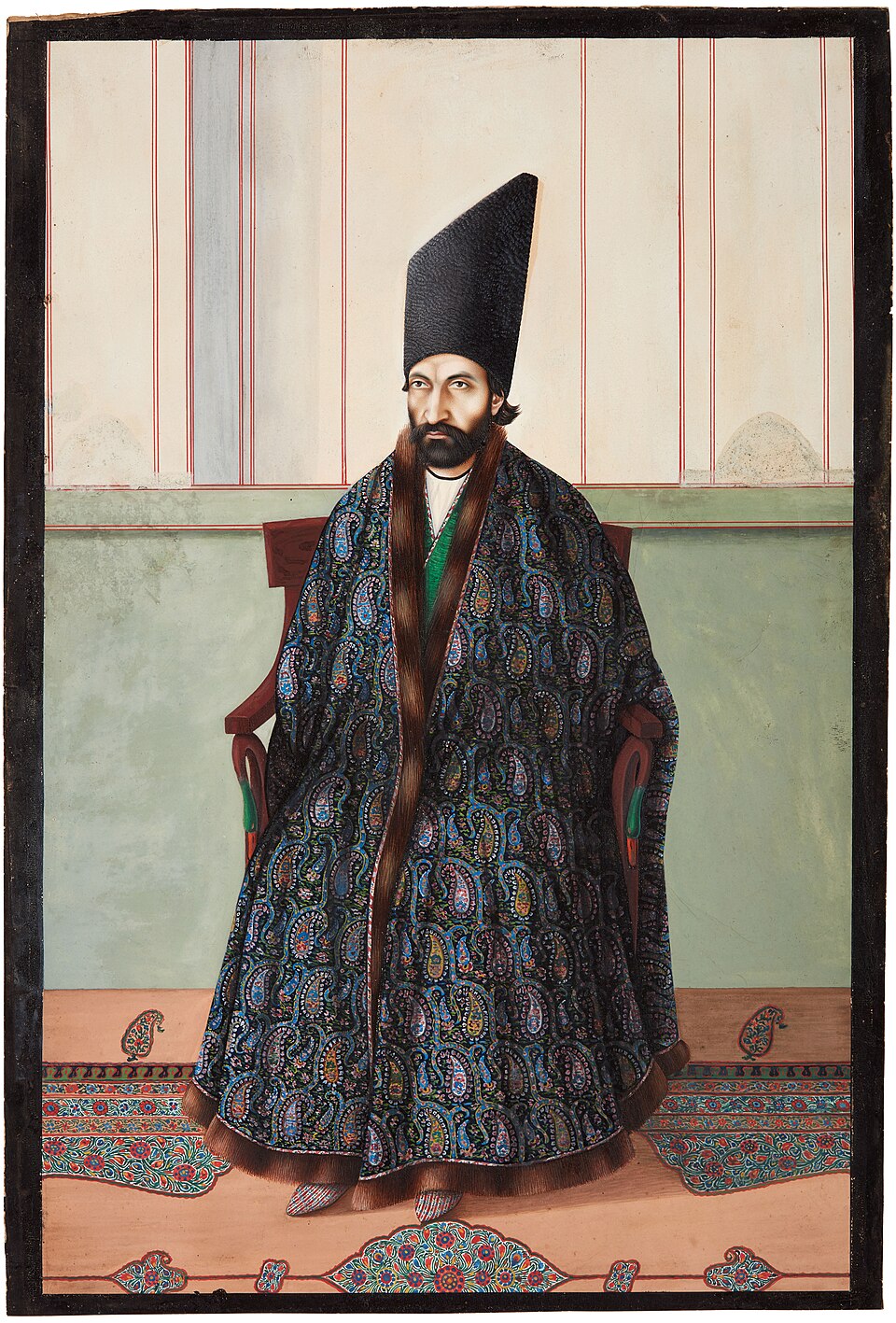
The boteh (Persian: بوته), is an almond or pine cone-shaped motif in ornament with a sharp-curved upper end. This Persian pattern is one of the national symbols of Iran and also very common and called buta in India, Armenia, Azerbaijan, Turkey and other countries in the Persianate cultural sphere. In India, the shape is associated more with a mango than with a pine cone, and is called ambi, from āmra (Sanskrit: आम्र) meaning mango. By the 19th century, it spread to Europe via Kashmir shawls. By the 1860s, the shape and textiles utilizing the motif became known as Persian paisleys, as Paisley, Renfrewshire, Scotland became a major centre for the production of high-demand imitation boteh textiles that were crafted for a new audience of transatlantic consumers.
In Asian ornament, the boteh motifs are typically placed in orderly rows, though especially in India they may appear in a pattern in a variety of sizes, colours, and orientations, which is also characteristic of European paisley patterns.
Further reading
Buta is one of the 3D puzzles in World Artifacts: turn a cloud of broken pieces until it lines up. For iPhone, iPad, Apple Vision Pro and Android.

