World Artifacts › Atlas › Bosnia and Herz.
Bogomil Cross
The medieval Bosnian Church was long described as a Bogomil heresy, and the stećci were called its monuments. Modern historians have largely dismantled that account, and the carved crosses are now read as ordinary Christian, which has disappointed a great many national narratives.
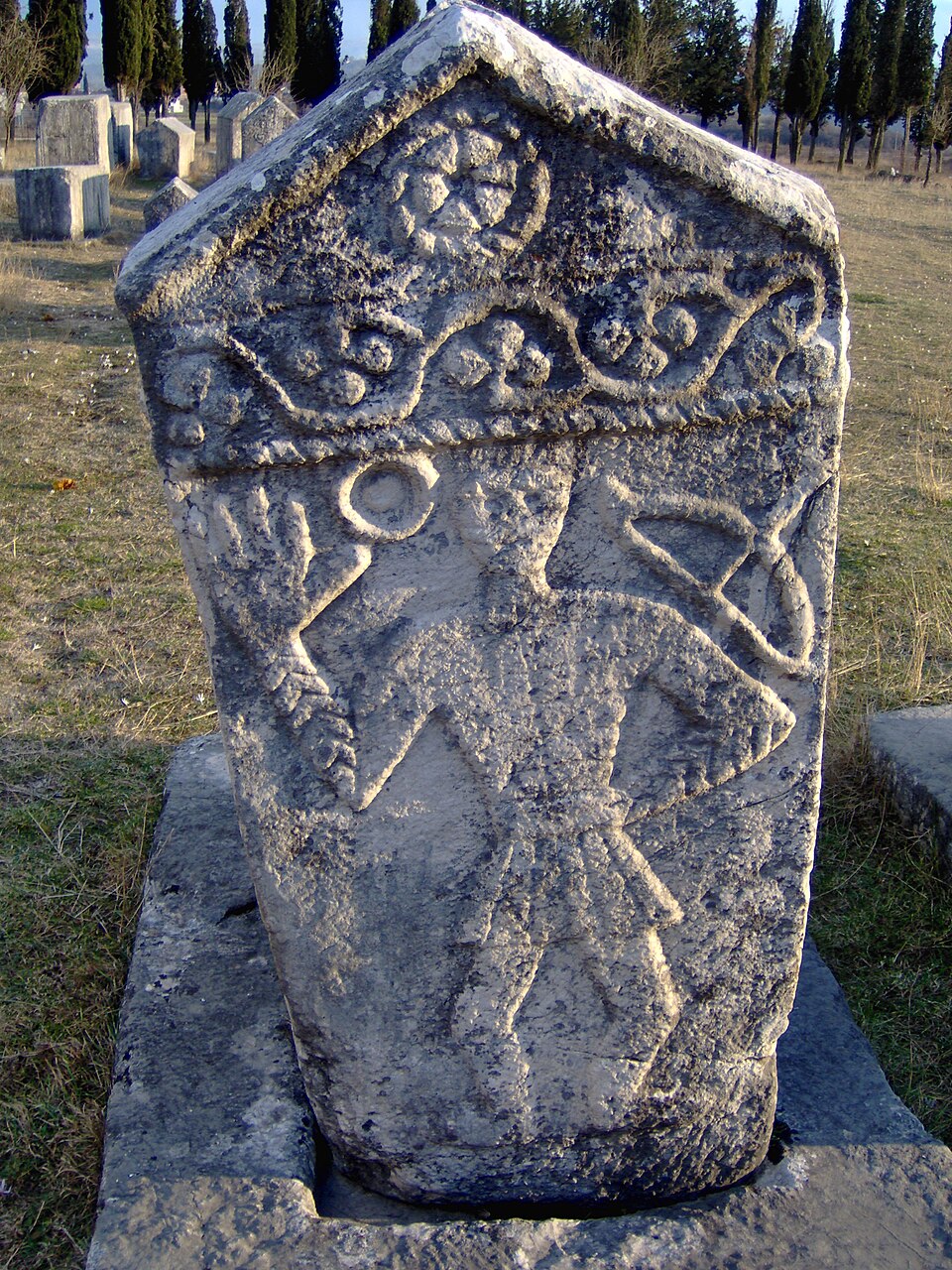
Stećak (plural stećci; Serbian Cyrillic: стећак, стећци) is the name for monumental medieval tombstones that lie scattered across Bosnia and Herzegovina, and the border parts of Croatia, Montenegro and Serbia. An estimated 60,000 are found within the borders of modern Bosnia and Herzegovina and the rest of 10,000 are found in what are today Croatia (4,400), Montenegro (3,500), and Serbia (2,100), at more than 3,300 odd sites with over 90% in poor condition. They are cut in a variety of recognizable stećak forms, with a certain percentage being richly decorated and some individual stećci also containing inscriptions in form of epitaphs.
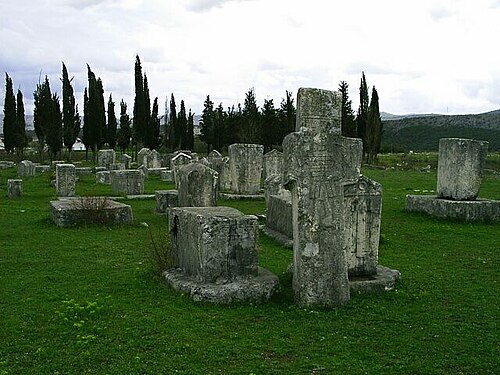
Appearing in the mid 12th century, with the first phase in the 13th century, the custom of cutting and using stećci tombstones reached its peak in the 14th and 15th century, before being discontinued in the very early 16th century during the Ottoman conquest of Bosnia and Herzegovina. They were a common tradition amongst Bosnian, Catholic and Orthodox Church followers alike, and were used by both Slavic and the Vlach populations.
Further reading
- The Bosnian Church · John V. A. (John Van Antwerp) Fine, Jr. (1975)A study of the medieval Bosnian Church and its history.Find a copy: AbeBooks · Amazon · WorldCat
- Stećci--kultura i umjetnost · Šefik Bešlagić (1982)A work on the stećci, the medieval Bosnian tombstones, covering their art and culture and their inscriptions.Find a copy: AbeBooks · Amazon · WorldCat
Bogomil Cross is one of the 3D puzzles in World Artifacts: turn a cloud of broken pieces until it lines up. For iPhone, iPad, Apple Vision Pro and Android.

