World Artifacts › Atlas › Bangladesh
Muslin
The fine cloth on a loom.
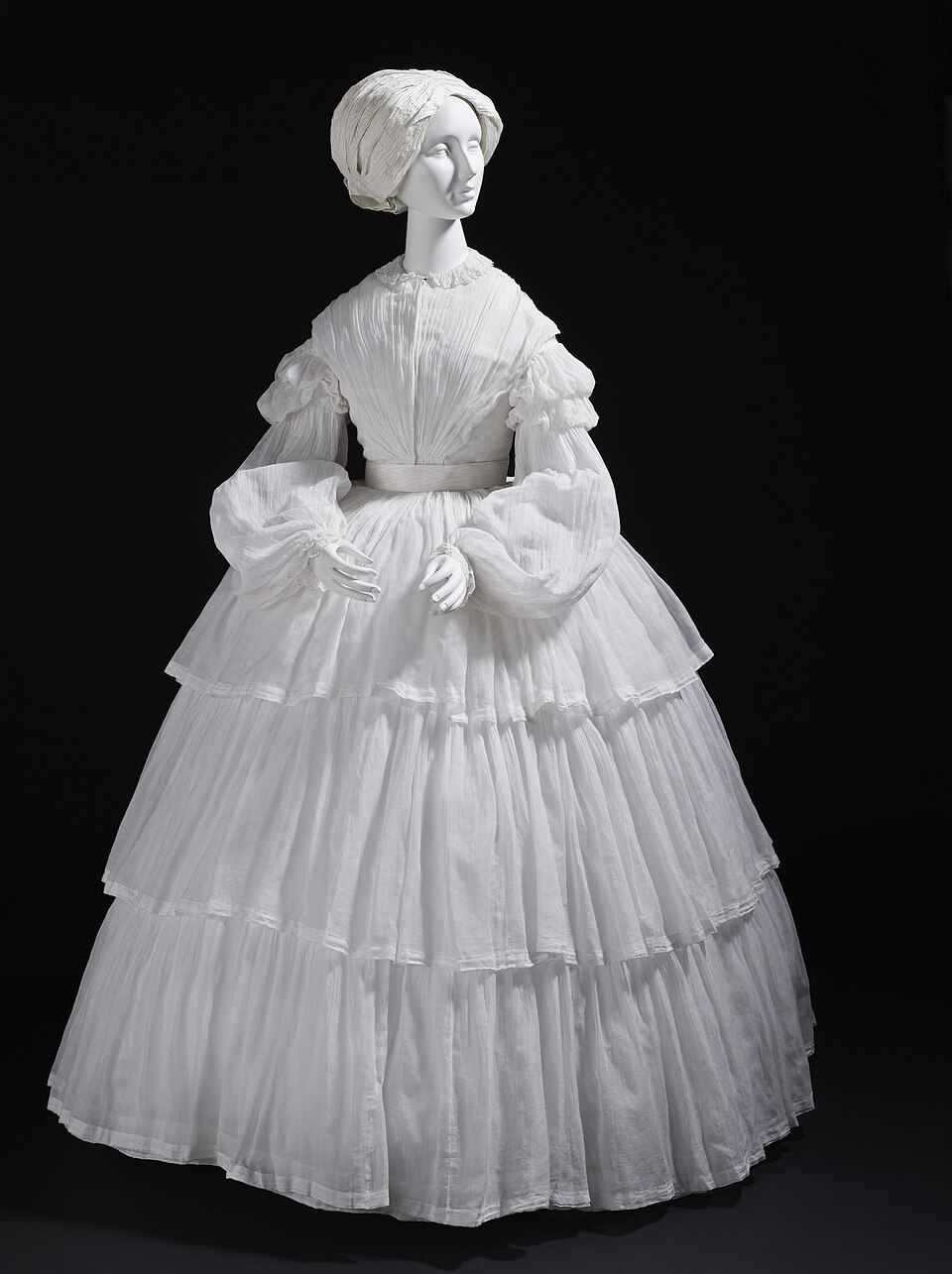
Muslin () is a cotton fabric of plain weave. It is made in a wide range of weights from delicate sheers to coarse sheeting.
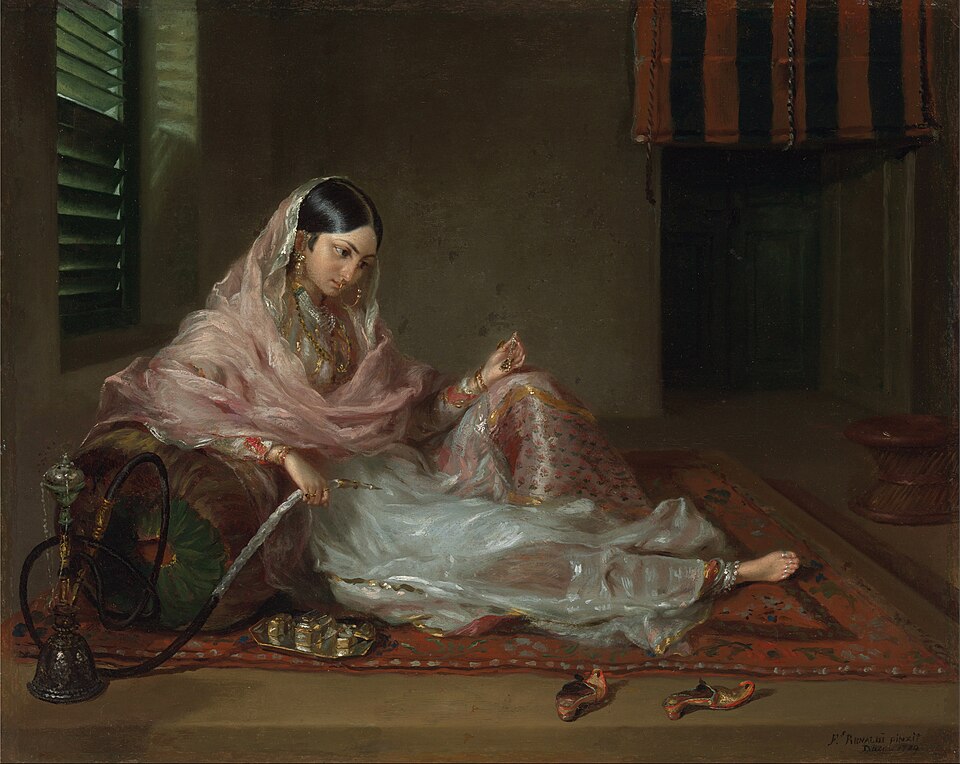
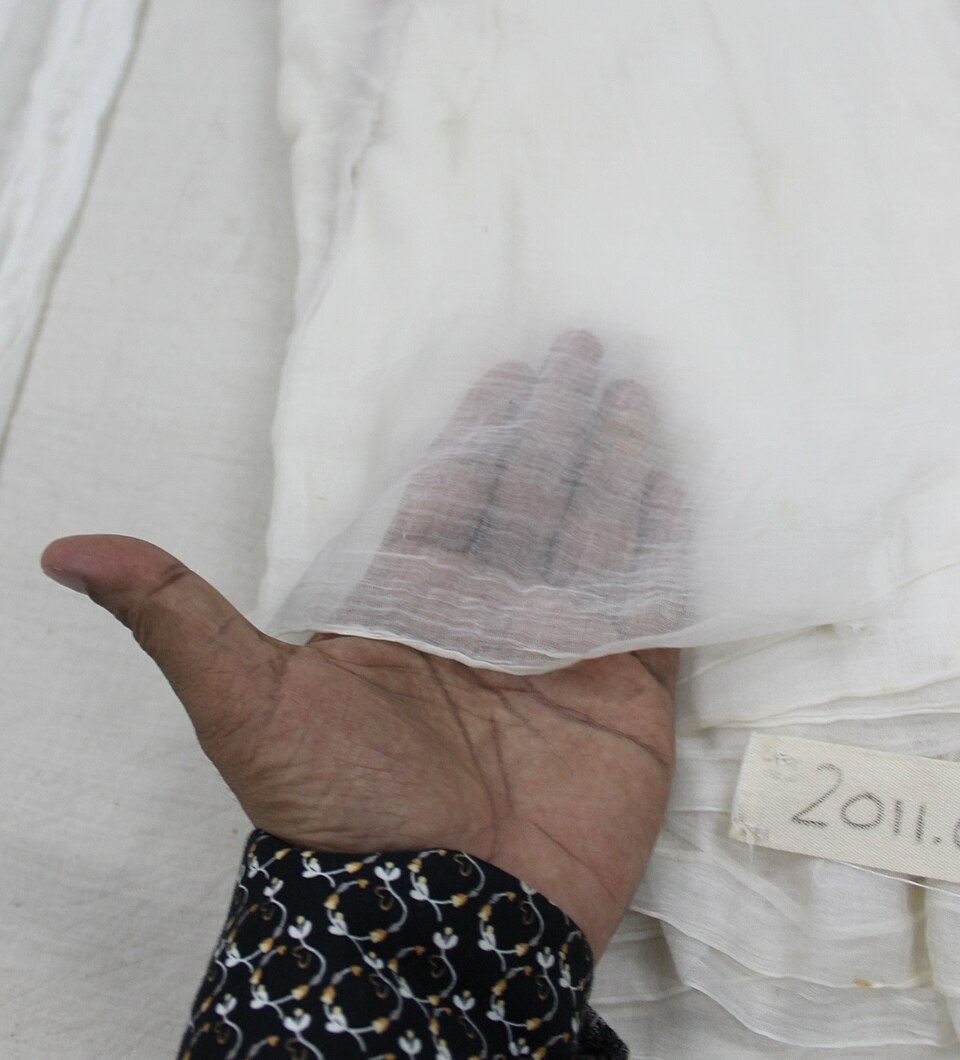
Muslin was produced in different regions of South Asia; the Bengal region was the main manufacturing area. While there were several cotton production centers in Bengal, the cloth produced in Sonargaon, 15 miles from east of Dhaka, was of the highest quality in the subcontinent. As Dhaka became the capital of Mughal Bengal following its conquest by the Mughals, the Muslin produced around Dhaka became more accessible to distant markets, including Central Asia where fine muslin was known as "Daka". The muslin produced at Dhaka, Sonargaon and its surrounding areas was of excellent quality, which is popularly known as Dhaka muslin. Muslin was made in Dhaka (Sonargaon) from very fine yarn, which is made from a cotton called phuti carpus, endemic to Bangladesh. A minimum of 300-count yarn was used for the muslin, making the muslin as transparent as glass. There were about 28 varieties of muslin, of which jamdani is still widely used. During the 17th and 18th centuries, Mughal Bengal emerged as the foremost muslin exporter in the world, with Dhaka as capital of the worldwide muslin trade. In the latter half of the 18th century, muslin weaving ceased in Bengal due to cheap fabrics from England.
Further reading
Muslin is one of the 3D puzzles in World Artifacts: turn a cloud of broken pieces until it lines up. For iPhone, iPad, Apple Vision Pro and Android.

