World Artifacts › Atlas › Belgium
Cuberdon
The cuberdon is a cone with a hard shell and a syrup centre that begins to crystallise within about three weeks, so it cannot be exported or stored. That is why almost nobody outside Belgium has eaten one.
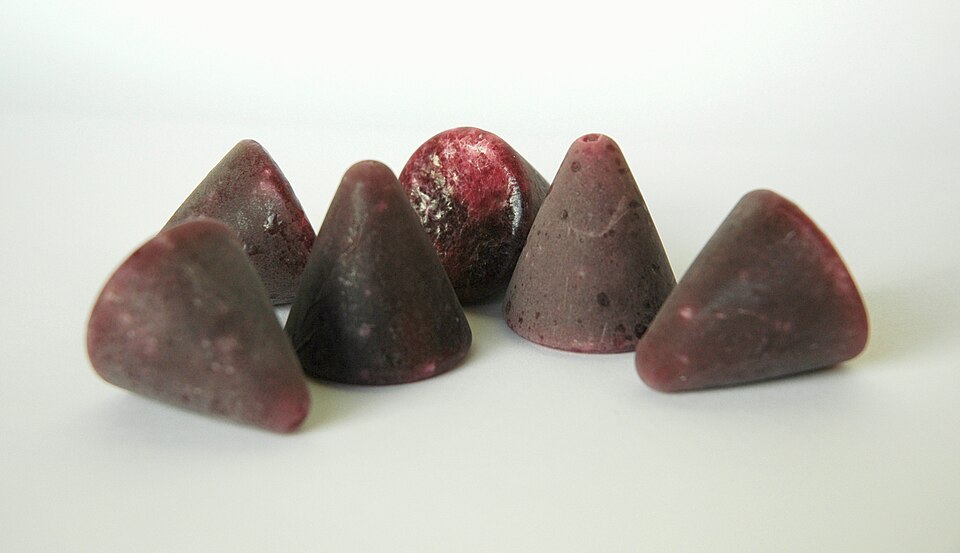
A cuberdon is a cone-shaped Belgian candy and a popular local delicacy in Ghent. In Dutch it is also known as a neus ("nose"), Gentse neus ("Ghent nose"), or neuzeke ("little nose") for its likeness to a human nose. In French, cuberdons are also called chapeau-de-curé and chapeau-de-prêtre (priest's hat).
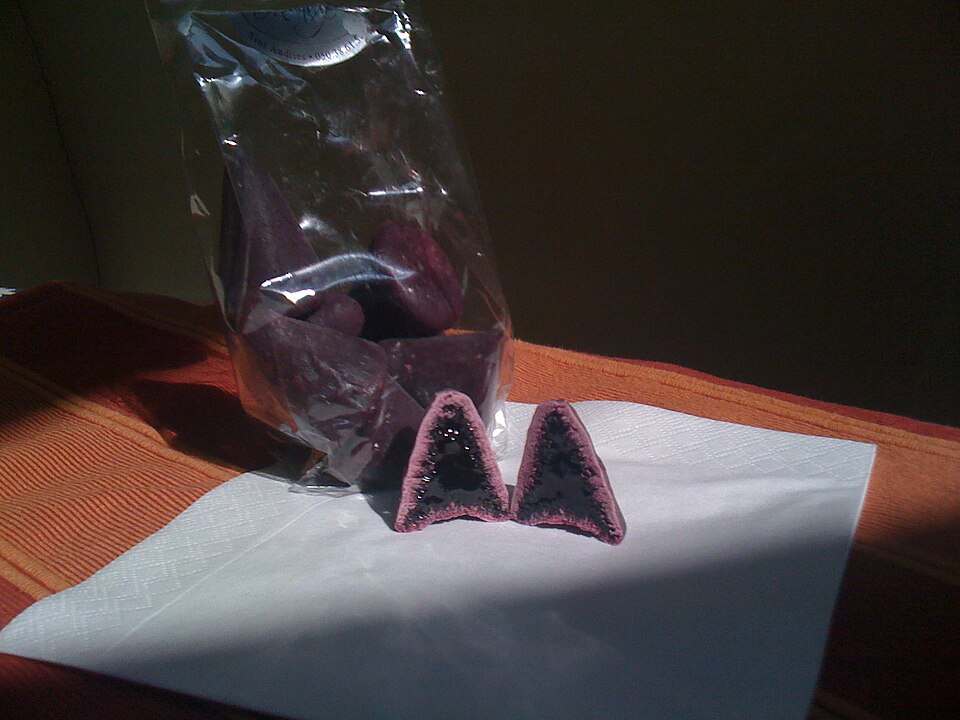
Cuberdons are traditionally made with gum arabic candy crust with a soft, raspberry-flavored filling. Their color is purple, though more recently differently colored and flavoured variants have been available as well.
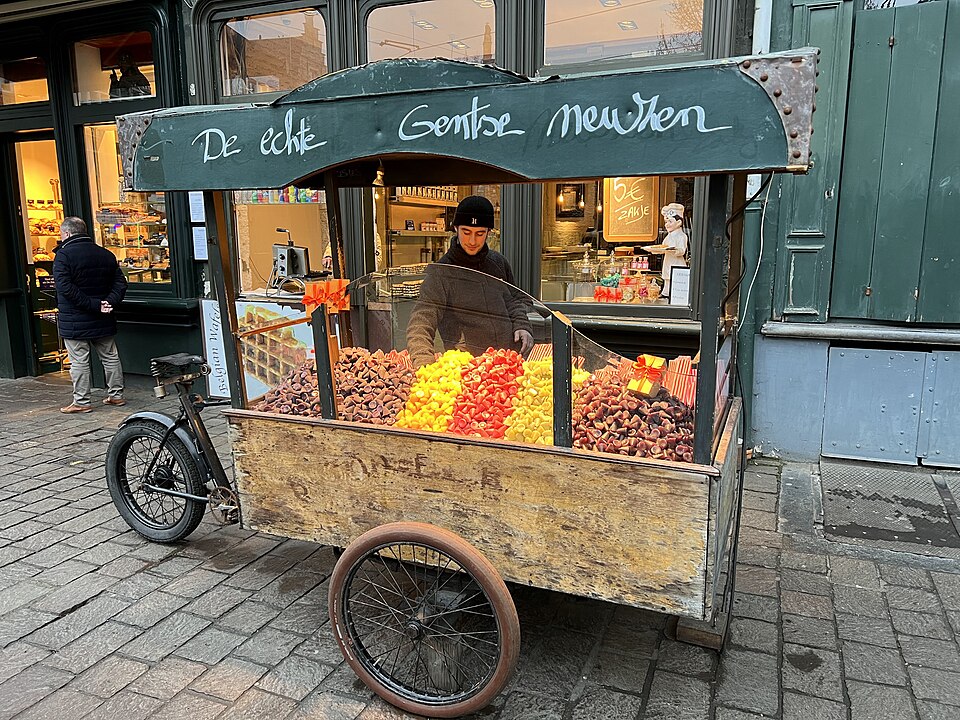
They are traditionally about 2.5 cm (1 inch) wide and weigh approximately 10 to 18 grams (0.35 to 0.63 oz), although smaller versions are also produced. The outside is relatively hard, whereas the inside is gelatinous. In recent years, various derivative food products have been made, including cuberdon-flavored jenever, ice cream, dessert sauce, and cookies.
Cuberdons can only be preserved for about three weeks, after which period the inside begins to crystallize. This limited preservability is the reason why cuberdons are infrequently exported outside Belgium. The Vlaams Centrum voor Agro-en Visserijmarketing (VLAM), an agency of the Flemish Government, has recognized the cuberdon as an official regional product.
Cuberdon is one of the 3D puzzles in World Artifacts: turn a cloud of broken pieces until it lines up. For iPhone, iPad, Apple Vision Pro and Android.

