World Artifacts › Atlas › Belgium
Praline Box
The filled chocolate was invented in Brussels in 1912 by a chemist's son who put a filling inside a hard shell. His wife then invented the ballotin, the stiff box, because the filled chocolates were being crushed in paper cones.
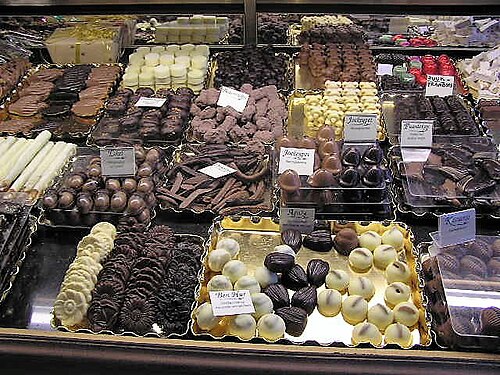
Belgian chocolate (Dutch: Belgische chocolade; French: Chocolat belge; German: Belgische Schokolade) is chocolate produced in Belgium. A major industry since the 19th century, today it forms an important part of the nation's economy and culture.
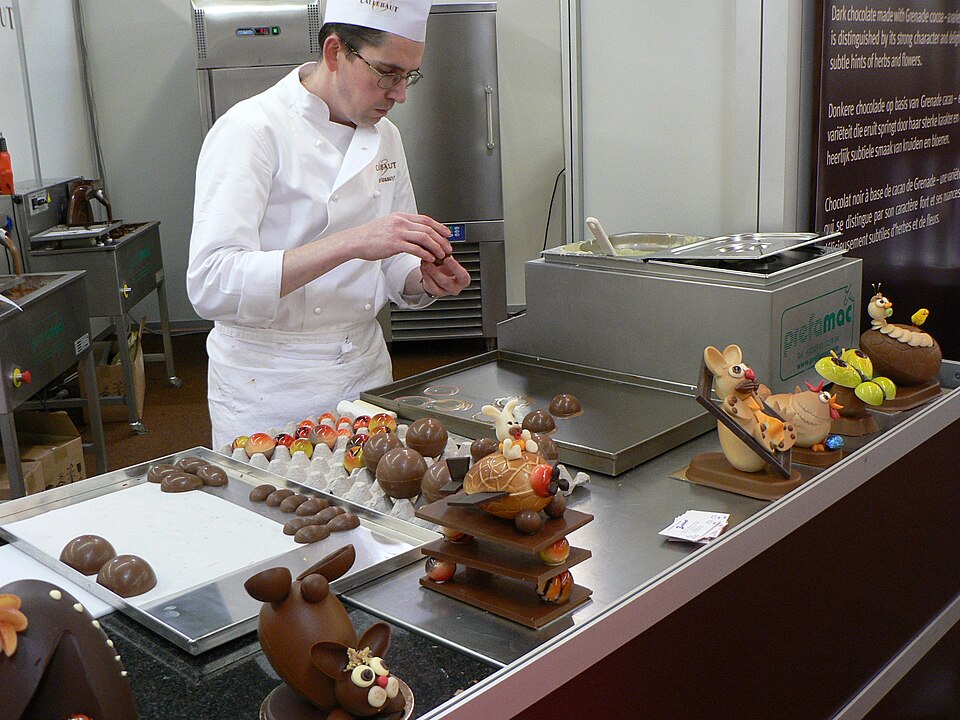
The raw materials used in chocolate production do not originate in Belgium; most cocoa is produced in Africa, Central America, and South America. Nonetheless, the country has an association with the product that dates to the early 17th century. The industry expanded massively in the 19th century, gaining an international reputation and, together with the Swiss, Belgium became one of the commodity's most important producers in Europe. Although the industry has been regulated by law since 1894, there is no universal standard for the chocolate to be labelled "Belgian". The most commonly accepted standard dictates that the actual production of the chocolate must take place inside Belgium.
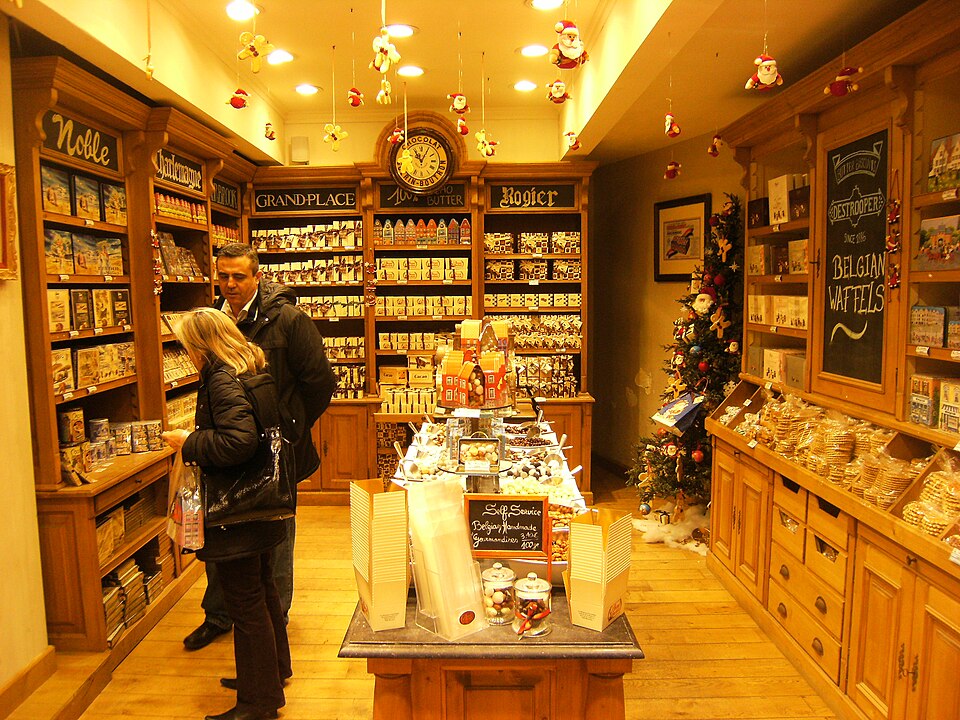
Further reading
- The Temptation Of Chocolate · Jacques Mercier (2008)A history of chocolate and the chocolate industry, with attention to the Belgian firm Neuhaus.Find a copy: AbeBooks · Amazon · WorldCat
- Food culture in Belgium · Peter Scholliers (2008)Covers Belgian cookery and food habits.Find a copy: AbeBooks · Amazon · WorldCat
Praline Box is one of the 3D puzzles in World Artifacts: turn a cloud of broken pieces until it lines up. For iPhone, iPad, Apple Vision Pro and Android.

