World Artifacts › Atlas › Belgium
Waterloo Lion Mound
The mound was built with earth dug from the battlefield itself, which levelled the ridge Wellington had used to hide his infantry. He is said to have looked at it and remarked that they had ruined his battlefield.
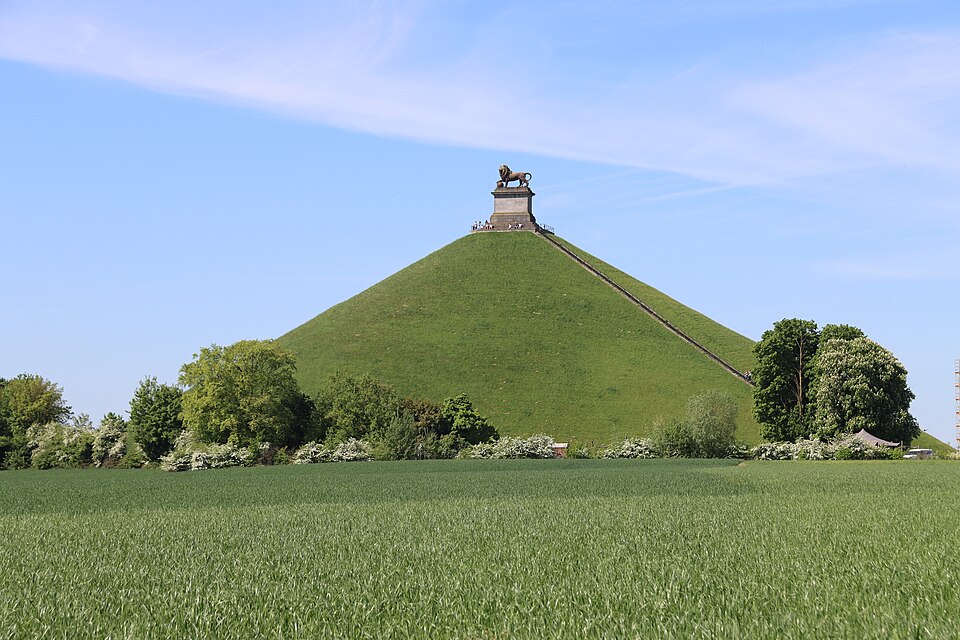
The Lion's Mound (French: Butte du Lion, lit. "Lion's Hillock/Knoll"; Dutch: Leeuw van Waterloo, lit. "Lion of Waterloo") is a large conical artificial hill in the municipality of Braine-l'Alleud, Walloon Brabant, Belgium. King William I of the Netherlands ordered its construction in 1820, and it was completed in 1826. It commemorates the spot on the battlefield of Waterloo where the king's elder son, Prince William of Orange, is presumed to have been wounded on 18 June 1815, as well as the Battle of Quatre Bras, which had been fought two days earlier.
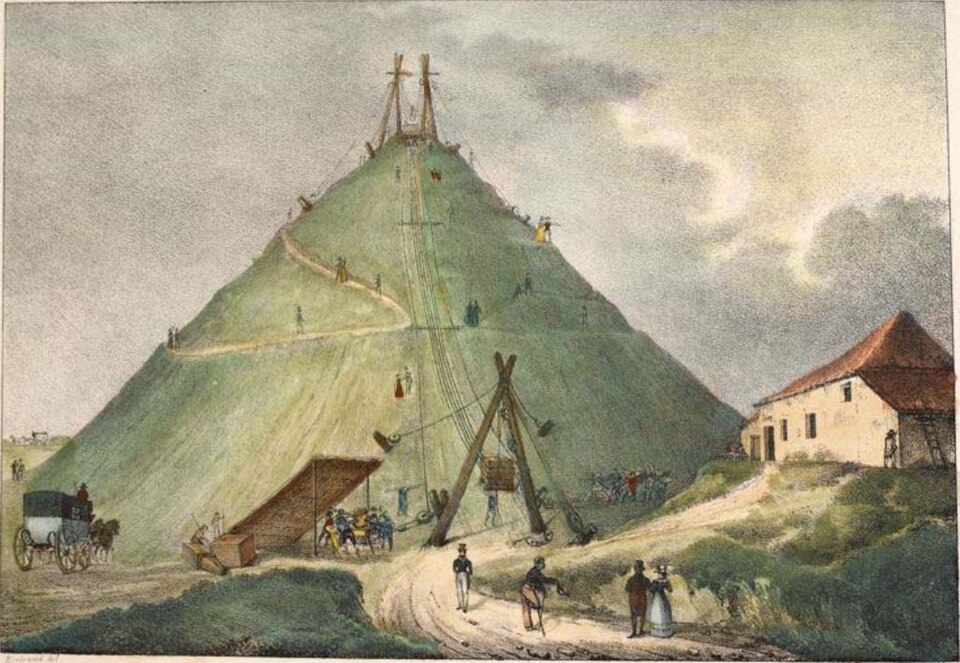
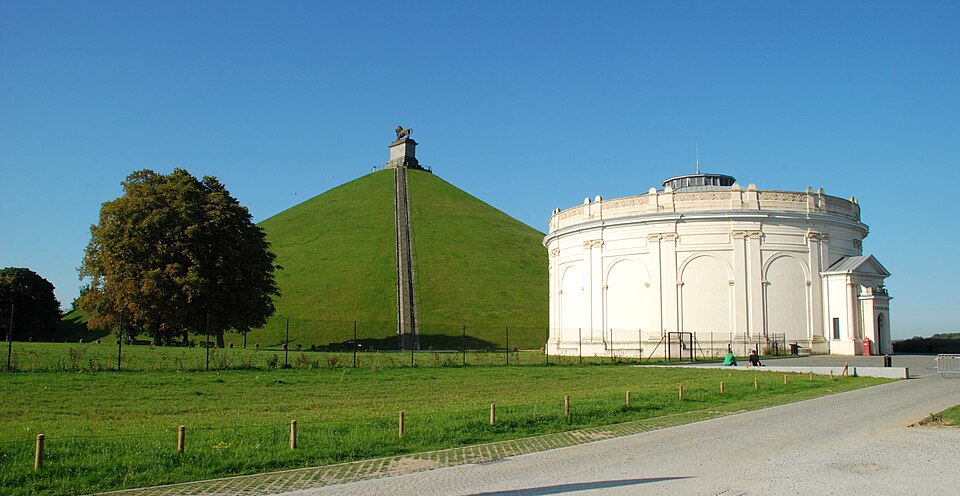
The hill offers a vista of the battlefield, and is the anchor point of the associated museums and taverns in the surrounding Lion's Hamlet (French: Hameau du Lion; Dutch: Gehucht met de Leeuw). Visitors who pay a fee may climb up the mound's 226 steps, which lead to the statue and its surrounding overlook (where there are maps documenting the battle, along with observation telescopes); the same fee also grants admission to see the painting Waterloo Panorama.
Further reading
- The Waterloo companion · Mark Adkin (2001)A guide to the Waterloo campaign and battle of 1815.Find a copy: AbeBooks · Amazon · WorldCat
- Journal Of The Waterloo Campaign · Cavalie Mercer (2004)A first-hand journal of the Waterloo campaign by an officer who took part.Find a copy: AbeBooks · Amazon · WorldCat
Waterloo Lion Mound is one of the 3D puzzles in World Artifacts: turn a cloud of broken pieces until it lines up. For iPhone, iPad, Apple Vision Pro and Android.

