World Artifacts › Atlas › Bolivia
Charango
The small lute with an armadillo back.
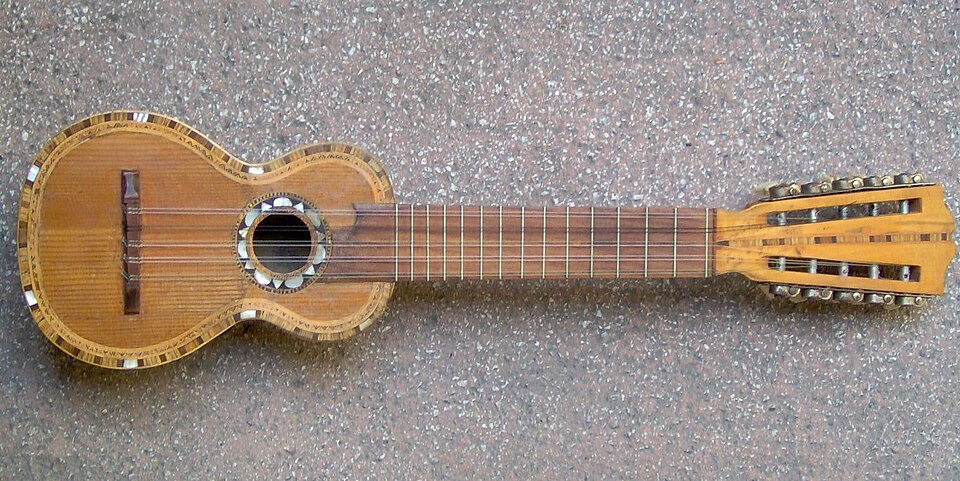
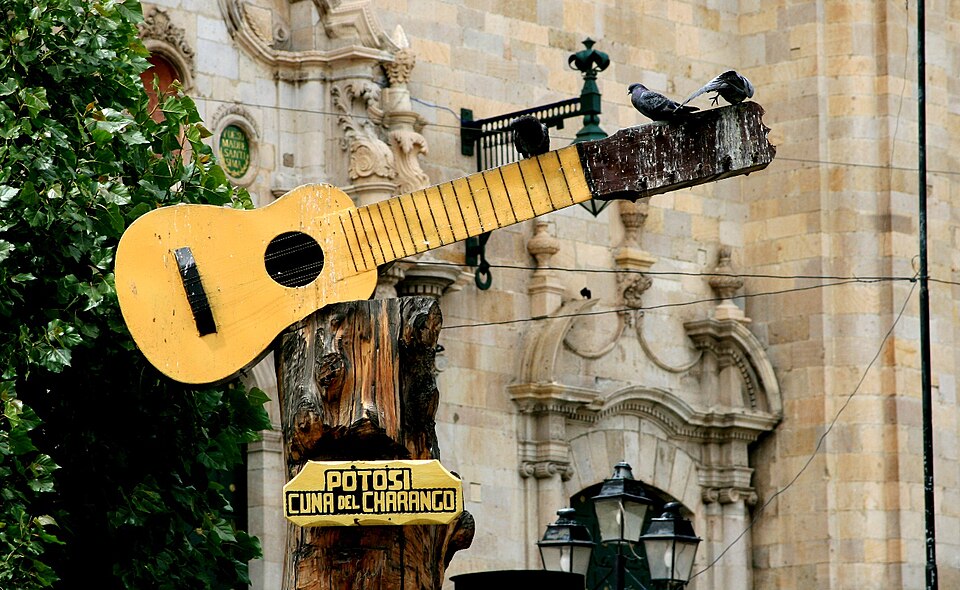
The charango is a small Andean stringed instrument of the lute family, from the Quechua and Aymara populations in the territory of the Altiplano in post-Colonial times, after European stringed instruments were introduced by the Spanish during colonization. The instrument is widespread throughout the Andean regions of Bolivia, Peru, Ecuador, northern Chile and northwestern Argentina, where it is a popular musical instrument that exists in many variant forms.
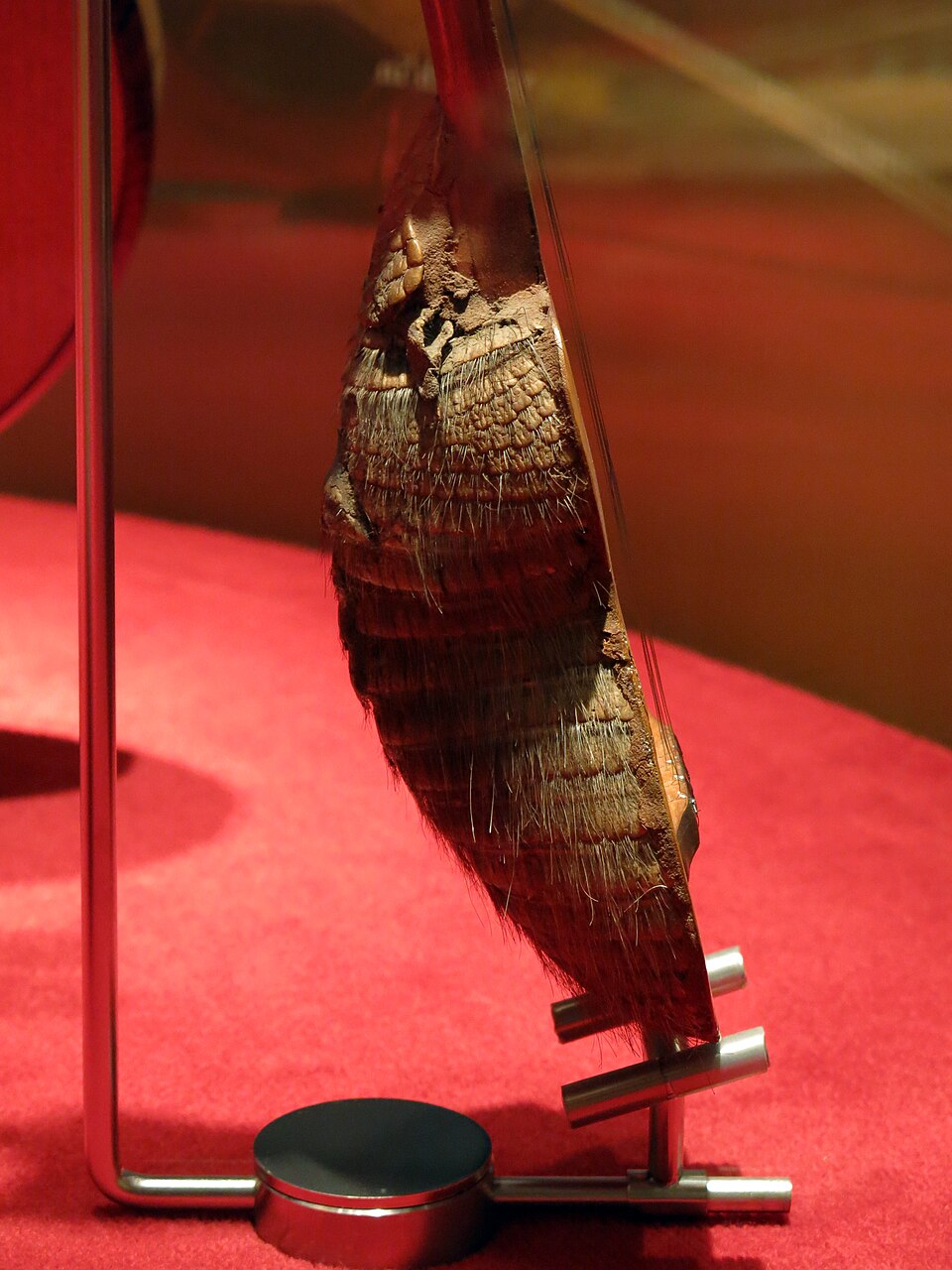
About 66 cm (26 in) long, the charango was traditionally made with the shell from the back of an armadillo (called quirquincho or mulita in South American Spanish), but it can also be made of wood, which some believe to be a better resonator. Wood is more commonly used in modern instruments. Charangos for children may also be made from calabash. Many contemporary charangos are now made with different types of wood. It typically has ten strings in five courses of two strings each, but many other variations exist.
The charango was primarily played in traditional Andean music. A charango player is called a charanguista (charanguist).
Further reading
- El charango · Ernesto Cavour Aramayo (1988)A book devoted entirely to the charango, by Ernesto Cavour Aramayo.Find a copy: AbeBooks · Amazon · WorldCat
- Music and the poetics of production in the Bolivian Andes · Henry Stobart (2006)Examines folk music and its social life and customs in the Bolivian Andes.Find a copy: AbeBooks · Amazon · WorldCat
Charango is one of the 3D puzzles in World Artifacts: turn a cloud of broken pieces until it lines up. For iPhone, iPad, Apple Vision Pro and Android.

