World Artifacts › Atlas › Bolivia
Vicuña
The slender vicuña.
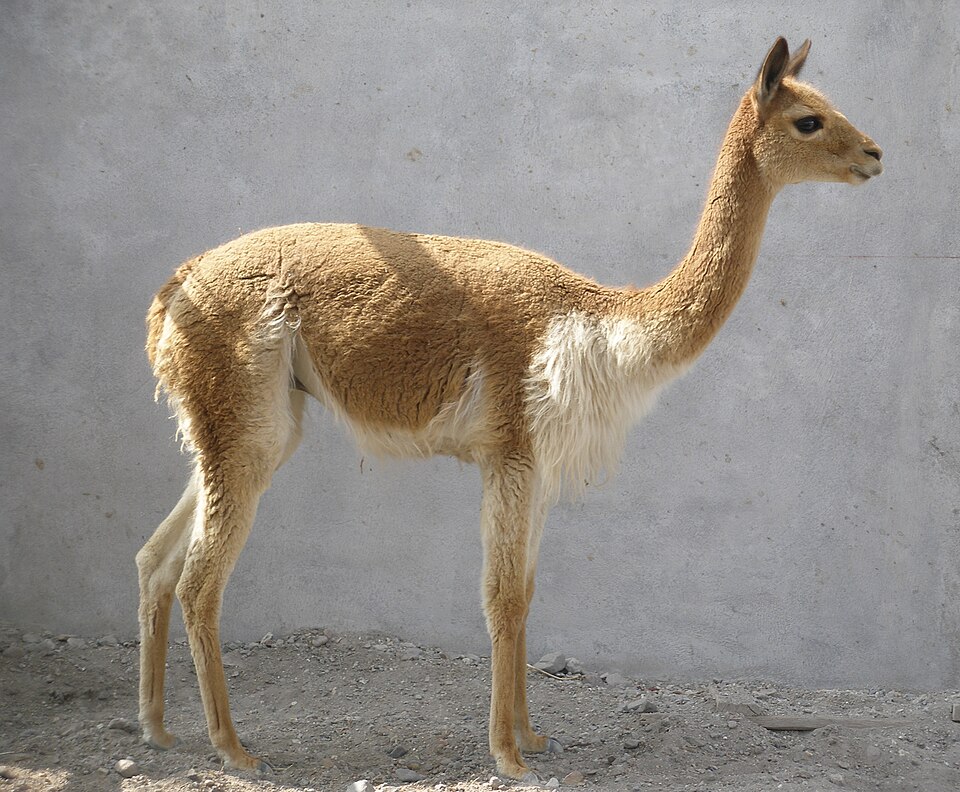
The vicuña (Lama vicugna) or vicuna (both , very rarely spelled vicugna, its Latin specific name) is a wild South American camelid which lives in high alpine areas of the Andes. It is a relative of the llama, the domesticated descendant of the guanaco, the only other still wild South American camelid.
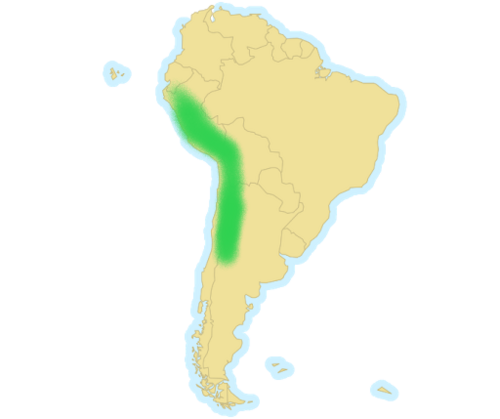
The vicuña is believed to be the ancestor of domesticated alpaca, which is raised for its coat. The vicuña produces small amounts of extremely fine wool, which is very expensive because the animal has to be caught from the wild to be fleeced and can only be shorn every three years. When knitted together, the product of the vicuña's wool is very soft and warm. The Inca valued the vicuña highly for its wool, and it was prohibited for anyone but royalty to wear vicuña garments; today, the vicuña is the national animal of Peru and appears on the Peruvian coat of arms.
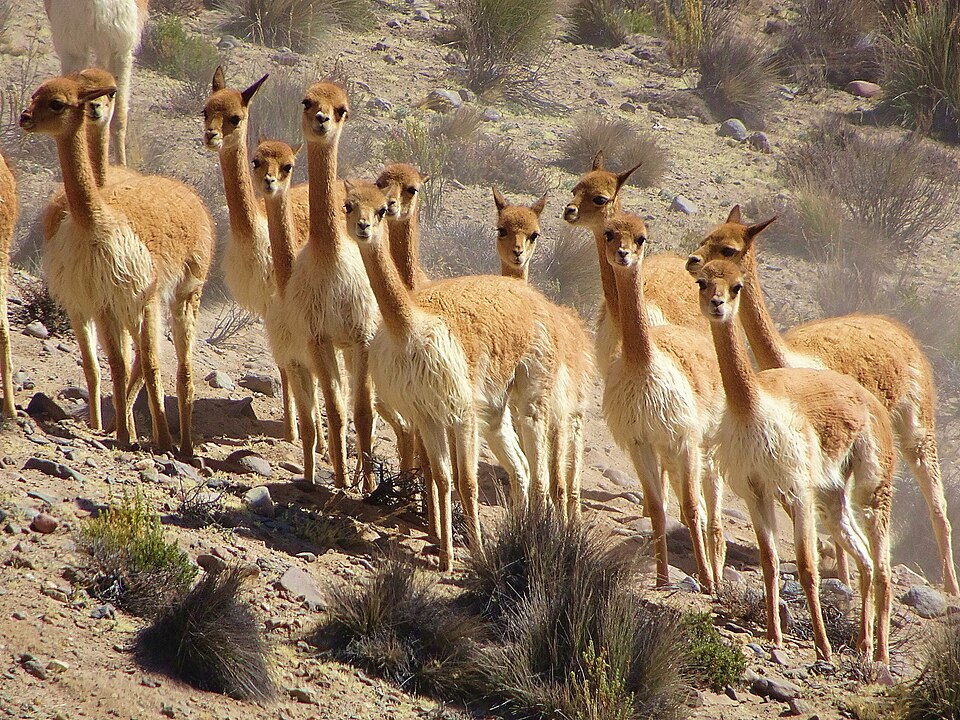
Both under the rule of the Inca and today, the vicuña has been protected by law, but it was heavily hunted in the intervening period. Only about 6,000 animals were left when it was declared endangered in 1974. Today, the vicuña population has recovered to about 350,000, and although conservation organizations have reduced its level of threat classification, they still call for active conservation programs to protect populations from poaching, habitat loss, and other threats.
Further reading
Vicuña is one of the 3D puzzles in World Artifacts: turn a cloud of broken pieces until it lines up. For iPhone, iPad, Apple Vision Pro and Android.

