World Artifacts › Atlas › Brazil
Capoeirista
Capoeira was made by enslaved Africans in Brazil and carries a fight inside a dance, which is part of why it survived. It was a criminal offence until the 1930s.
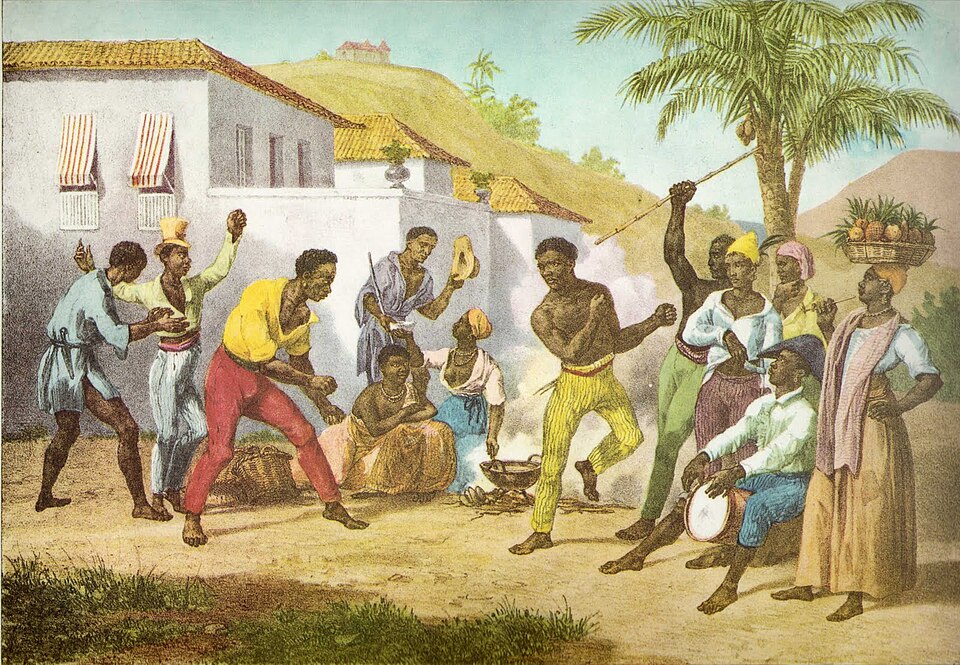
Capoeira (Portuguese pronunciation: [kapuˈe(j)ɾɐ]) is an Afro-Brazilian martial art and game that includes elements of dance, acrobatics, music, and spirituality.
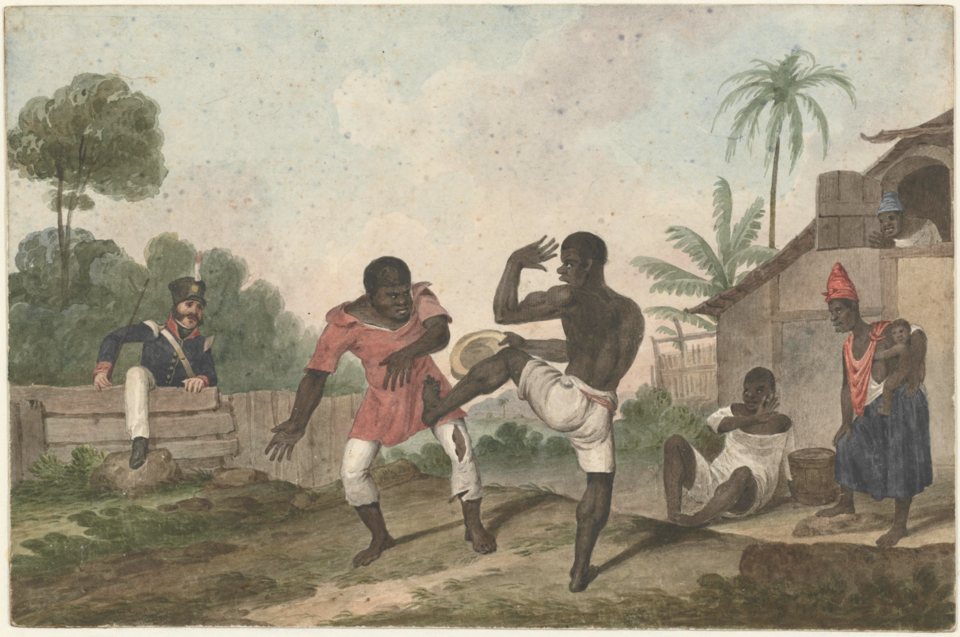
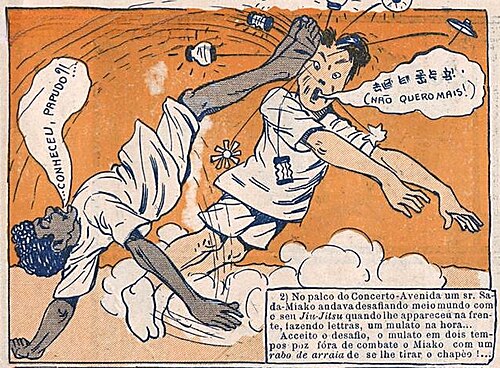
Capoeira has been practiced among Black Brazilians for centuries; scholars have identified roots in engolo, a traditional Bantu martial art practiced in Angola. Capoeira is first mentioned in an official document in 1789, as a criminal activity. In the 19th century, a street fighting style called capoeira carioca appeared; it was also criminalized. In the early 1930s, Mestre Bimba reformed traditional capoeira and developed the capoeira regional style, which established standardized teaching sequences. The government came to see capoeira as a socially acceptable sport, legalizing it in 1937 and promoting it as part of national culture. In 1941, Mestre Pastinha founded his school where he cultivated the traditional capoeira Angola, distinguishing it from reformed capoeira and the "national sport" approach. Both of these influential teachers came from the Bahia region of Brazil.
Further reading
- Capoeira · Matthias Röhrig Assunção (2004)A history of capoeira and its social aspects as a martial art and dance.Find a copy: AbeBooks · Amazon · WorldCat
- Fighting for honor · M. Thomas J. Desch-Obi (2008)An anthropological and historical study of capoeira as a martial art.Find a copy: AbeBooks · Amazon · WorldCat
Capoeirista is one of the 3D puzzles in World Artifacts: turn a cloud of broken pieces until it lines up. For iPhone, iPad, Apple Vision Pro and Android.

