World Artifacts › Atlas › Brazil
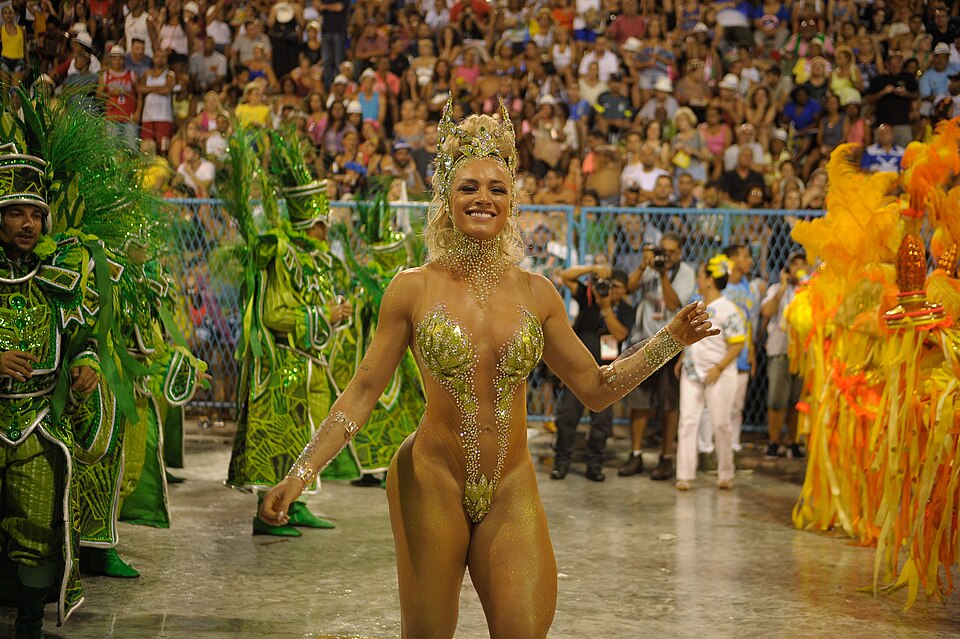
Carnival Dancer
The feathered frames are built by neighbourhood samba schools that work all year and are judged on everything from the song to the floats. The avenue they parade down was built for the purpose by Niemeyer in 1984.
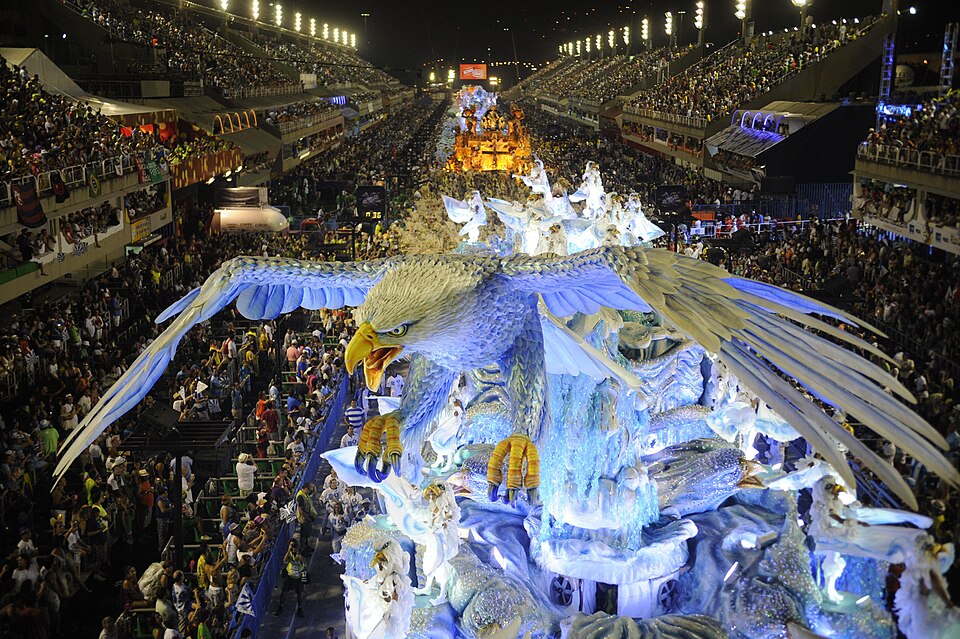
The Carnival in Rio de Janeiro (Portuguese: Carnaval do Rio de Janeiro) is a festival held every year before Lent; it is considered the biggest celebration of Carnival in the world, with two million people per day on the streets. The first Carnival festival in Rio occurred in 1723.
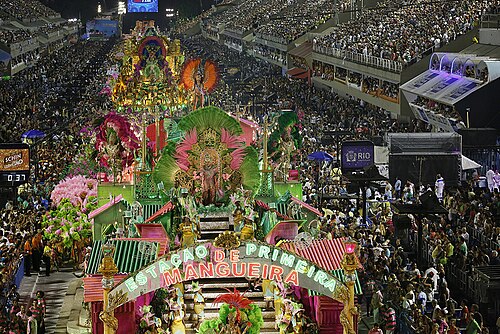
The typical Rio Carnival parade is filled with revelers, floats, and adornments from numerous samba schools which are located in Rio (more than 200 approximately, divided into five leagues/divisions). A samba school is composed of a collaboration of local neighbours that want to attend the carnival together, with some kind of regional, geographical and common background.
Further reading
- Samba · Alma Guillermoprieto (1990)A book on Rio's samba and carnival, covering the dance, social life and customs of Brazil.Find a copy: AbeBooks · Amazon · WorldCat
- The mystery of samba · Hermano Vianna (1999)A study of samba as Brazilian popular music and its social aspects.Find a copy: AbeBooks · Amazon · WorldCat
Carnival Dancer is one of the 3D puzzles in World Artifacts: turn a cloud of broken pieces until it lines up. For iPhone, iPad, Apple Vision Pro and Android.

