World Artifacts › Atlas › Brazil
Christ the Redeemer
The statue is faced in thousands of small soapstone tiles, cut by hand and laid like scales. Standing where it does, it is hit by lightning several times a year, and fingers occasionally have to be remade.
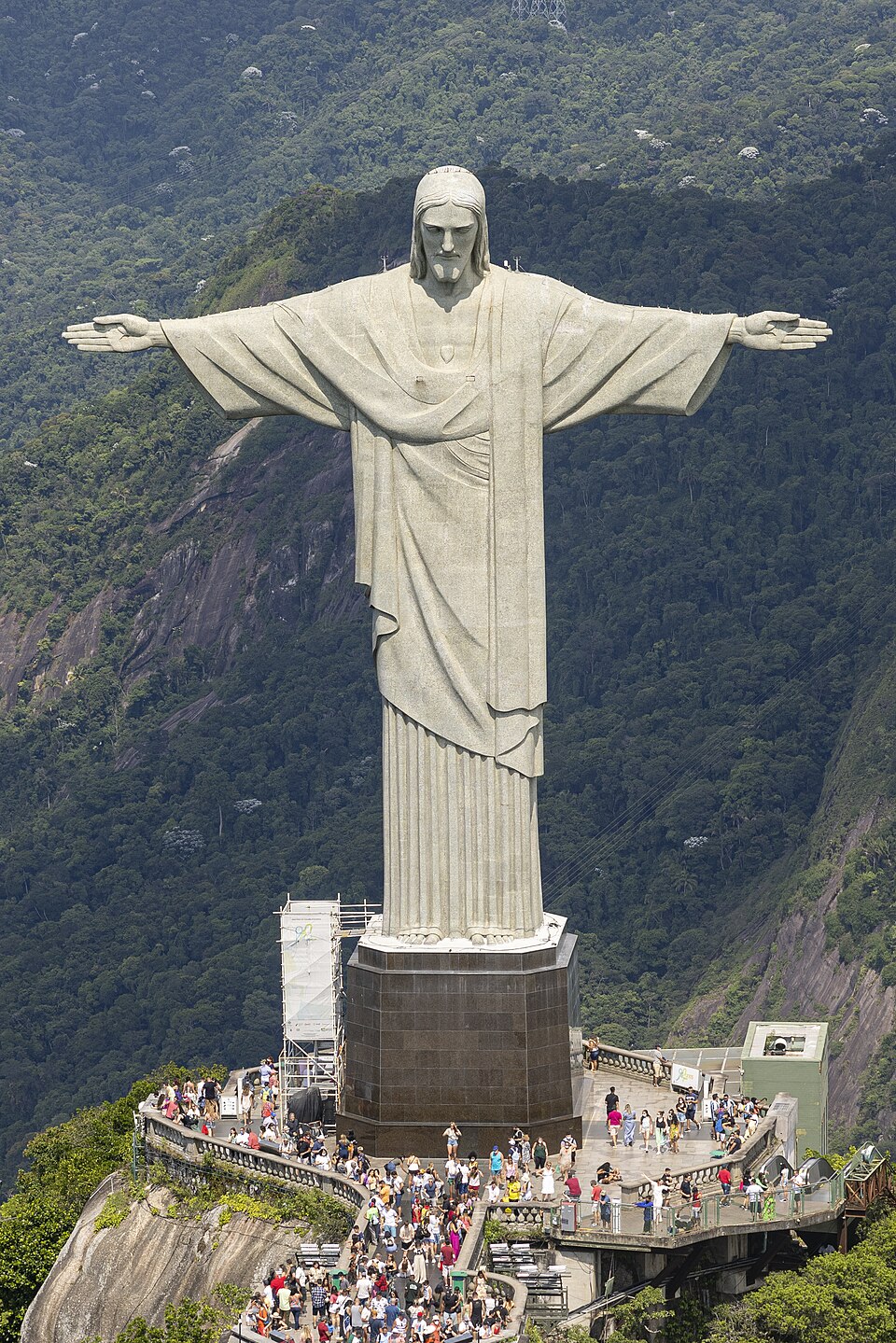
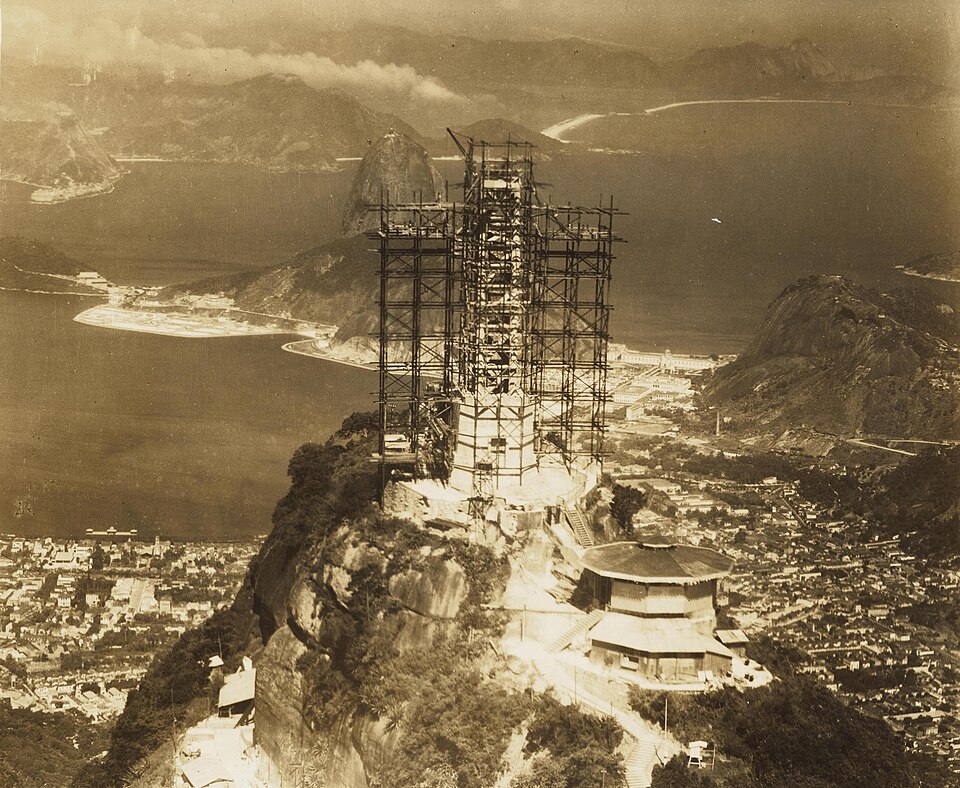
Christ the Redeemer (Portuguese: Cristo Redentor, standard Brazilian Portuguese: [ˈkɾistu ʁedẽˈtoʁ]) is an Art Deco statue of Jesus in Rio de Janeiro, Brazil, created by French-Polish sculptor Paul Landowski and built by Brazilian engineer Heitor da Silva Costa, in collaboration with French engineer Albert Caquot and Romanian sculptor Gheorghe Leonida who sculpted the face. Constructed between 1922 and 1931, the statue is 30 metres (98 ft) high, excluding its 8-metre (26 ft) pedestal, and faces east. The arms stretch 28 metres (92 ft) wide. It is made of reinforced concrete and soapstone. Christ the Redeemer differs considerably from its original design, as the initial plan was a large Christ with a globe in one hand and a cross in the other. Although the project organizers originally accepted the design, it later changed to the statue of today, with the arms spread out wide.
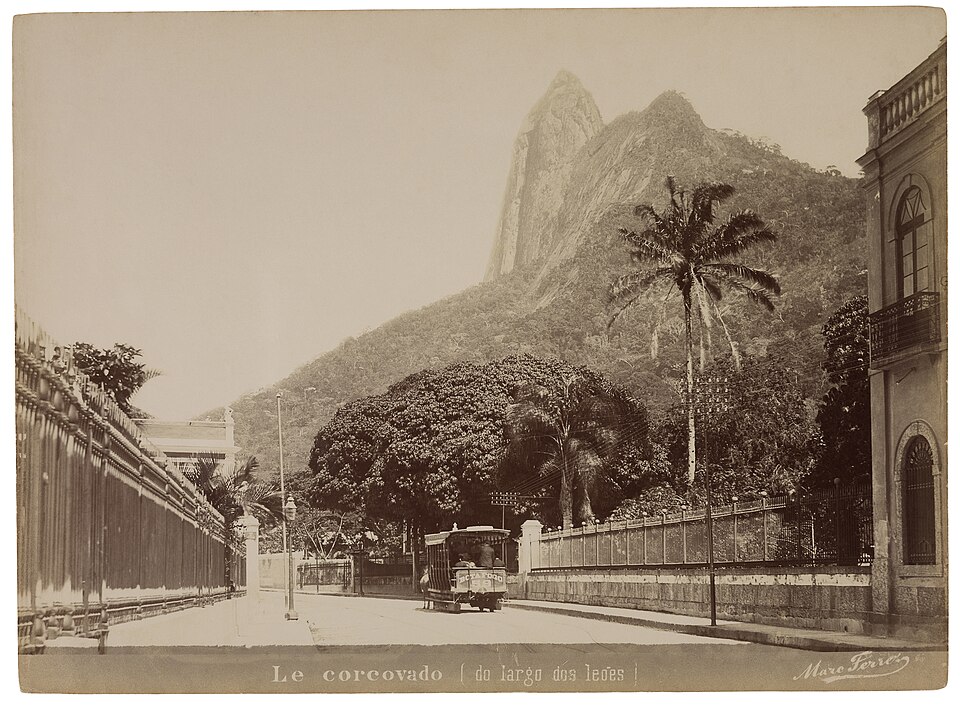
The statue weighs 635 metric tons (625 long, 700 short tons), and is located at the peak of the 700-metre (2,300 ft) Corcovado mountain in the Tijuca National Park overlooking the city of Rio de Janeiro. This statue is the largest Art Deco-style sculpture in the world. A symbol of Christianity around the world, the statue has also become a cultural icon of both Rio de Janeiro and Brazil and was voted one of the New 7 Wonders of the World.
Christ the Redeemer is one of the 3D puzzles in World Artifacts: turn a cloud of broken pieces until it lines up. For iPhone, iPad, Apple Vision Pro and Android.

