World Artifacts › Atlas › Bhutan
Cham Dancer Mask
The horned festival mask with bulging eyes.
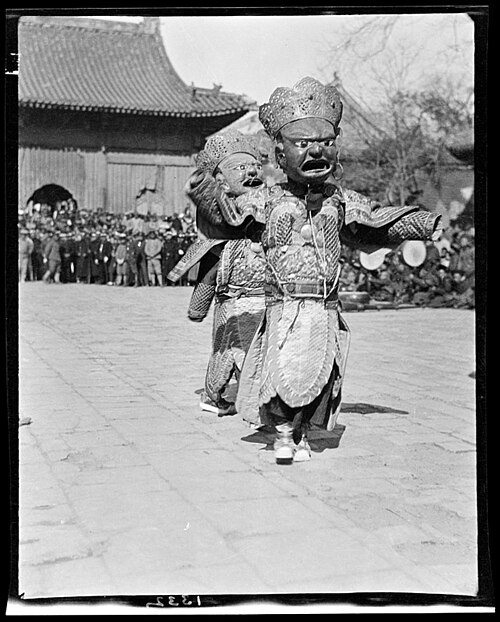
The cham dance (Tibetan: འཆམ་, Wylie: 'cham) is a lively masked and costumed dance associated with some sects of Tibetan Buddhism and Buddhist festivals. The dance is accompanied by music played by monks using traditional Tibetan musical instruments. The dances often offer moral instruction relating to karuṇā (compassion) for sentient beings and are held to bring merit to all who perceive them.
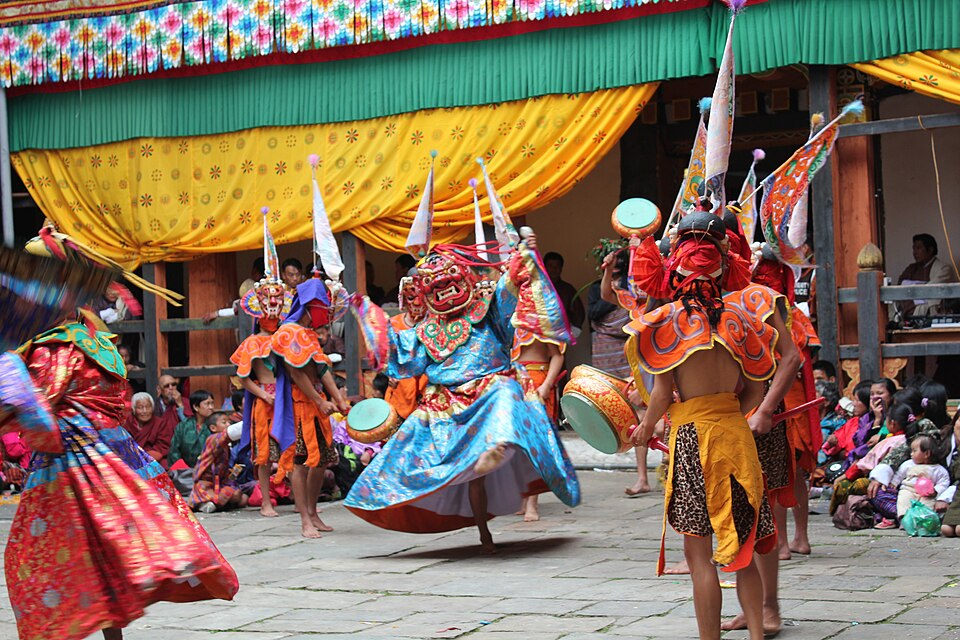
Chams are considered a form of meditation and an offering to the gods. The leader of the cham is typically a musician, keeping time with a percussion instrument like cymbals, the one exception being Dramyin Cham, where time is kept using dramyin.
The term "devil dance" was an early 20th century description of the performance, derived from Western perceptions of the costumes worn by performers.
Further reading
- Tibetan Religious Dances · René de Nebesky-Wojkowitz (2002)A study of Tibetan religious dances, including the 'chams type of sacral dance.Find a copy: AbeBooks · Amazon · WorldCat
- Tibetan Sacred Dance · Ellen Pearlman (2002)Covers Tibetan sacred dance including Cham, with its rituals and Buddhist context.Find a copy: AbeBooks · Amazon · WorldCat
Cham Dancer Mask is one of the 3D puzzles in World Artifacts: turn a cloud of broken pieces until it lines up. For iPhone, iPad, Apple Vision Pro and Android.

