World Artifacts › Atlas › Bhutan
Thangka Scroll
The painted scroll.
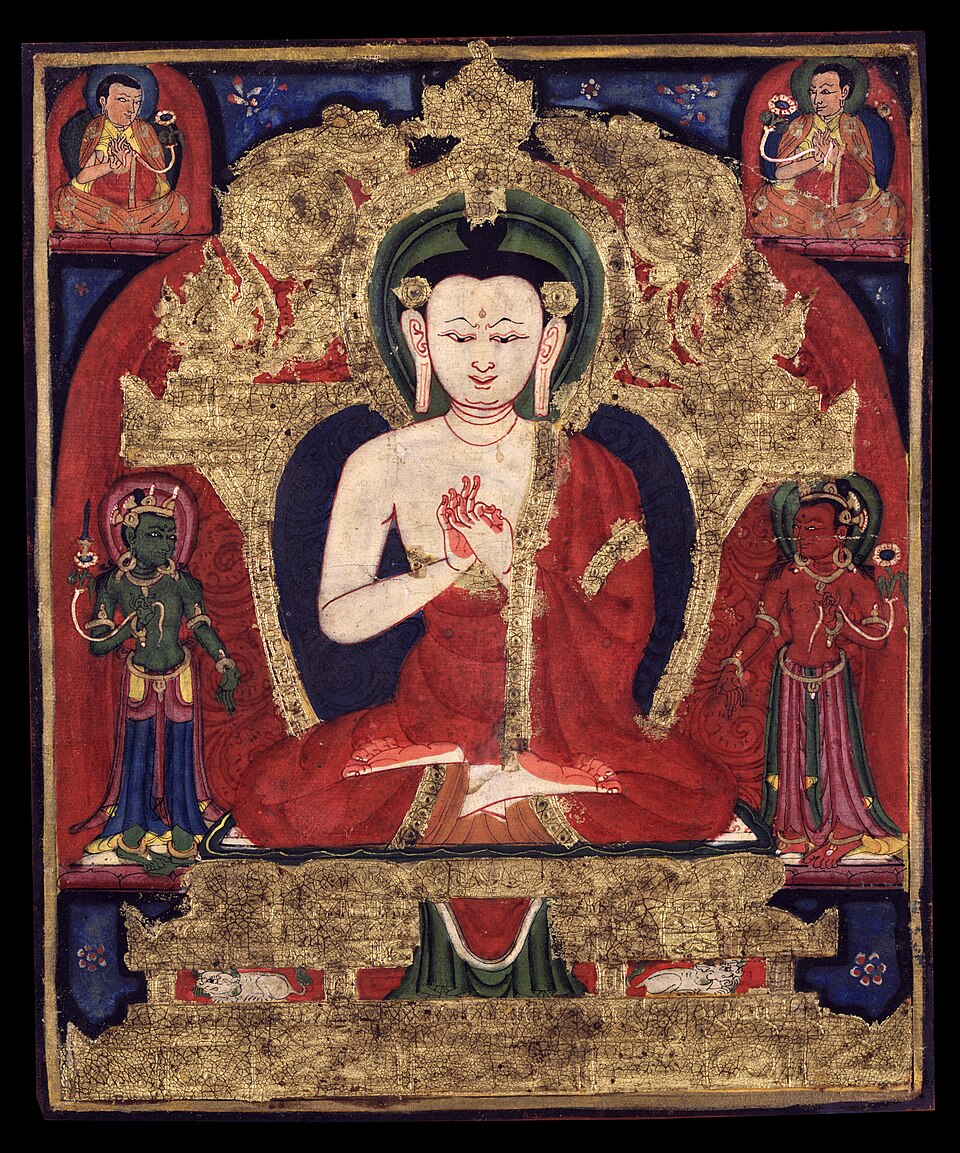
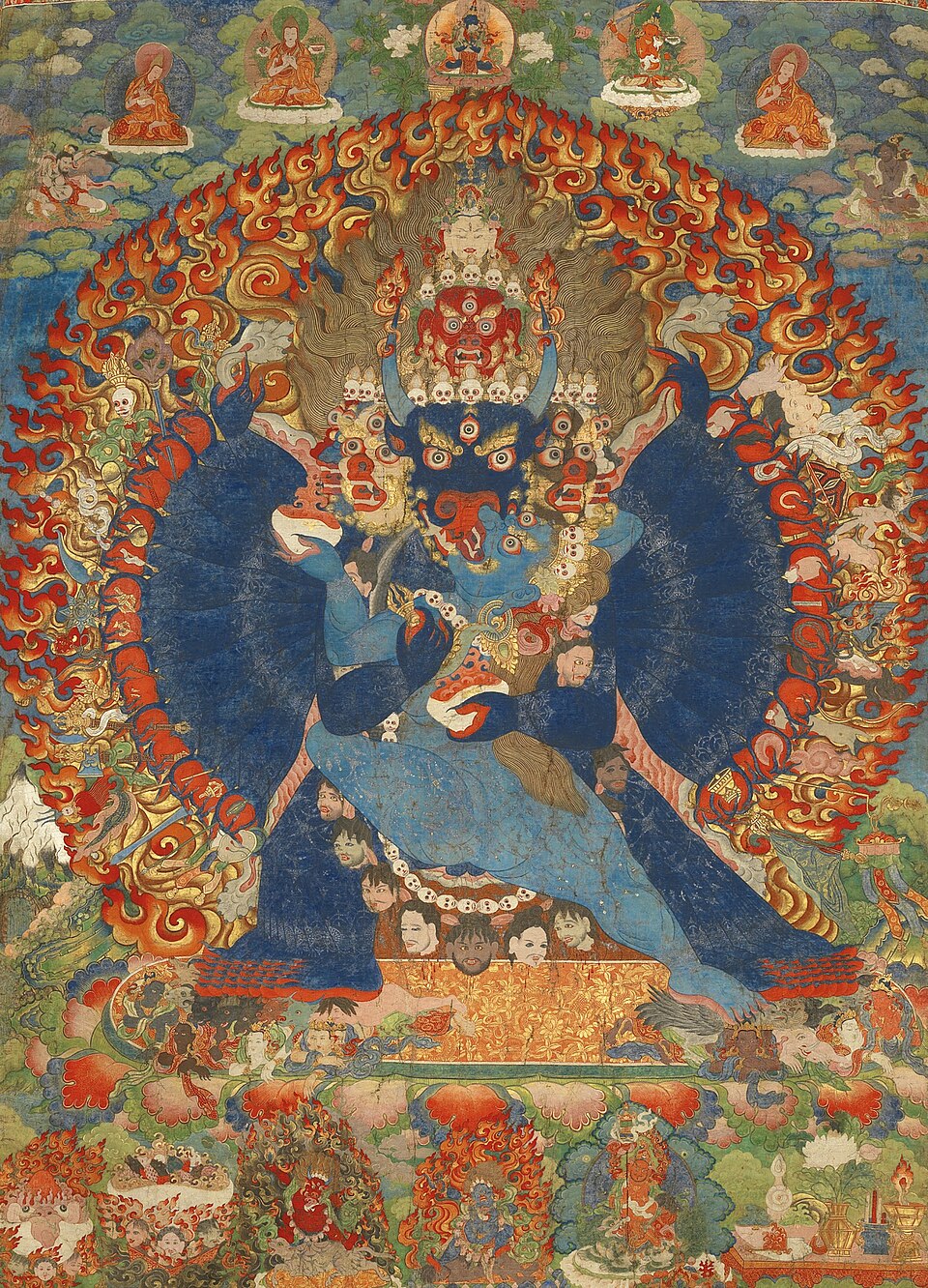
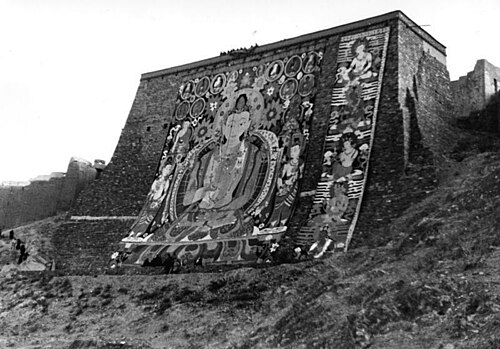
A thangka painting (Nepali pronunciation: [ˈt̪ʰaŋka]; Tibetan: ཐང་ཀ་; Nepal Bhasa: पौभा) is a Tibetan Buddhist painting on cotton, silk appliqué, usually depicting a Buddhist deity, scene, or mandala. Thangkas are traditionally kept unframed and rolled up when not on display, mounted on a textile backing somewhat in the style of Chinese scroll paintings, with a further silk cover on the front. So treated, thangkas can last a long time, but because of their delicate nature, they have to be kept in dry places where moisture will not affect the quality of the silk. Most thangkas are relatively small, comparable in size to a western half-length portrait, but some are extremely large, several metres in each dimension; these were designed to be displayed, typically for very brief periods on a monastery wall, as part of religious festivals. Most thangkas were intended for personal meditation or instruction of monastic students. They often have elaborate compositions including many very small figures. A central deity is often surrounded by other identified figures in a symmetrical composition. Narrative scenes are less common, but do appear.
Further reading
- Tibetan Thangka painting · David Paul Jackson (1984)Covers Tibetan thangka painting, including its technique, as a form of Buddhist painted scroll.Find a copy: AbeBooks · Amazon · WorldCat
- A history of Tibetan painting · David Paul Jackson (1996)A history of Tibetan painting, covering Buddhist painting and its art and symbolism.Find a copy: AbeBooks · Amazon · WorldCat
Thangka Scroll is one of the 3D puzzles in World Artifacts: turn a cloud of broken pieces until it lines up. For iPhone, iPad, Apple Vision Pro and Android.

