World Artifacts › Atlas › Belarus
European Bison
The great zubr of the Białowieża forest, head lowered.
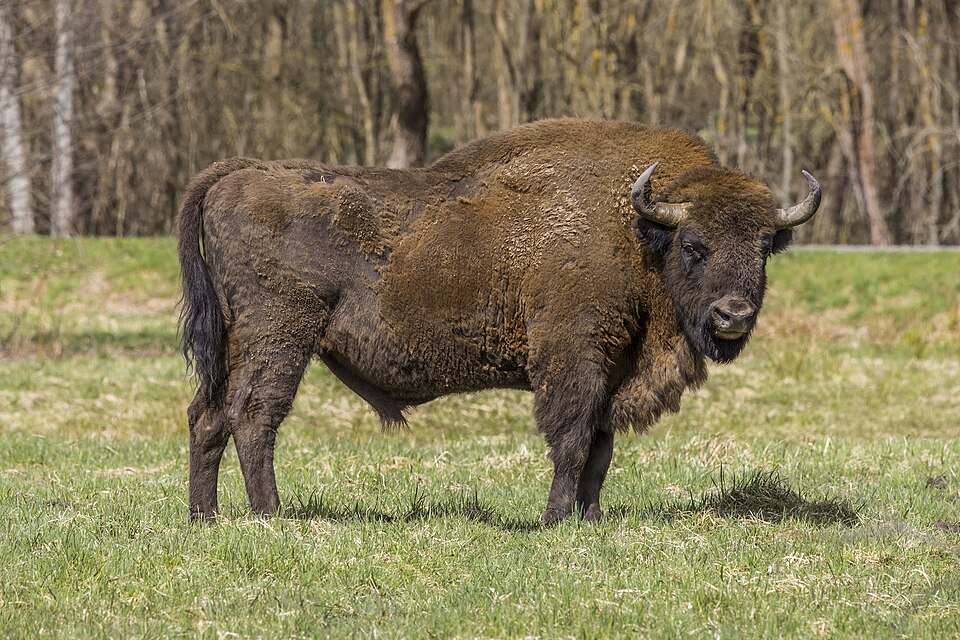
The European bison (pl.: bison) (Bison bonasus) or the European wood bison, also known as the wisent ( or ), the zubr (), or sometimes colloquially as the European buffalo, is a European species of bison. It is one of two extant species of bison, alongside the American bison. The European bison is the heaviest wild land animal in Europe, and individuals in the past may have been even larger than their modern-day descendants. During late antiquity and the Middle Ages, bison became extinct in most of Europe and Asia, surviving into the 20th century only in northern-central Europe and the northern Caucasus Mountains. During the early years of the 20th century, the remaining bison were hunted to extinction in the wild, with domestic bison later reintroduced into the wild.
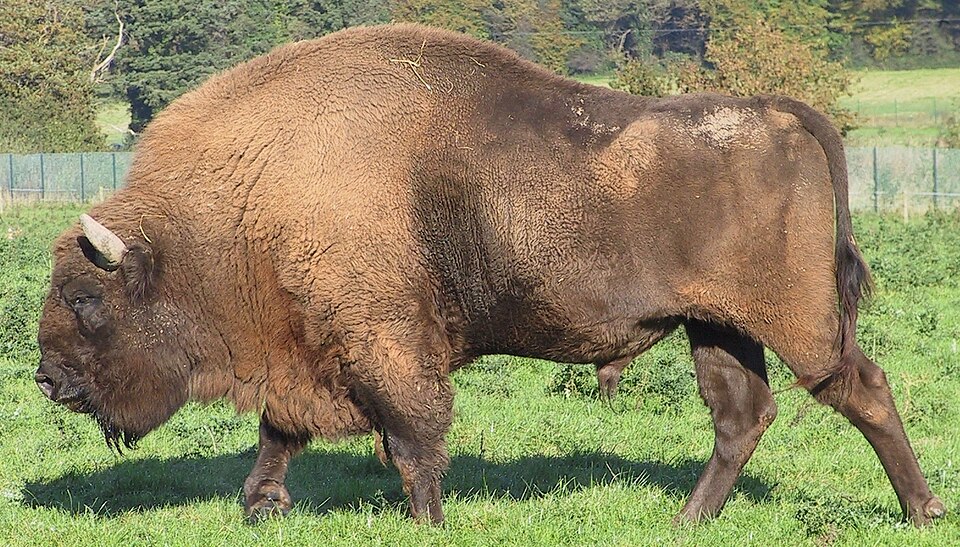
By the late 2010s, the species numbered several thousand and had been returned to the wild by captive breeding programmes. It is no longer in immediate danger of extinction, but remains absent from most of its historical range. It is not to be confused with the aurochs (Bos primigenius), the extinct ancestor of domestic cattle, with which it once co-existed. Besides humans, bison have few predators. In the 19th century, there were scattered reports of wolves, lions, tigers, and bears hunting bison. In the past, especially during the Middle Ages, humans commonly killed bison for their hide, meat and other uses such as drinking horns.
Further reading
- European bison · Zdzisław Pucek (2004)A monograph on the European bison covering its conservation as an endangered species.Find a copy: AbeBooks · Amazon · WorldCat
- Conservation and hunting · Tomasz Samojlik (2005)A history of hunting and conservation, with social life and customs.Find a copy: AbeBooks · Amazon · WorldCat
European Bison is one of the 3D puzzles in World Artifacts: turn a cloud of broken pieces until it lines up. For iPhone, iPad, Apple Vision Pro and Android.

