World Artifacts › Atlas › Canada
Inuksuk
An inuksuk is a stone marker, and the word means acting in the capacity of a human: it stands where a person cannot. The human-shaped kind is properly an inunnguaq, and most traditional ones are not that shape at all, being markers for routes, caches and caribou drives.
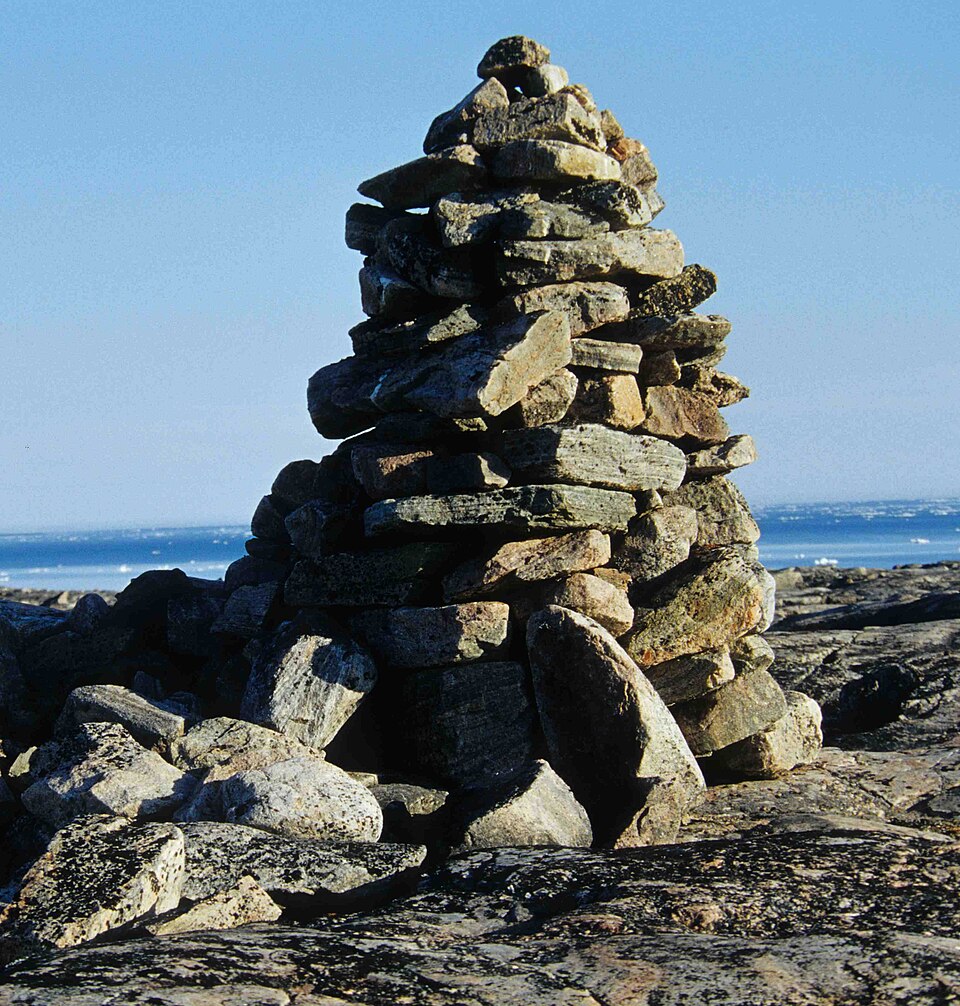
An inuksuk (plural inuksuit) or inukshuk is a type of stone landmark or cairn built and used by Inuit, including Iñupiat, Kalaallit, Yupik, and other related Indigenous peoples of the North American Arctic. These structures are found in northern Canada, Greenland, and Alaska. This combined region, north of the Arctic Circle, is dominated by the tundra biome and has areas with few natural landmarks.
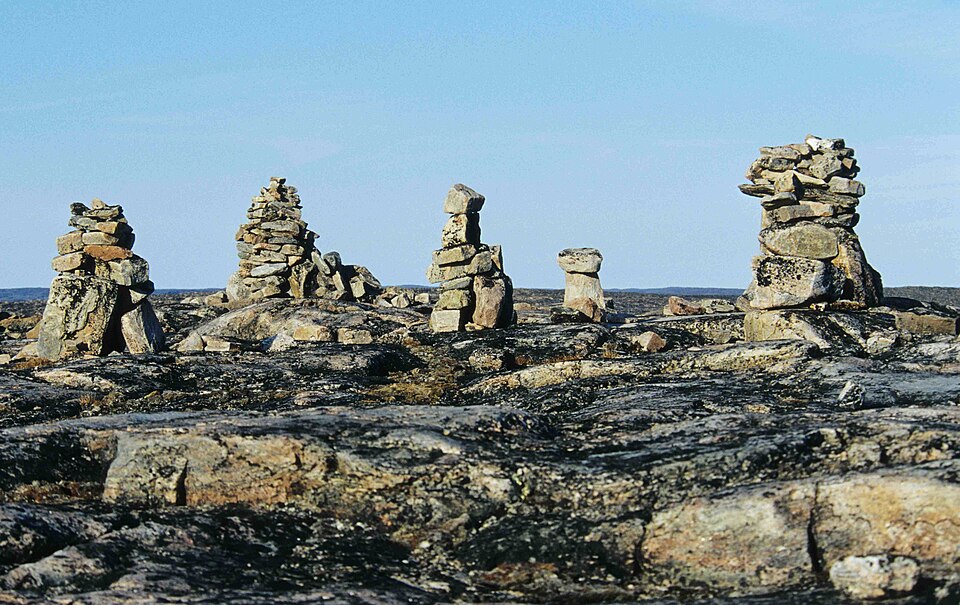
The inuksuk may historically have been used for navigation, as a point of reference, a marker for travel routes, fishing places, camps, hunting grounds, places of veneration, drift fences used in hunting, or to mark a food cache. The Iñupiat in northern Alaska used inuksuit to assist in the herding of caribou into contained areas for slaughter. Varying in shape and size, the inuksuit have ancient roots in Inuit culture.

Historically, the most common types of inuksuit are built with stone placed upon stone. The simplest type is a single stone positioned in an upright manner. The size of some inuksuit suggests that the construction was often a communal effort.
At Inuksuk Point (Enukso Point) on Baffin Island, there are more than 100 inuksuit. The site was designated a National Historic Site of Canada in 1969.
Further reading
Inuksuk is one of the 3D puzzles in World Artifacts: turn a cloud of broken pieces until it lines up. For iPhone, iPad, Apple Vision Pro and Android.

