World Artifacts › Atlas › Canada
Moose
A bull moose can be two metres at the shoulder and will not move for a car. Collisions are serious enough that provinces build fences and highway signs count the year's tally.
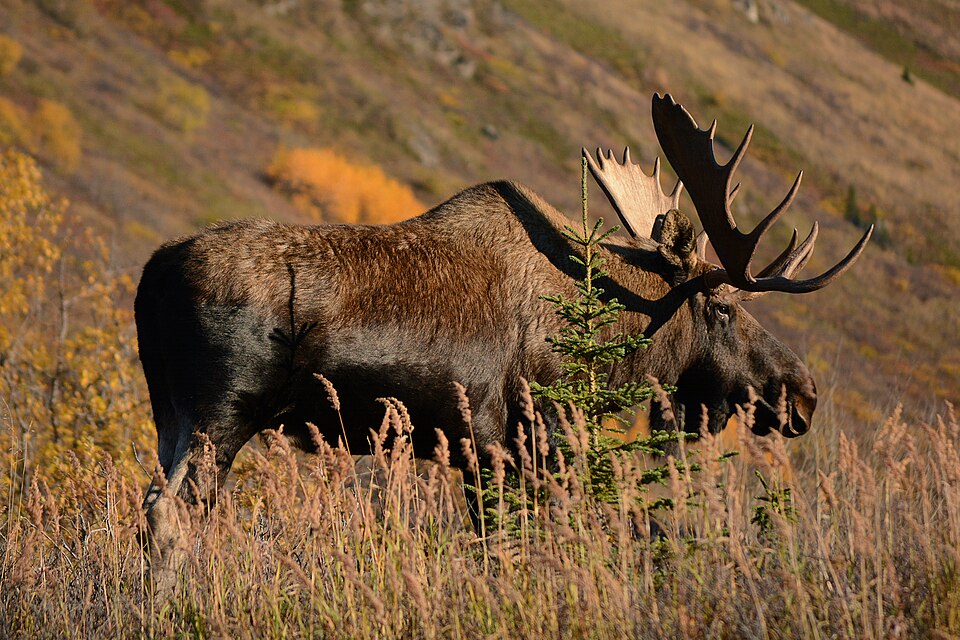
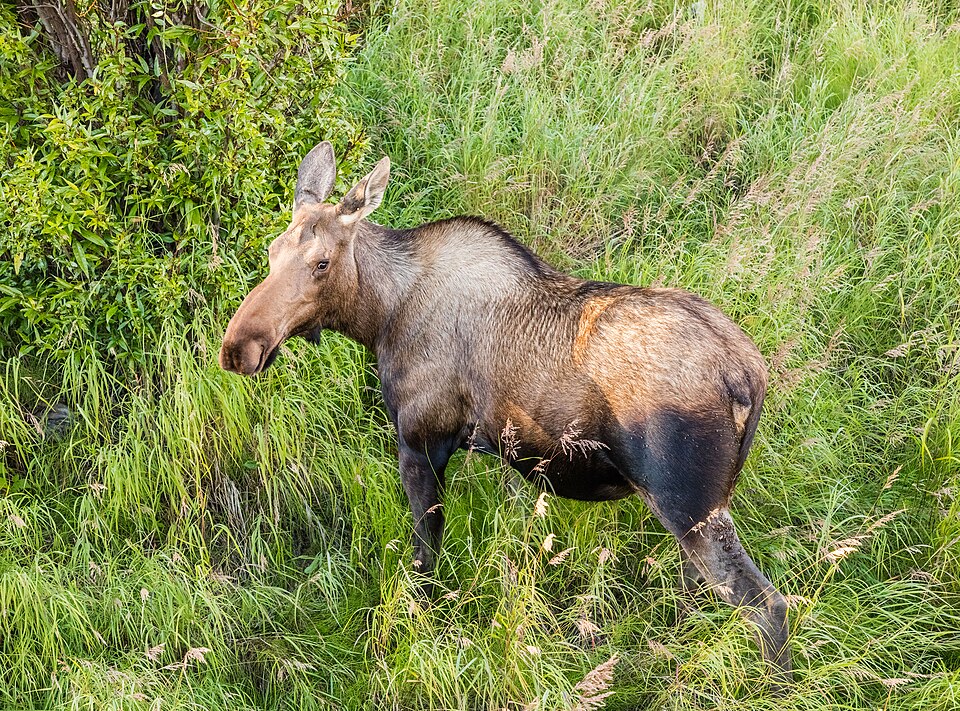
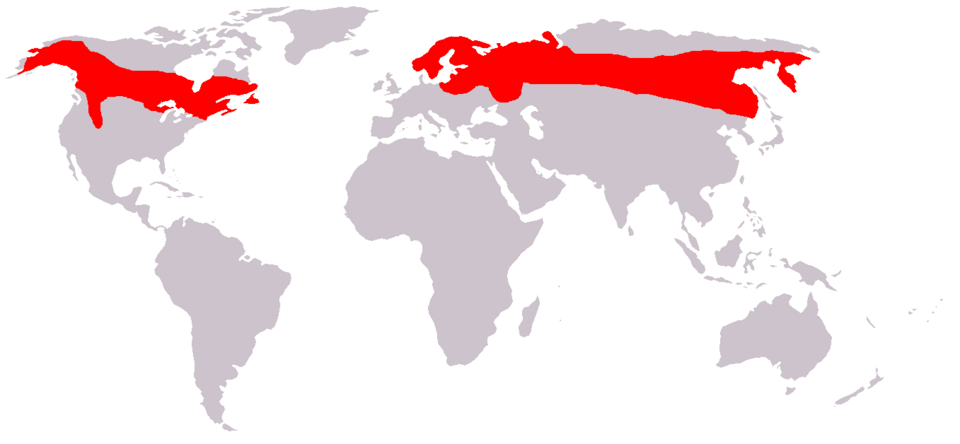
The moose or elk (Alces alces) is the world's tallest, largest and heaviest extant species of deer and the only extant species in the genus Alces. It is also the tallest, and the second-largest, land animal in North America, falling short only to the American bison in body mass. Most adult male moose have broad, palmate ("open-hand shaped") antlers; most other members of the deer family have pointed antlers with a dendritic ("twig-like") configuration. Moose inhabit the circumpolar boreal forests or temperate broadleaf and mixed forests of the Northern Hemisphere, thriving in cooler, temperate areas as well as subarctic climates.
Hunting shaped the relationship between moose and humans, both in Eurasia and North America. Prior to the early modern period (around 1600-1700), moose were one of many valuable sources of sustenance for certain North American Indians. Hunting and habitat loss have reduced the moose's range; this fragmentation has led to sightings of "urban moose" in some areas. The moose has been reintroduced to some of its former habitats. Currently, the greatest populations occur in Canada. Additionally, substantial numbers are found in Alaska, the northern states of the contiguous United States, Fennoscandia, the Baltic states, the Caucasus region, Poland, Eastern Europe, Mongolia, Kazakhstan, and Russia.
Further reading
Moose is one of the 3D puzzles in World Artifacts: turn a cloud of broken pieces until it lines up. For iPhone, iPad, Apple Vision Pro and Android.

