World Artifacts › Atlas › Canada
Poutine Bowl
Poutine came out of rural Quebec in the 1950s, and the argument about which restaurant first is unresolved. The curds must be fresh enough to squeak against the teeth, which is the one point on which nobody argues.
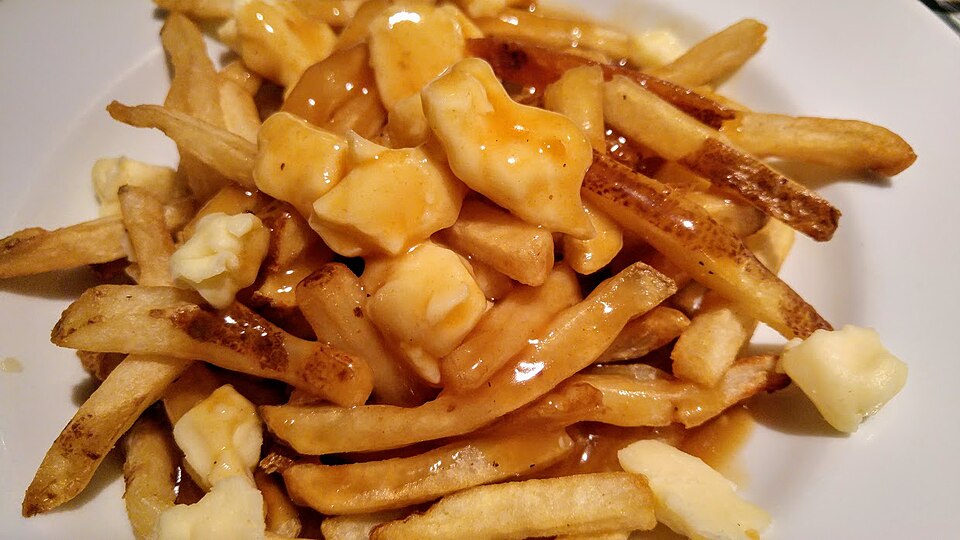
Poutine is a dish of French fries and cheese curds topped with a hot brown beef and chicken stock gravy. It emerged in the Centre-du-Québec region of Quebec in 1959, though its exact origins are uncertain, and there are several competing claims regarding its origin. For many years, it was used by some to mock Quebec society. Poutine later became celebrated as a symbol of Québécois culture and the province of Quebec. It has long been associated with Quebec cuisine, and its rise in prominence has led to its growing popularity throughout the rest of Canada.

Annual poutine celebrations occur in Montreal, Quebec City, and Drummondville, as well as Toronto, Ottawa, New Hampshire, and Chicago. It has been called Canada's national dish, though some critics believe this labeling represents cultural appropriation of the Québécois or Quebec national identity. Many variations on the original recipe are popular, leading some to suggest that poutine has emerged as a new dish classification in its own right, as with sandwiches or dumplings.
Further reading
- Poutine Nation · Sylvain Charlebois (2025)A book about poutine and its place in Canadian culture.Find a copy: AbeBooks · Amazon · WorldCat
- Maudite poutine! · Charles-Alexandre Theoret (2007)A Quebec-focused book on poutine, filed under French-Canadian cooking and potato and fries cuisine.Find a copy: AbeBooks · Amazon · WorldCat
Poutine Bowl is one of the 3D puzzles in World Artifacts: turn a cloud of broken pieces until it lines up. For iPhone, iPad, Apple Vision Pro and Android.

