World Artifacts › Atlas › Dem. Rep. Congo
Bonobo
The slender ape.
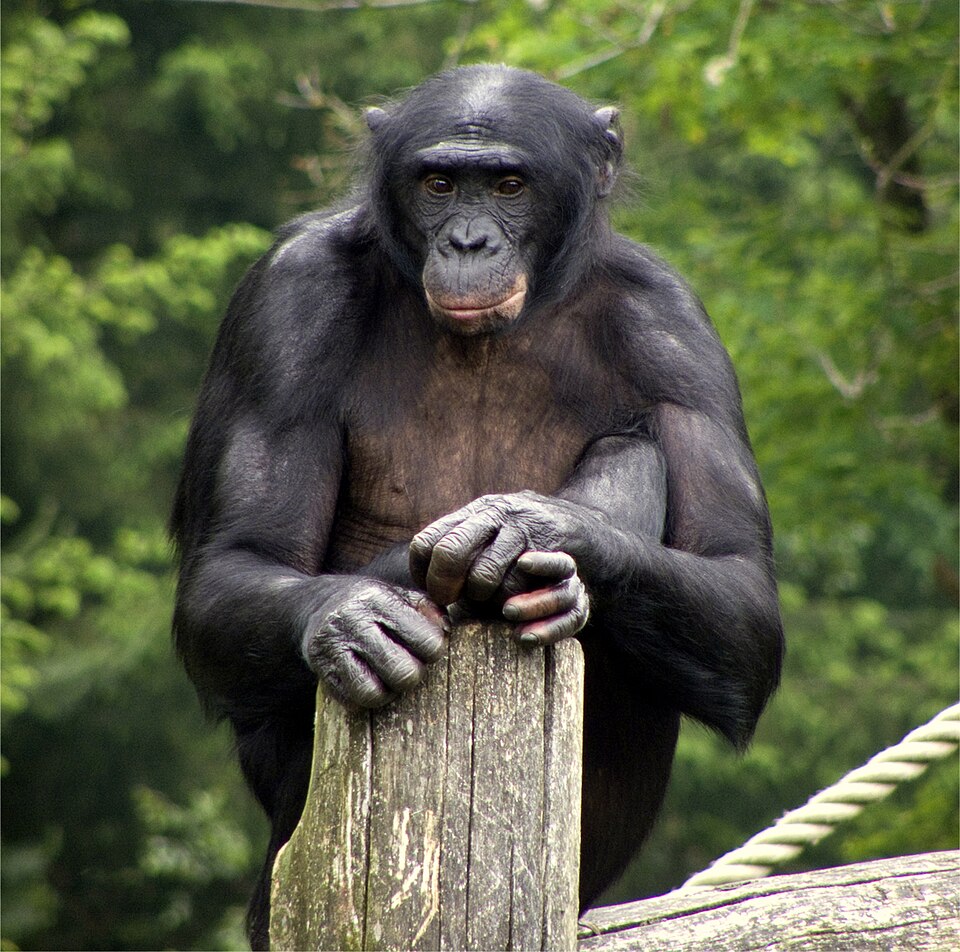
The bonobo (; Pan paniscus), also historically called the pygmy chimpanzee, is the smallest species of great ape and one of the two making up the genus Pan (the other being the chimpanzee, Pan troglodytes). While bonobos are today recognized as a distinct species, they were initially thought to be a subspecies of Pan troglodytes, because of the physical similarities between the two species. Taxonomically, members of the chimpanzee/bonobo subtribe Panina - composed entirely by the genus Pan - are collectively termed panins.
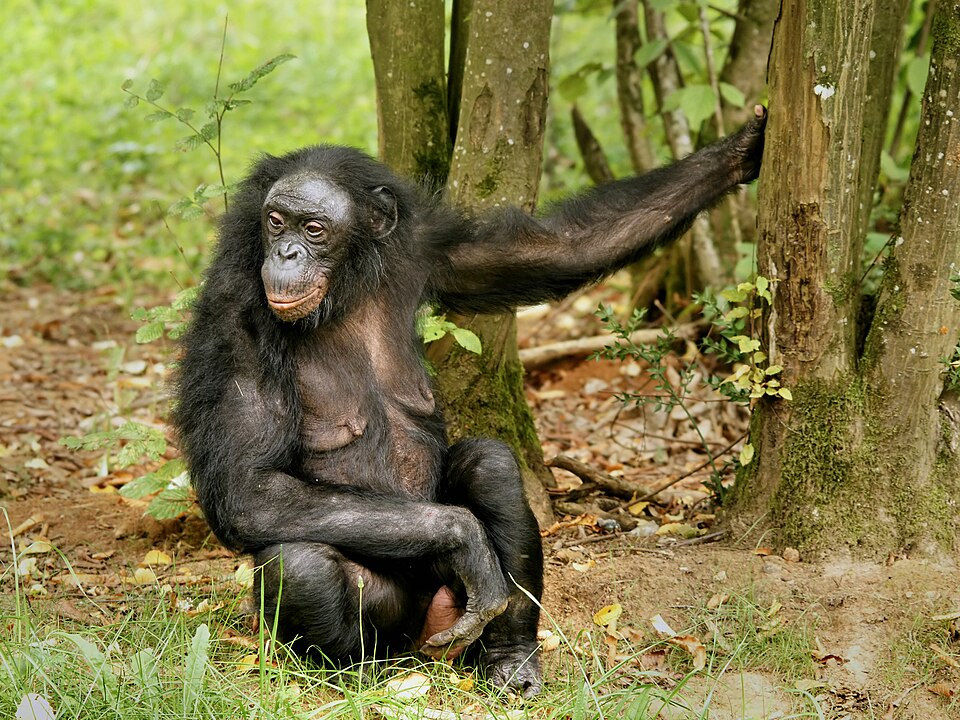
Bonobos are distinguished from common chimpanzees by relatively long limbs, pinker lips, a darker face, a tail-tuft through adulthood, and longer, parted hair on their heads. Some individuals have sparser, thin hair over parts of their bodies. Bonobos typically live 40 years in captivity; their lifespan in the wild is unknown, but it is almost certainly much shorter. The bonobo is found in a 500,000 km2 (190,000 sq mi) area within the Congo Basin of the Democratic Republic of the Congo (DRC), Central Africa. It is predominantly frugivorous, compared to the often highly omnivorous diets and hunting of small monkeys, duiker and other antelope exhibited by common chimpanzees. Bonobos inhabit primary and secondary forest, including seasonally inundated swamp forest. Because of political instability in the region, and the general timidity of bonobos, there has been relatively little field work done observing the species in its natural habitat.
Further reading
- Bonobo handshake · Vanessa Woods (2010)An account of bonobo behavior and wildlife rescue and conservation in Africa.Find a copy: AbeBooks · Amazon · WorldCat
- Our Inner Ape · Frans de Waal (2005)Examines bonobo behavior and what it reveals about human behavior.Find a copy: AbeBooks · Amazon · WorldCat
Bonobo is one of the 3D puzzles in World Artifacts: turn a cloud of broken pieces until it lines up. For iPhone, iPad, Apple Vision Pro and Android.

