World Artifacts › Atlas › Côte d'Ivoire
Attiéké
The cassava couscous with fish.
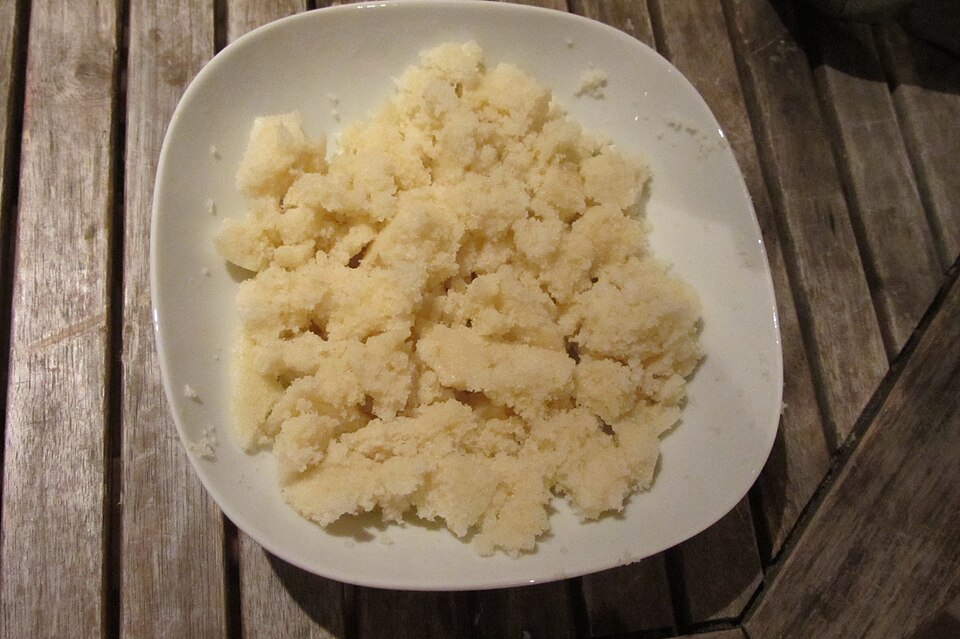
Acheke (Bambara: cɛkɛ) (Nzema; Akyɛkɛ) (correct spelling being attiéké (Ivory Coast) or akyeke (Ghana)), is a dish made from cassava that is popular and traditional in the Côte d’Ivoire and Ghana. The dish is prepared from fermented cassava pulp that has been grated or granulated. Dried acheke is also prepared, which is similar in texture to couscous.
Attiéké is a culinary specialty of the lagoon people (Ebrié, Adjoukrou, Alladjan, Abidji, Avikam, Ahizi, Attie) of southern Côte d’Ivoire and the Nzema people of Ghana's Western Region.
The word attiéké comes from the word "adjèkè" from the Ebrié language spoken in southern Côte d'Ivoire. The pronunciation of the word was distorted by the Bambara transporters into "atchèkè" and then by the French colonists into "attiéké". It is made from grated cassava that is fermented, and is flavorful when eaten with fried fish with ground spicy pepper garnished with chopped pepper, and onions with a little seasoning for taste added mixed with regular oil.
Attiéké is an accessible and affordable meal that has become a staple in family meals, but also in restaurants and during ceremonies. The knowledge and skills related to the making of the dish play an important role in the social life of communities. Among Ghana's Nzema community, one is said not to be a true Nzema if they have never had akyeke.
Attiéké is one of the 3D puzzles in World Artifacts: turn a cloud of broken pieces until it lines up. For iPhone, iPad, Apple Vision Pro and Android.

