World Artifacts › Atlas › Chile
Cueca Dancers
The cueca is danced as a chase: the man circles, the woman turns away, and the handkerchiefs stand in for the wings of a rooster and hen. It was made the national dance by decree in 1979.
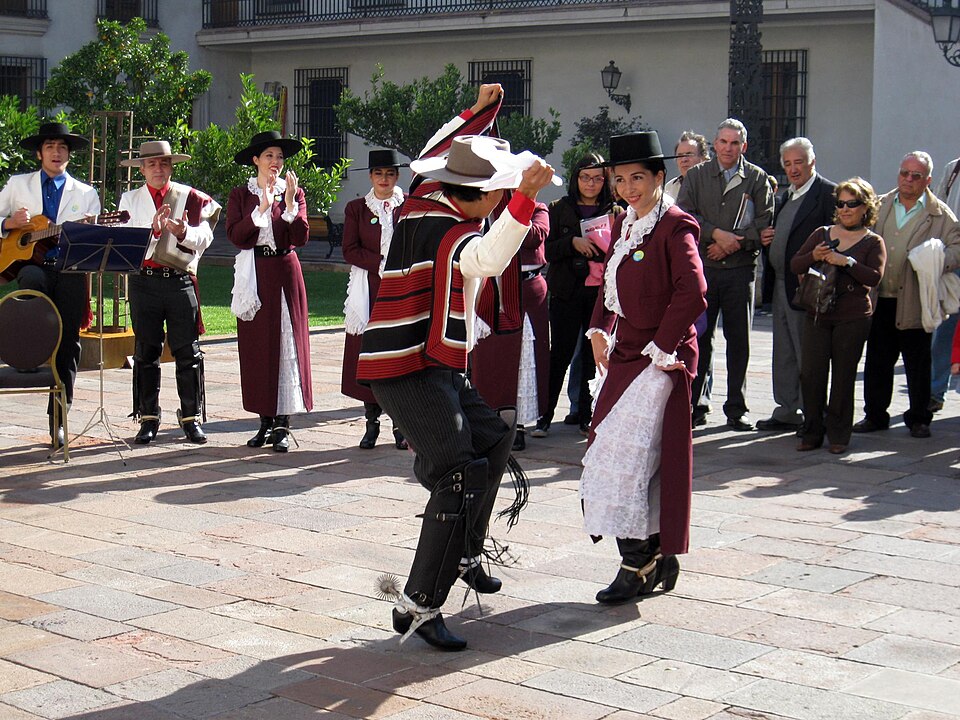
Cueca (Spanish pronunciation: [ˈkweka]) is a family of musical styles and associated dances in which 'the dancers, who carry a handkerchief in their right hand, trace circular figures, with turns and half-turns, interrupted by various flourishes.' It dates back to the late 18th century, and its origin is disputed; there are various theories or schools of thought regarding its provenance and evolution.
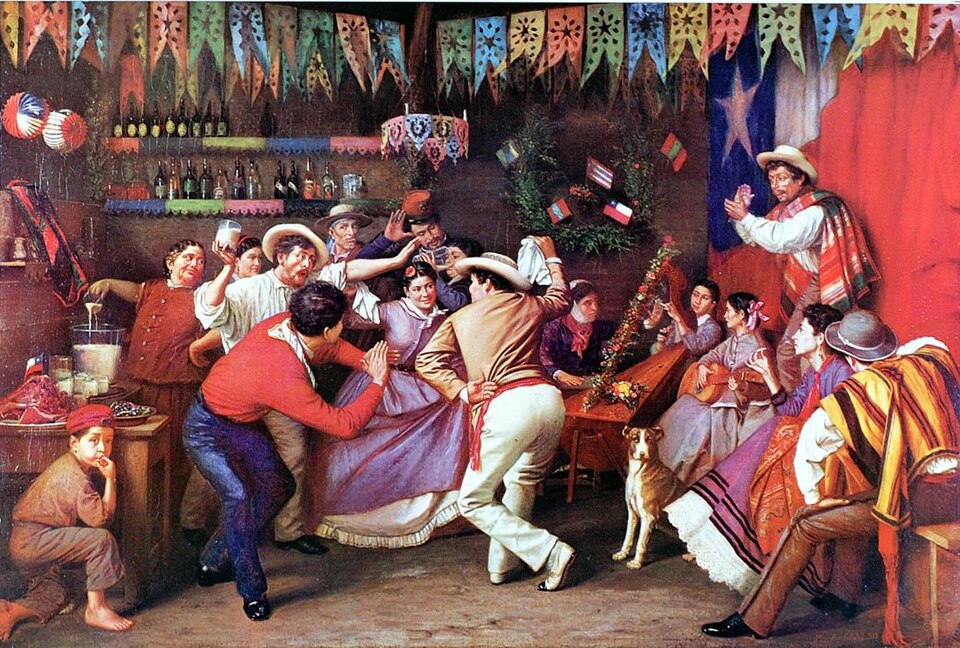
It is danced "under more or less different names", from Colombia to Argentina, Chile, and Bolivia, and it has different varieties, both in rhythm and choreography, depending on the regions and the periods; "the only thing that differentiates them is the local color they acquire in different places, as well as the number of measures, which varies from one to another."
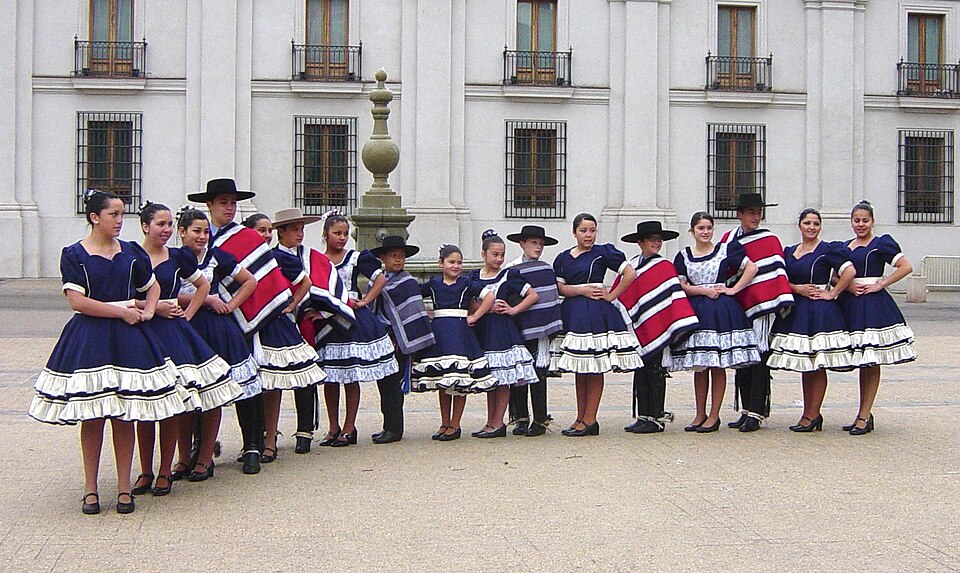
The Chilean government officially declared the cueca the "national dance of Chile" through Decree No. 23 of November 6, 1979, issued by the Ministry of the General Secretariat of Government, and designated September 17 as the "National Cueca Day" through Decree No. 54 of October 28, 1989, issued by the same ministry. Likewise, the Bolivian government declared the Bolivian cueca an intangible cultural heritage of the country on November 30, 2015, and established the first Sunday of October as the "Day of the Bolivian Cueca".
Cueca Dancers is one of the 3D puzzles in World Artifacts: turn a cloud of broken pieces until it lines up. For iPhone, iPad, Apple Vision Pro and Android.

