World Artifacts › Atlas › Chile
Moai
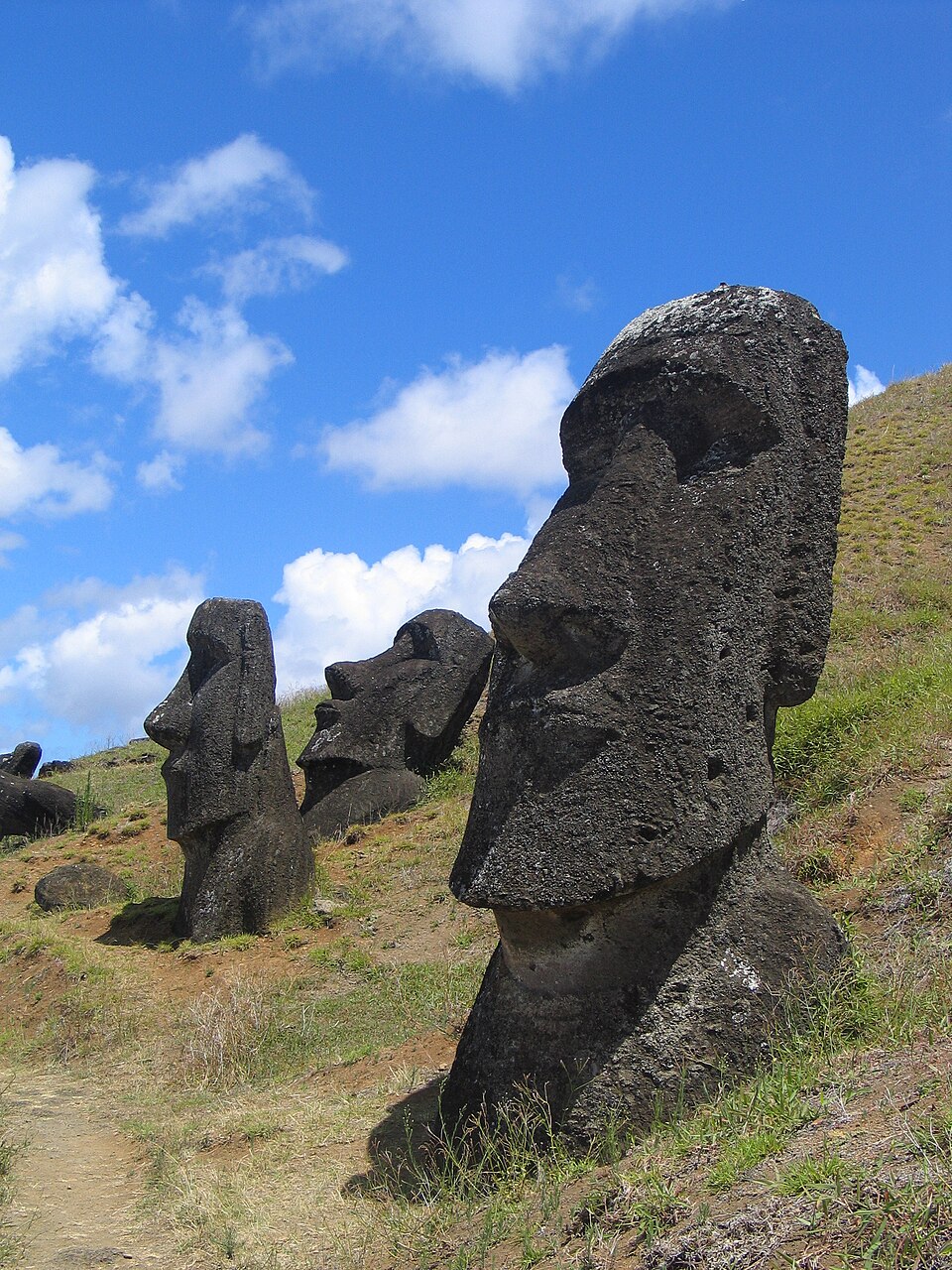
Almost every moai faces inland, watching over its village rather than the sea. The famous heads are whole bodies, buried to the shoulders by centuries of sliding soil.
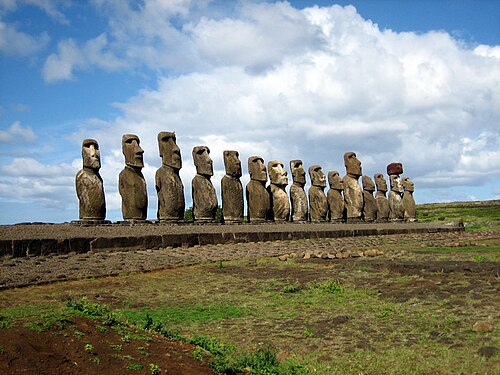
Moai or moꞌai ( MOH-eye; Rapa Nui: moꞌai, lit. 'statue', pronounced [ˈmoʔai]; Spanish: moái) are monolithic human figures carved from stone by the Rapa Nui people, on Rapa Nui (Easter Island) in eastern Polynesia between the years 1250 and 1500. Nearly half are still at Rano Raraku, the main moai quarry, but hundreds were transported from there and set on stone platforms called ahu around the island's perimeter. Almost all moai have overly large heads, which account for three-eighths of the size of the whole statue. They also have no legs. The moai are chiefly the living faces (aringa ora) of deified ancestors (aringa ora ata tepuna).
Although the stone moai are the most famous, the Rapa Nui also carved small wooden moai: moꞌai kavakava (male), moꞌai paepae/papa (female), and moꞌai taŋata (male).
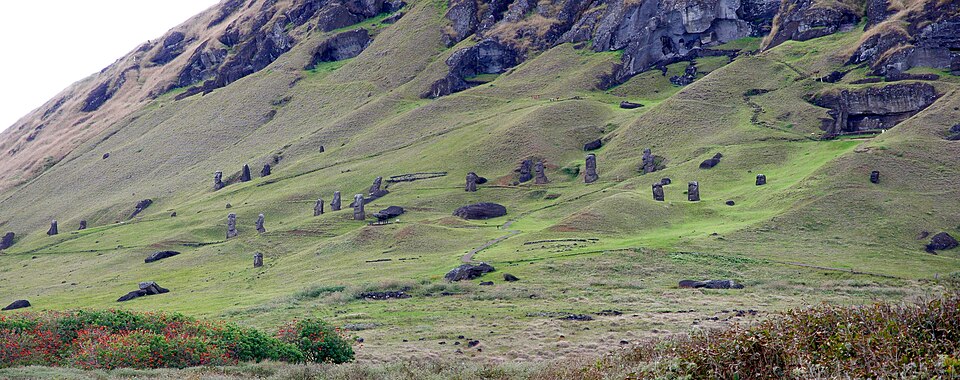
The statues still gazed inland across their clan lands when Europeans first visited the island in 1722, but all of them had fallen by the latter part of the 19th century. The moai were toppled in the late 18th and early 19th centuries, possibly as a result of European contact or internecine tribal wars.
Further reading
- The statues that walked · Terry L. Hunt (2011)Argues about how the Easter Island statues were moved, covering the island's antiquities and prehistoric sculpture.Find a copy: AbeBooks · Amazon · WorldCat
- Easter Island, Earth Island Hardcover - May, 1992 · PAUL BAHN AND JOHN FLENLEY (1992)Examines Easter Island's history and its ecological story.Find a copy: AbeBooks · Amazon · WorldCat
Moai is one of the 3D puzzles in World Artifacts: turn a cloud of broken pieces until it lines up. For iPhone, iPad, Apple Vision Pro and Android.

