World Artifacts › Atlas › China
Chinese Alligator
The Chinese alligator is small, shy and one of the rarest crocodilians alive, down to a couple of hundred in the wild. It hibernates in burrows through the winter, and some scholars think it is what the Chinese dragon was drawn from.
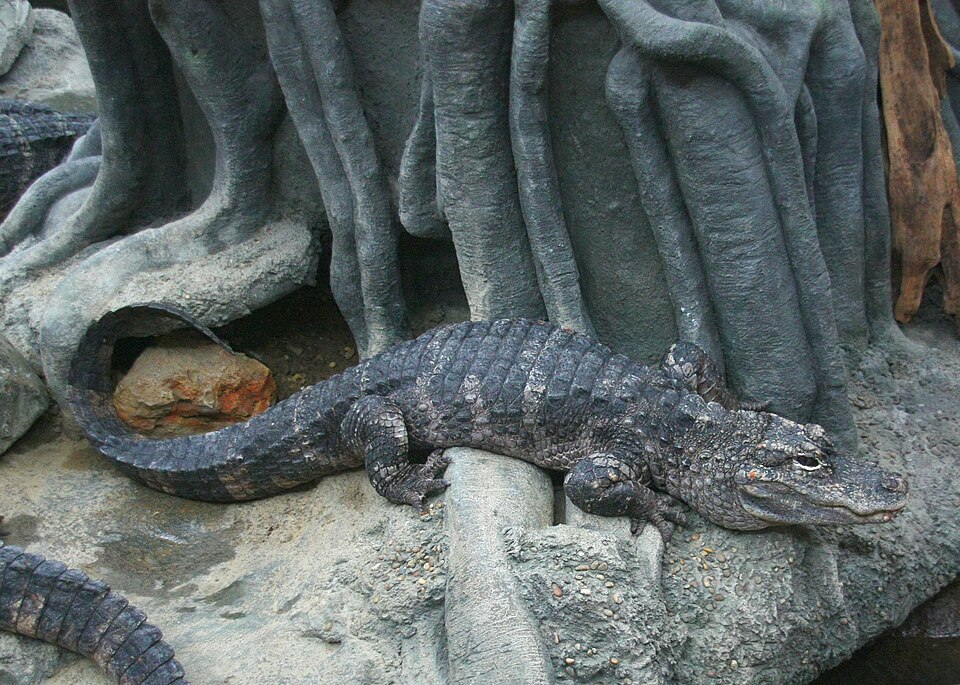
The Chinese alligator (Alligator sinensis; simplified Chinese: 鼍; traditional Chinese: 鼉; pinyin: tuó), also known as the Yangtze alligator (simplified Chinese: 扬子鳄; traditional Chinese: 揚子鱷; pinyin: yángzǐ'è), China alligator, or historically the muddy dragon, is a crocodilian endemic to China. It and the American alligator (A. mississippiensis) are the only living species in the genus Alligator of the family Alligatoridae. Dark gray or black in color with a fully armored body, the Chinese alligator grows to 1.5-2.1 metres (5-7 ft) in length and weighs 36-45 kilograms (80-100 lb) as an adult. It brumates in burrows in winter and is nocturnal in summer. Mating occurs in early summer, with females most commonly producing 20-30 eggs, which are smaller than those of any other crocodilian. The species is an opportunistic feeder, primarily eating fish and invertebrates. A vocal species, adults bellow during the mating season and young vocalize to communicate with their parents and other juveniles. Captive specimens have reached age 70, and wild specimens can live past 50.

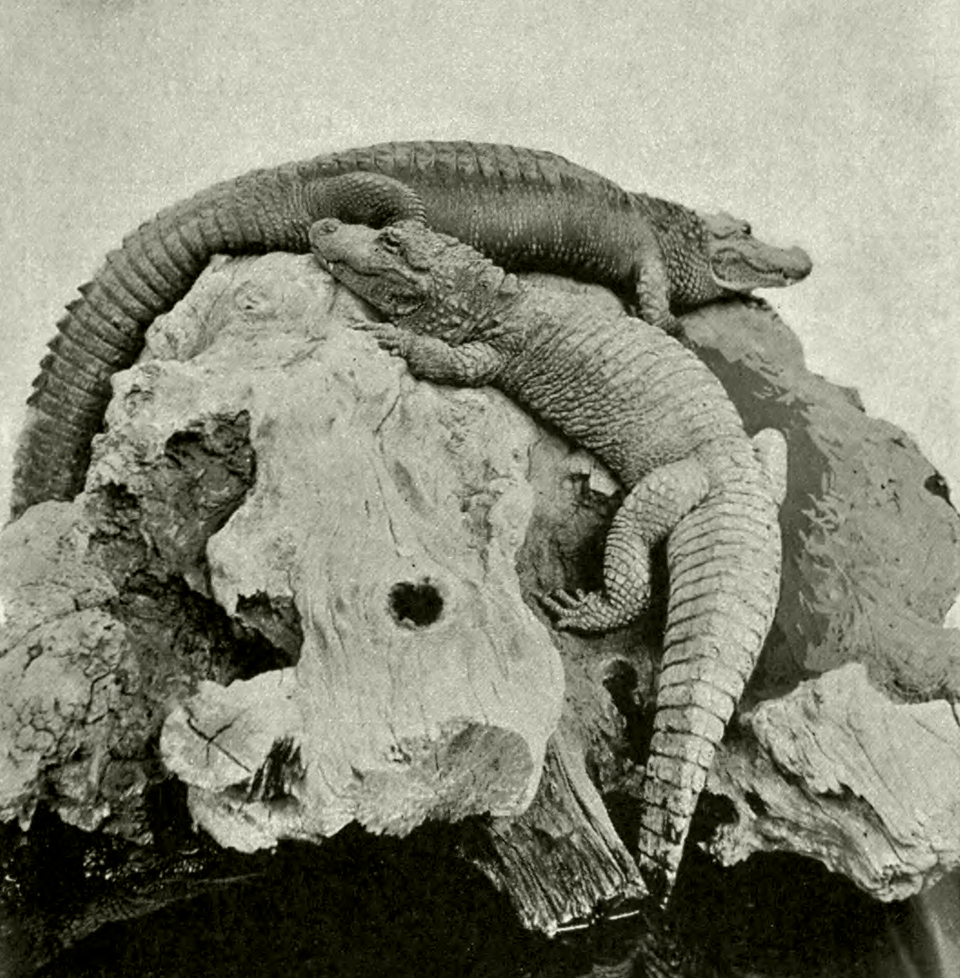
Further reading
Chinese Alligator is one of the 3D puzzles in World Artifacts: turn a cloud of broken pieces until it lines up. For iPhone, iPad, Apple Vision Pro and Android.

