World Artifacts › Atlas › China
Fu Banner
The character for fortune is hung upside down on purpose, because upside down and arrives sound the same, so a reversed sign reads as fortune has arrived. Visitors are expected to point out that it is upside down, which is the joke.
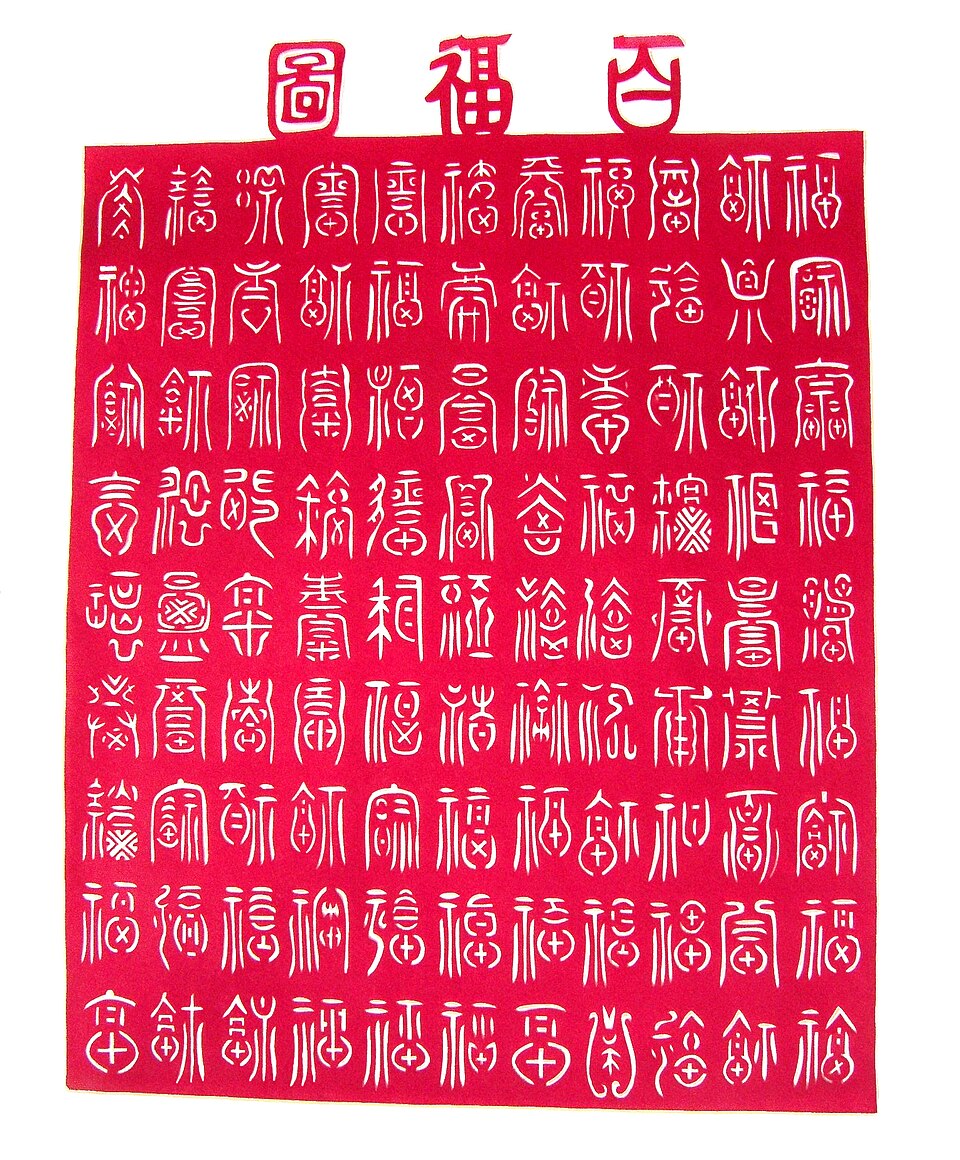
The Chinese character fu (福; fú ), meaning 'fortune' or 'good luck', is represented both as a Chinese ideograph and, at times, pictorially, in one of its homophonous forms. It is often found on a figurine of the male god of the same name, one of the trio of "star gods" Fú, Lù, and Shòu.
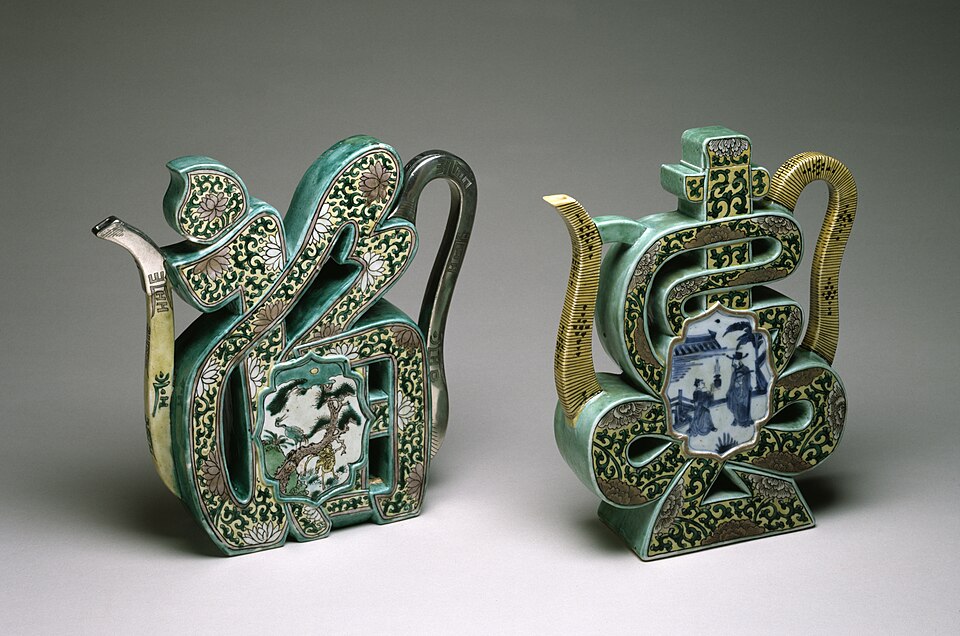
Mounted fu are a widespread Chinese tradition associated with Chinese New Year and can be seen on the entrances of many Chinese homes worldwide. The characters are generally printed on a square piece of paper or stitched in fabric. The practice is universal among Chinese people regardless of socioeconomic status, and dates to at least the Song dynasty (960 - 1279 CE).
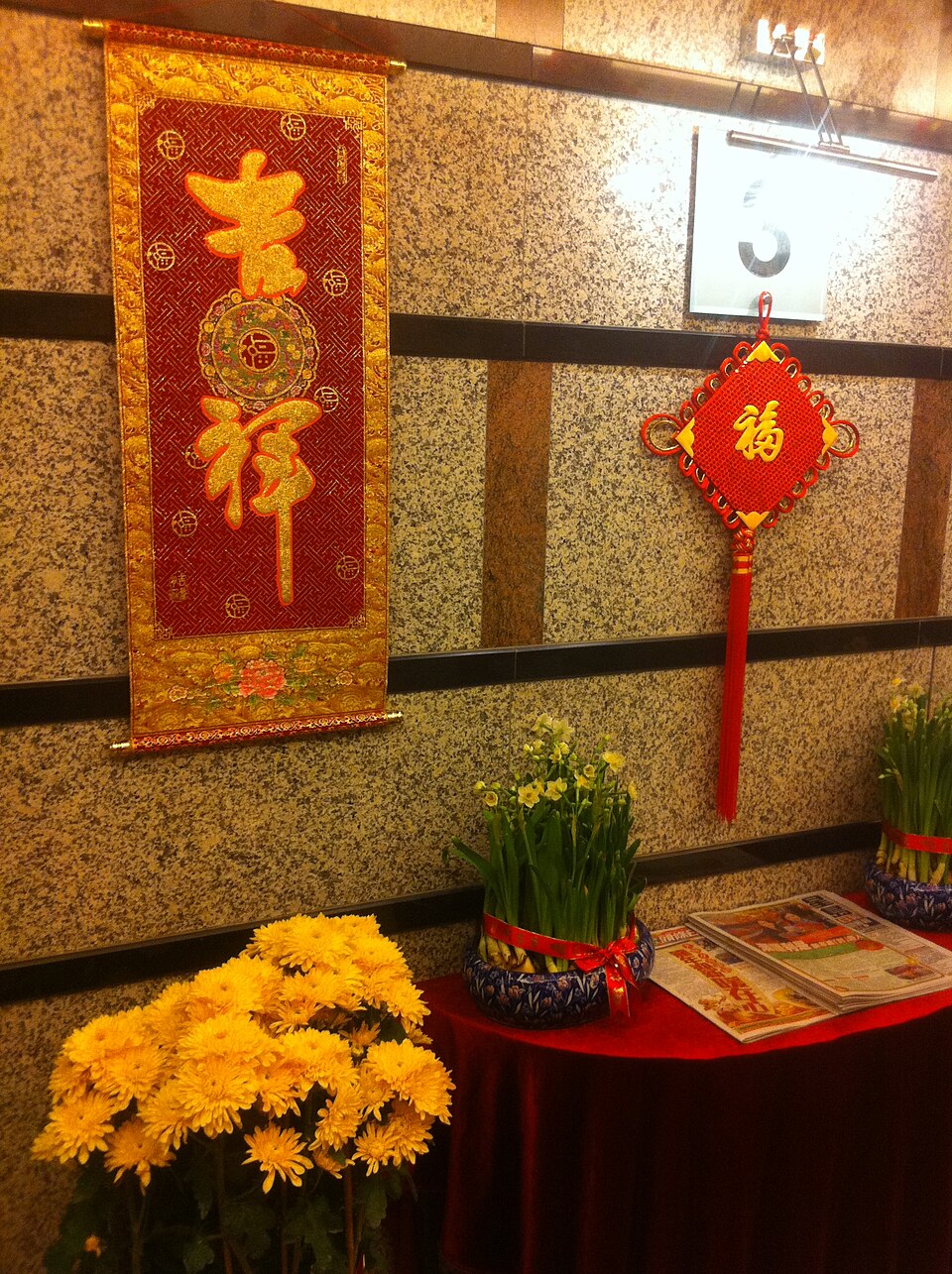
When displayed as a Chinese ideograph, fu is often displayed upside-down on diagonal red squares. The reasoning is based on a wordplay: in nearly all varieties of Chinese, the words for 'upside-down' and 'to arrive' are homophonous (dào - 倒 and 到, respectively). Therefore, the phrase 'upside-down fu' sounds nearly identical to the phrase 'good luck arrives'. Pasting the character upside-down on a door or doorpost thus translates into a wish for prosperity to descend upon a dwelling.
Further reading
- A dictionary of Chinese symbols · Eberhard, Wolfram (1986)A dictionary of Chinese symbols, covering symbolism in art and civilization.Find a copy: AbeBooks · Amazon · WorldCat
- Outlines of Chinese symbolism and art motives · C. A. S. Williams (1932)Outlines Chinese symbolism and art motives, with folklore and symbolism in social life and customs.Find a copy: AbeBooks · Amazon · WorldCat
Fu Banner is one of the 3D puzzles in World Artifacts: turn a cloud of broken pieces until it lines up. For iPhone, iPad, Apple Vision Pro and Android.

