World Artifacts › Atlas › China
Guardian Lion
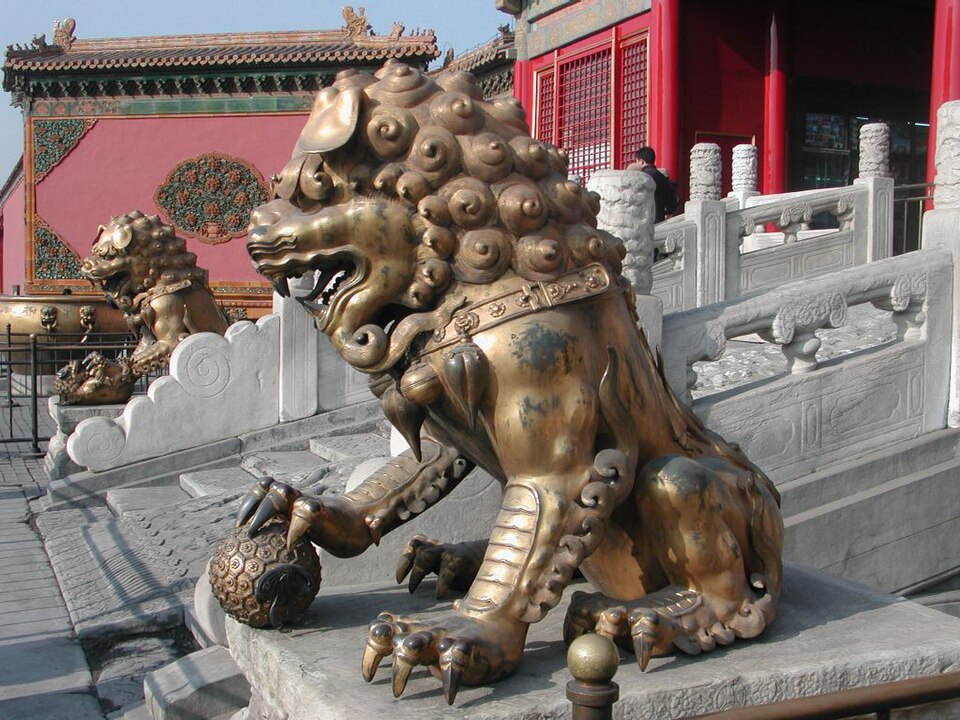
Guardian lions come in pairs: the male has a ball under his paw and the female a cub under hers. The ball is usually read as the world, and the pair together as power and continuity, which is why they sit outside banks as well as temples.
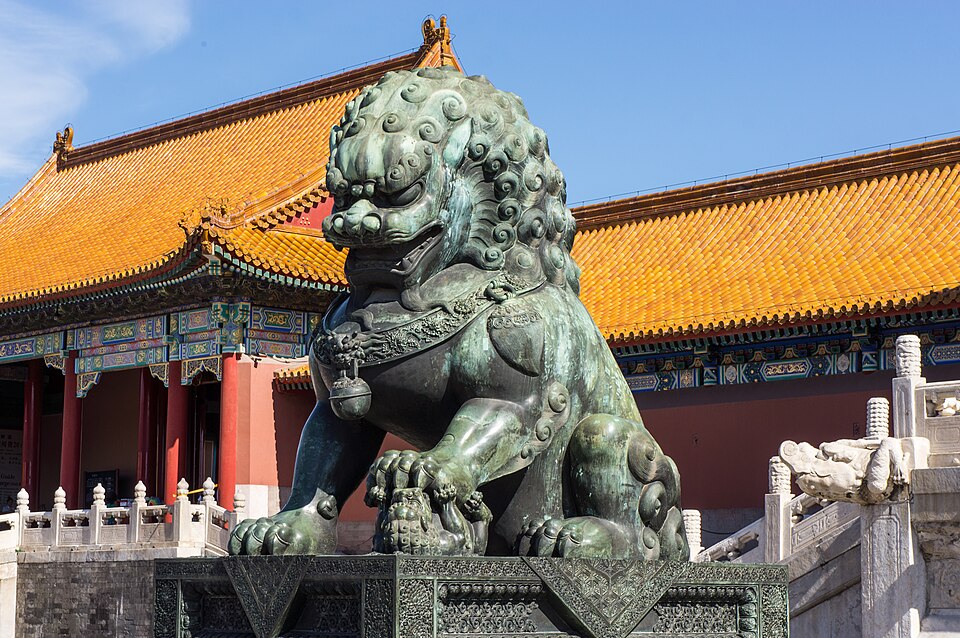
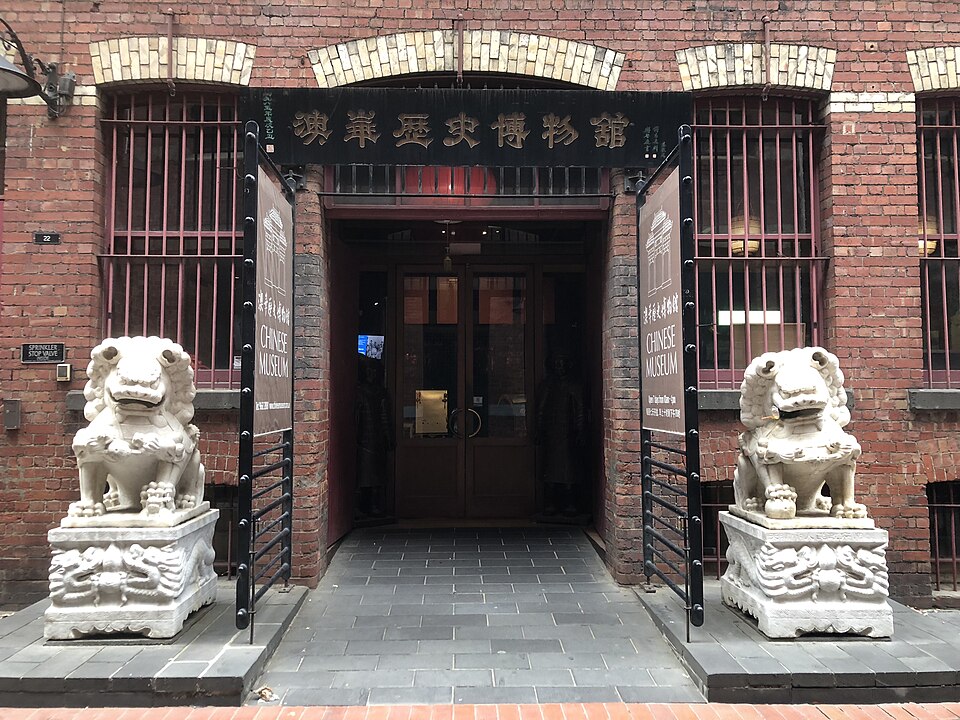
Chinese guardian lions, or imperial guardian lions, are a traditional Chinese architectural ornament. Typically made of stone, they are also known as stone lions or shishi (石獅; shíshī). They are known in colloquial English as lion dogs, foo dogs, or fu dogs. The concept, which originated and became popular in Chinese Buddhism, features a pair of Asiatic lions - often one male with a ball that represents the material elements and one female with a cub that represents the element of spirit - that were thought to protect the building from harmful spiritual influences and harmful people that might be a threat. Used in imperial Chinese palaces and tombs, the lions subsequently spread to other parts of Asia including Japan (see komainu), Okinawa, Korea, Mongolia, the Philippines, Tibet, Thailand, Myanmar, Vietnam, Sri Lanka, India, Nepal, Cambodia, Laos, Singapore, and Malaysia.
Further reading
Guardian Lion is one of the 3D puzzles in World Artifacts: turn a cloud of broken pieces until it lines up. For iPhone, iPad, Apple Vision Pro and Android.

