World Artifacts › Atlas › China
Lion Dance Head
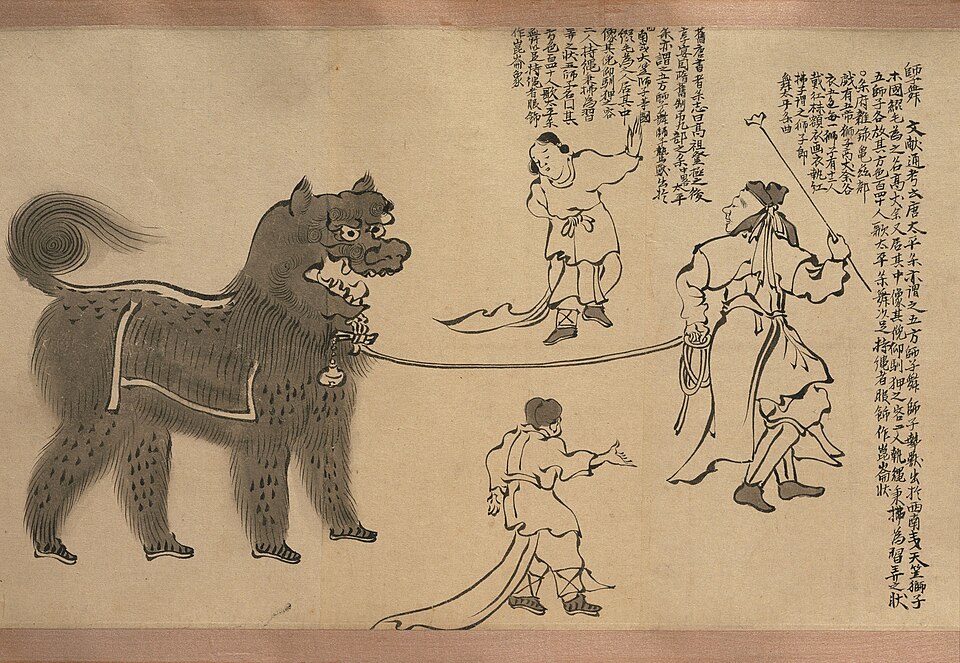
China has no lions, so the lion of the dance was imagined from descriptions brought along the trade routes, which is why it looks like nothing alive. The dance ends with the lion eating a lettuce hung above the door and spitting the leaves back at the crowd.
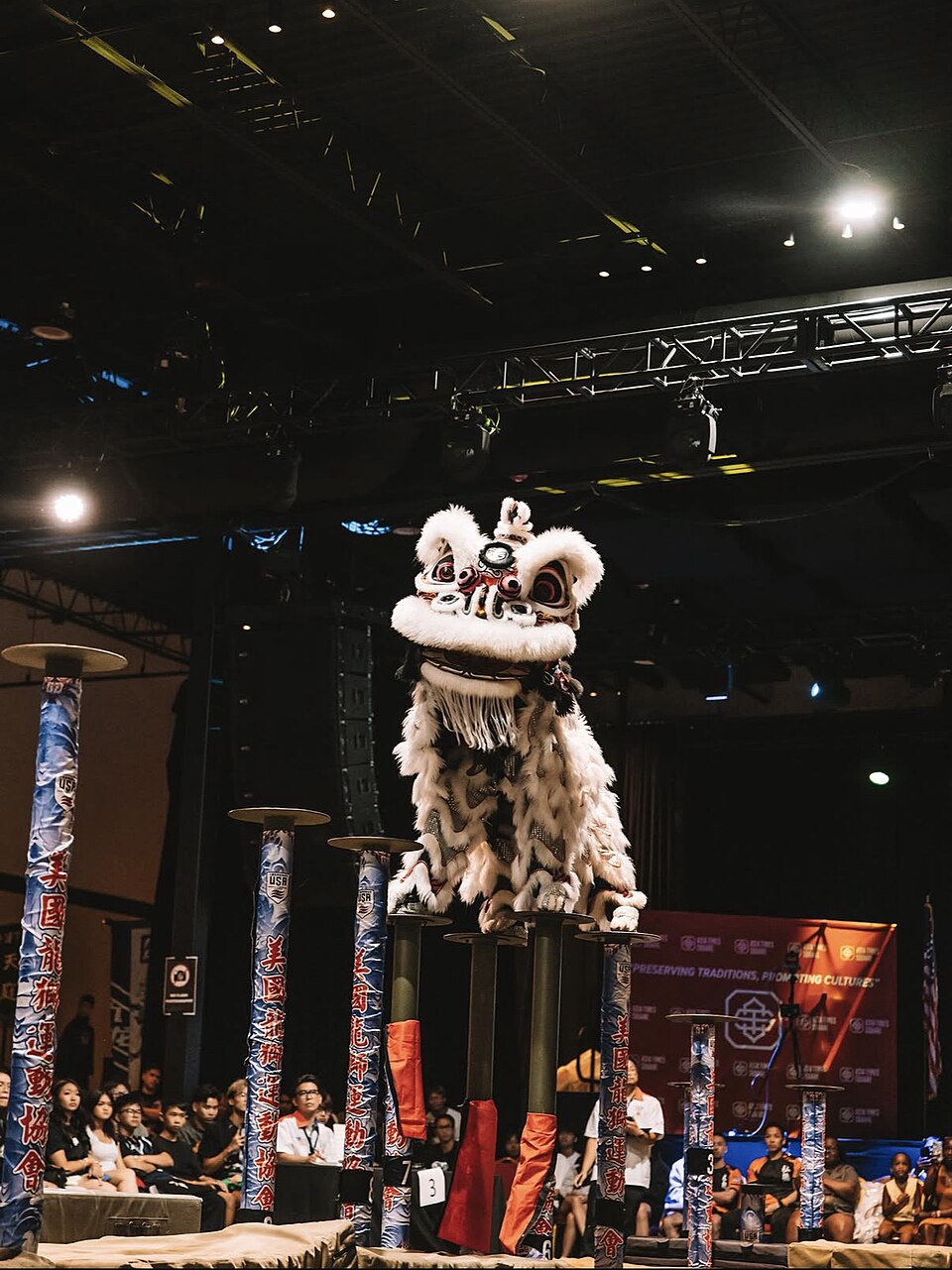
Lion dance (traditional Chinese: 舞獅; simplified Chinese: 舞狮; pinyin: wǔshī) is a form of traditional dance in Chinese culture and other Asian countries in which performers mimic a lion's movements in a lion costume to bring good luck and fortune and to ward off evil. The lion dance is usually performed during the Lunar New Year and other traditional, cultural and religious festivals. It may also be performed at important occasions such as business opening events, special celebrations or wedding ceremonies, or may be used to honor special guests by the Chinese communities.
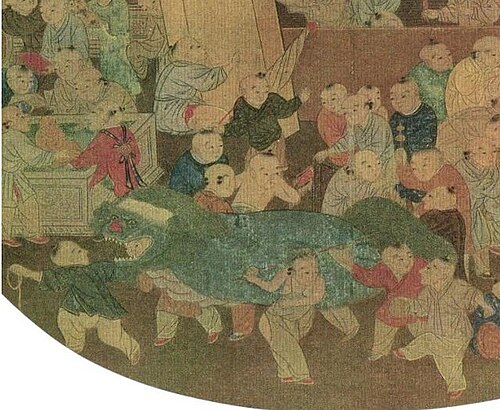
The Chinese lion dance is normally performed by two dancers, one of whom manipulates the head while the other manipulates the tail of the lion. It is distinguishable from the dragon dance which is performed by many people who hold the long sinuous body of the dragon on poles. Some fundamental movements of the lion dance can be found in Chinese martial arts, and it is commonly performed to a vigorous drumbeat with gongs and cymbals.
Further reading
- Mooncakes and hungry ghosts : festivals of China · Carol Stepanchuk (1992)Covers Chinese festivals and customs, including the Lunar New Year, the occasion for lion dances.Find a copy: AbeBooks · Amazon · WorldCat
- The History of Chinese Dance (Traditional Chinese Arts and Culture) · Wang Kefen (1985)History of Chinese dance, with its social life and customs.Find a copy: AbeBooks · Amazon · WorldCat
Lion Dance Head is one of the 3D puzzles in World Artifacts: turn a cloud of broken pieces until it lines up. For iPhone, iPad, Apple Vision Pro and Android.

