World Artifacts › Atlas › China
Ming Vase
Blue-and-white porcelain was made with cobalt imported from Persia and was, from the start, largely an export product shaped to foreign taste. Chinese collectors of the time often preferred plain wares.
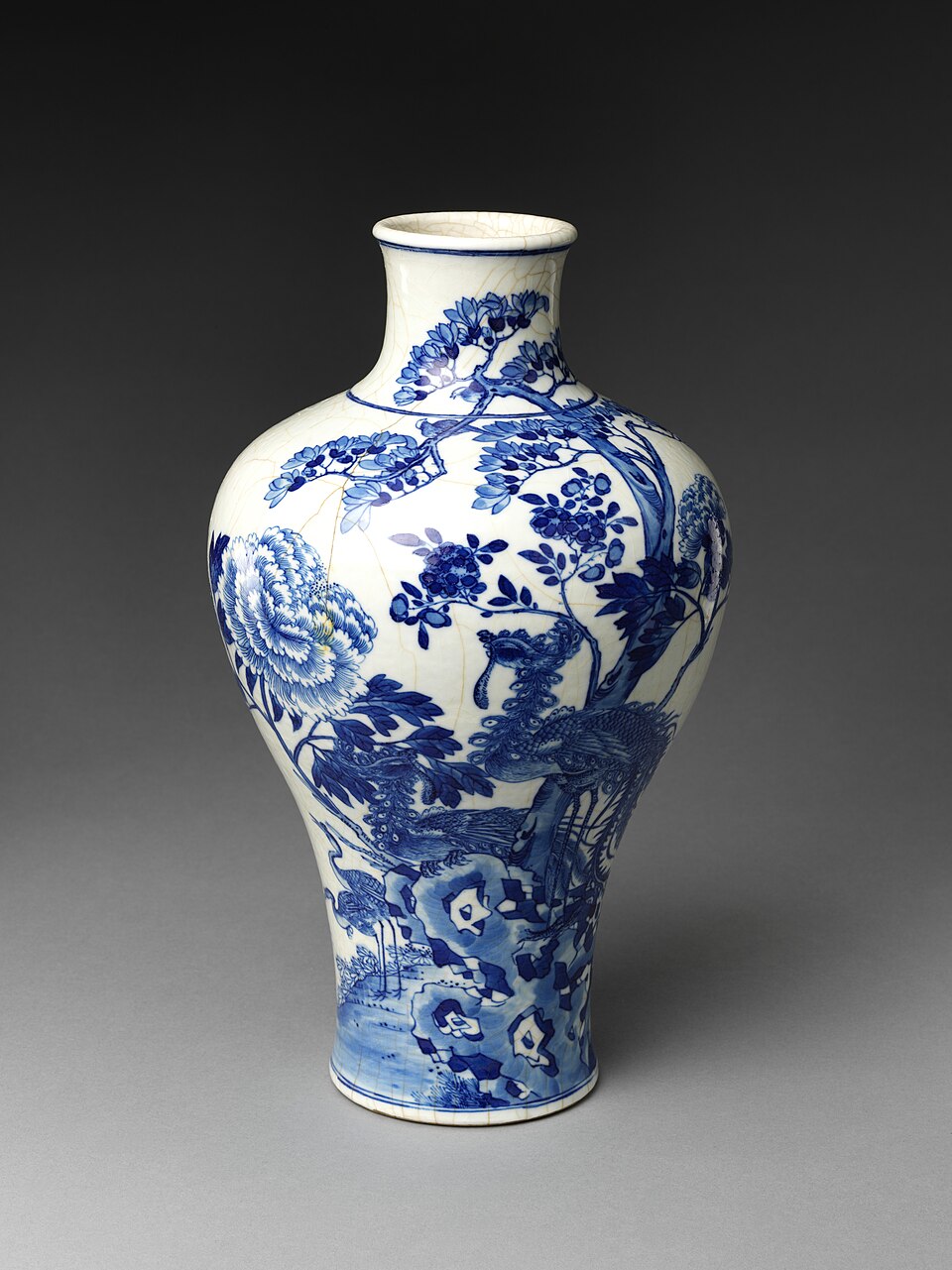
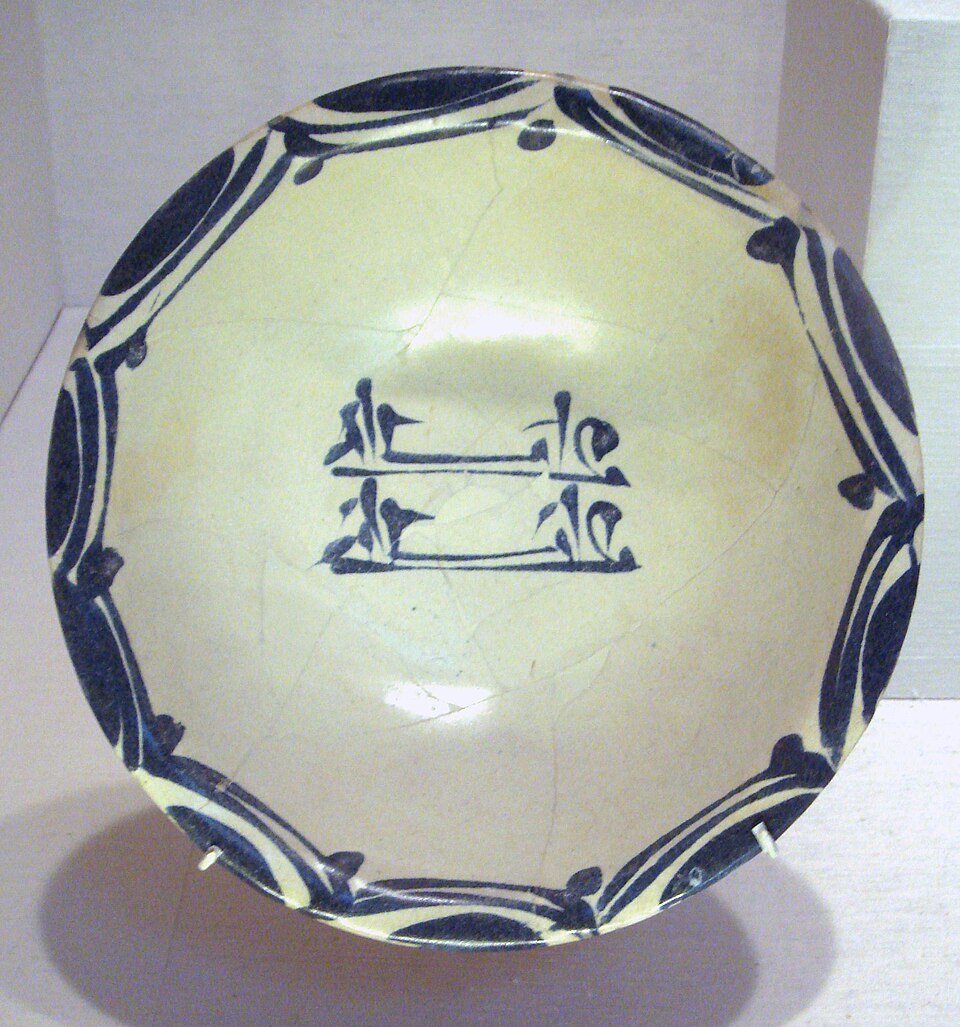
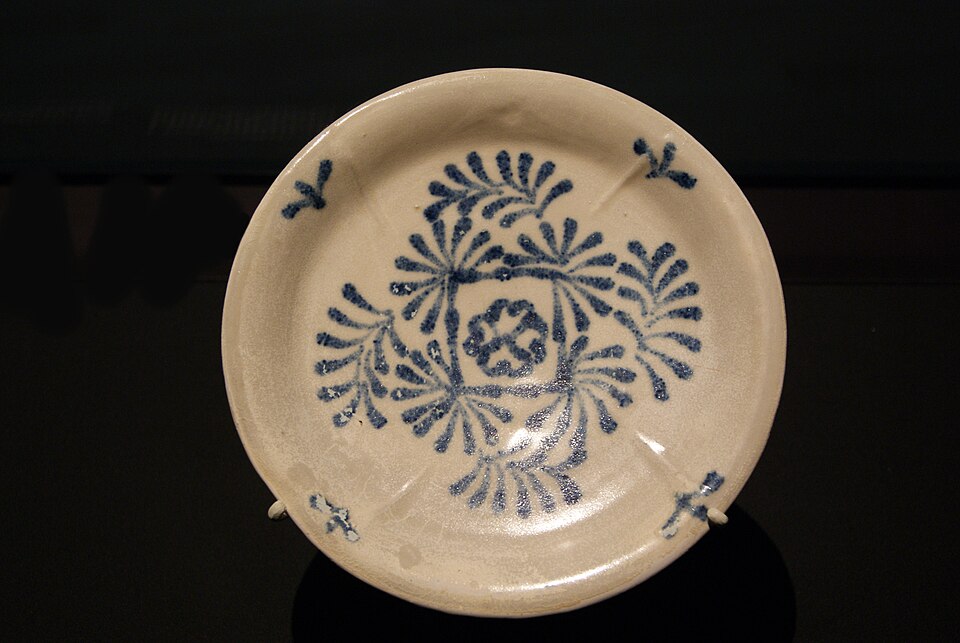
"Blue and white pottery" (Chinese: 青花瓷; pinyin: qīng-huā cí; lit. 'Blue flowers/patterns') covers a wide range of white pottery and porcelain decorated under the glaze with a blue pigment, generally cobalt oxide. The decoration was commonly applied by hand, originally by brush painting, but nowadays by stencilling or by transfer-printing, though other methods of application have also been used. The cobalt pigment is one of the very few that can withstand the highest firing temperatures that are required, in particular for porcelain, which partly accounts for its long-lasting popularity. Historically, many other colours required overglaze decoration and then a second firing at a lower temperature to fix that.
Further reading
- Blue and White · John Carswell (1985)Covers blue and white porcelain, including China trade porcelain.Find a copy: AbeBooks · Amazon · WorldCat
- The pilgrim art · Robert Finlay (2010)Covers the history and social aspects of Chinese porcelain and the porcelain industry.Find a copy: AbeBooks · Amazon · WorldCat
Ming Vase is one of the 3D puzzles in World Artifacts: turn a cloud of broken pieces until it lines up. For iPhone, iPad, Apple Vision Pro and Android.

