World Artifacts › Atlas › China
Paper Cut
Paper cuts are made freehand with scissors or a small knife, in red, and stuck to windows so the light comes through them. A fish appears constantly because the word for fish sounds like the word for surplus, so the picture is a wish for more than enough.
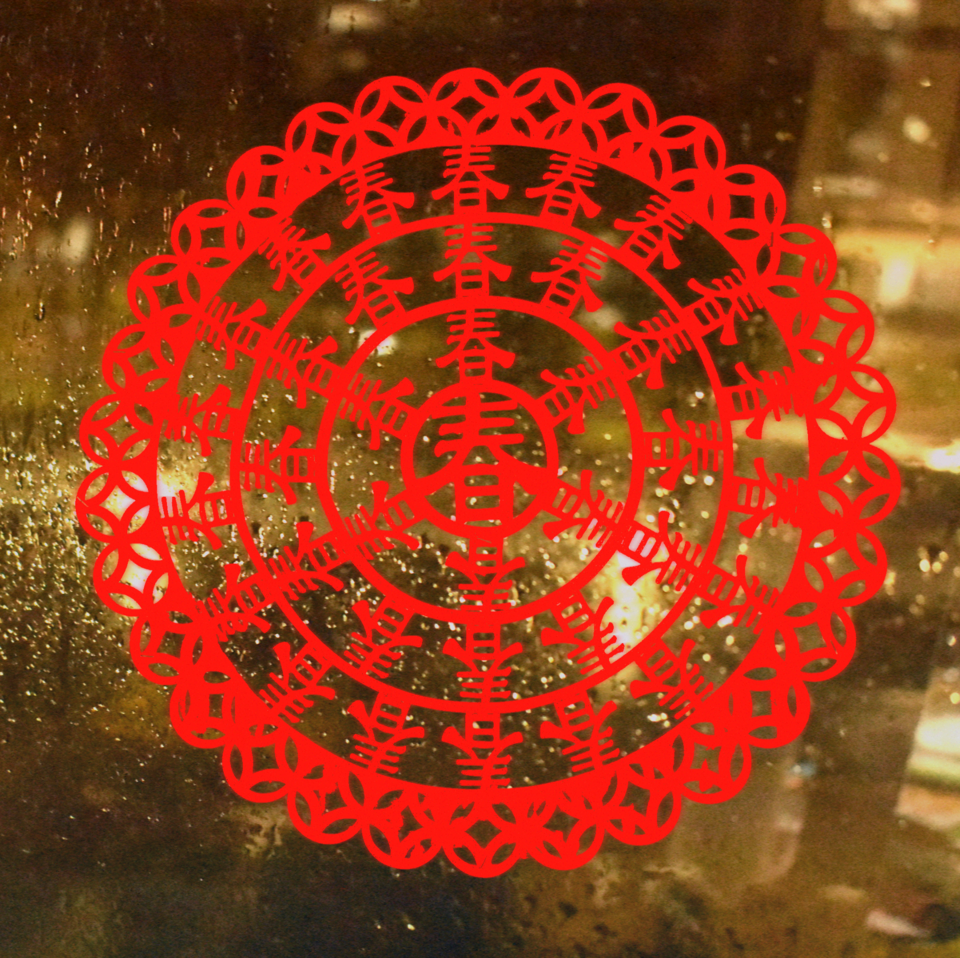
The traditional art of paper cutting (Chinese: 剪紙; pinyin: jiǎnzhǐ) in China may date back to the 2nd century CE, when paper was invented by Cai Lun, a court official of the Eastern Han dynasty. On May 20, 2006, paper cutting has been officially listed as one of the earliest intangible cultural heritages of China, issue by Shanxi Culture Department. It was put on the UNESCO Representative List of the Intangible Cultural Heritage of Humanity in 2009.
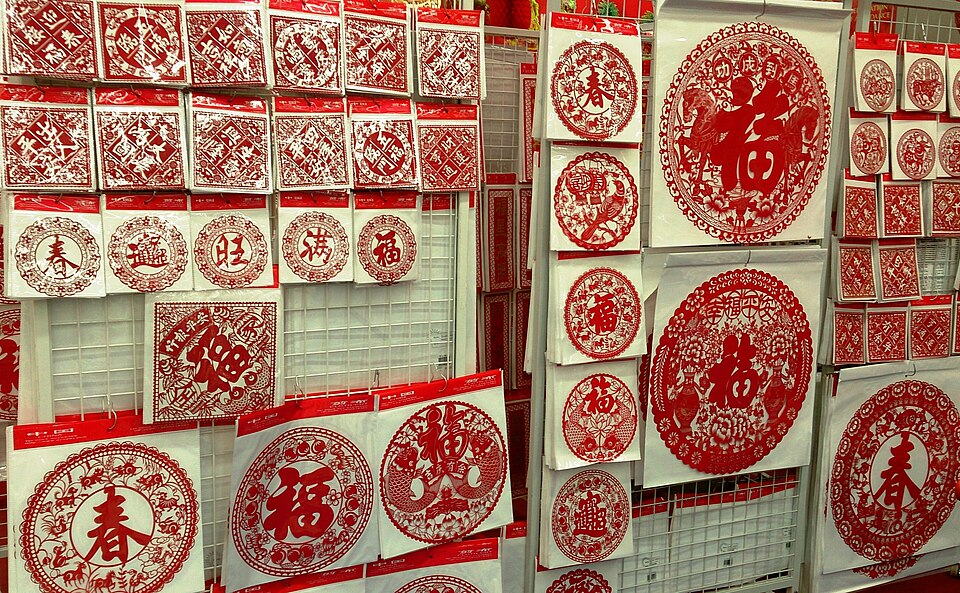
Prior to the invention of paper, ancient Chinese people used silver and gold leaf to create similar kinds of cut out decorations. As paper became more accessible, paper cutting became popular as a way of decorating doors and windows. These elaborate cutting designs are created with scissors or artwork knives and can include a variety of shapes, such as symbols and animals. When paper became more affordable in Eastern Han dynasty, paper-cutting became one of the most important types of Chinese folk art. Later, this art form spread to other parts of the world, with different regions adopting their own cultural styles.
Paper Cut is one of the 3D puzzles in World Artifacts: turn a cloud of broken pieces until it lines up. For iPhone, iPad, Apple Vision Pro and Android.

