World Artifacts › Atlas › China
Peking Opera Mask
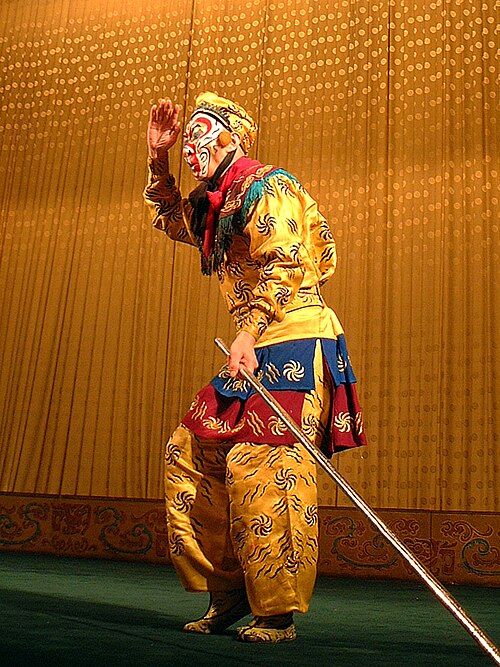
The painted face is a code readable from the back of the theatre: red for loyalty and courage, white for cunning and treachery, black for honesty and rough temper. The audience knows who a character is before he opens his mouth.
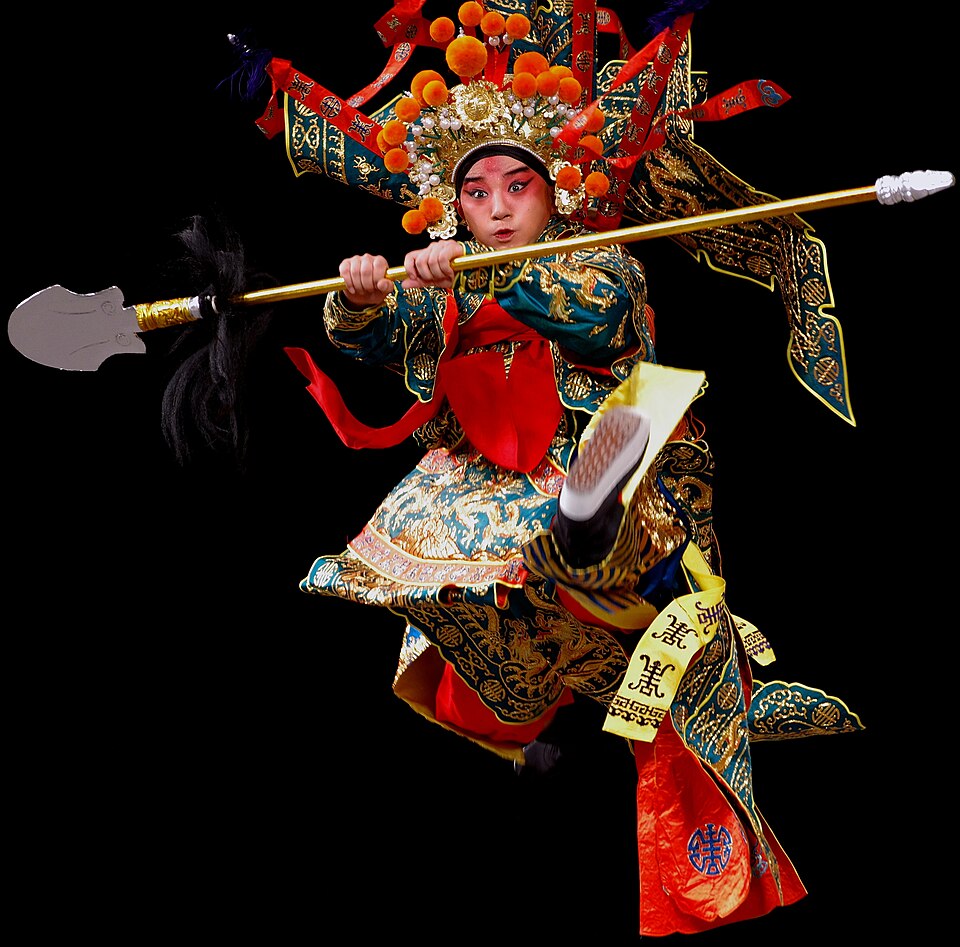
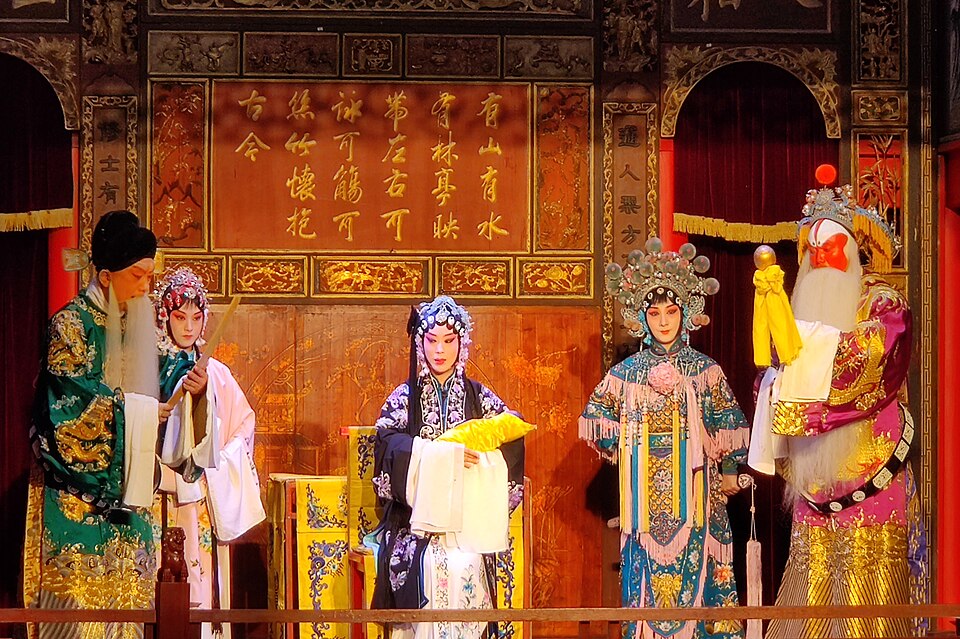
Peking opera, or Beijing opera, Jingju (simplified Chinese: 京剧; traditional Chinese: 京劇; pinyin: Jīngjù), is the dominant form of Chinese opera, which combines instrumental music, vocal performance, miming, martial arts, dance and acrobatics. It arose in Beijing in the mid-Qing dynasty (1644-1912) and became fully developed and recognized by the mid-19th century. The form was extremely popular in the Qing court and has come to be regarded as one of the cultural treasures of China. Major performance troupes are based in Beijing, Tianjin and Shanghai. The art form is also preserved in Taiwan, where it is also known as Guójù (Chinese: 國劇; lit. 'National opera'). It has also spread to other regions such as the United States and Japan.
Further reading
- Peking opera · Elizabeth Halson (1966)A guide to Peking opera, with stories, plots, analysis, history and criticism.Find a copy: AbeBooks · Amazon · WorldCat
- Chinese theatre and the actor in performance · Jo Riley (1997)Covers Chinese theatre and opera, the actor in performance, and its history and criticism.Find a copy: AbeBooks · Amazon · WorldCat
Peking Opera Mask is one of the 3D puzzles in World Artifacts: turn a cloud of broken pieces until it lines up. For iPhone, iPad, Apple Vision Pro and Android.

