World Artifacts › Atlas › China
Seismoscope
In 132 AD Zhang Heng built a bronze urn with eight dragons; a tremor released a ball from one dragon's mouth into a bronze toad below, showing the direction of a quake. It reported one several hundred kilometres away that nobody in the capital had felt.
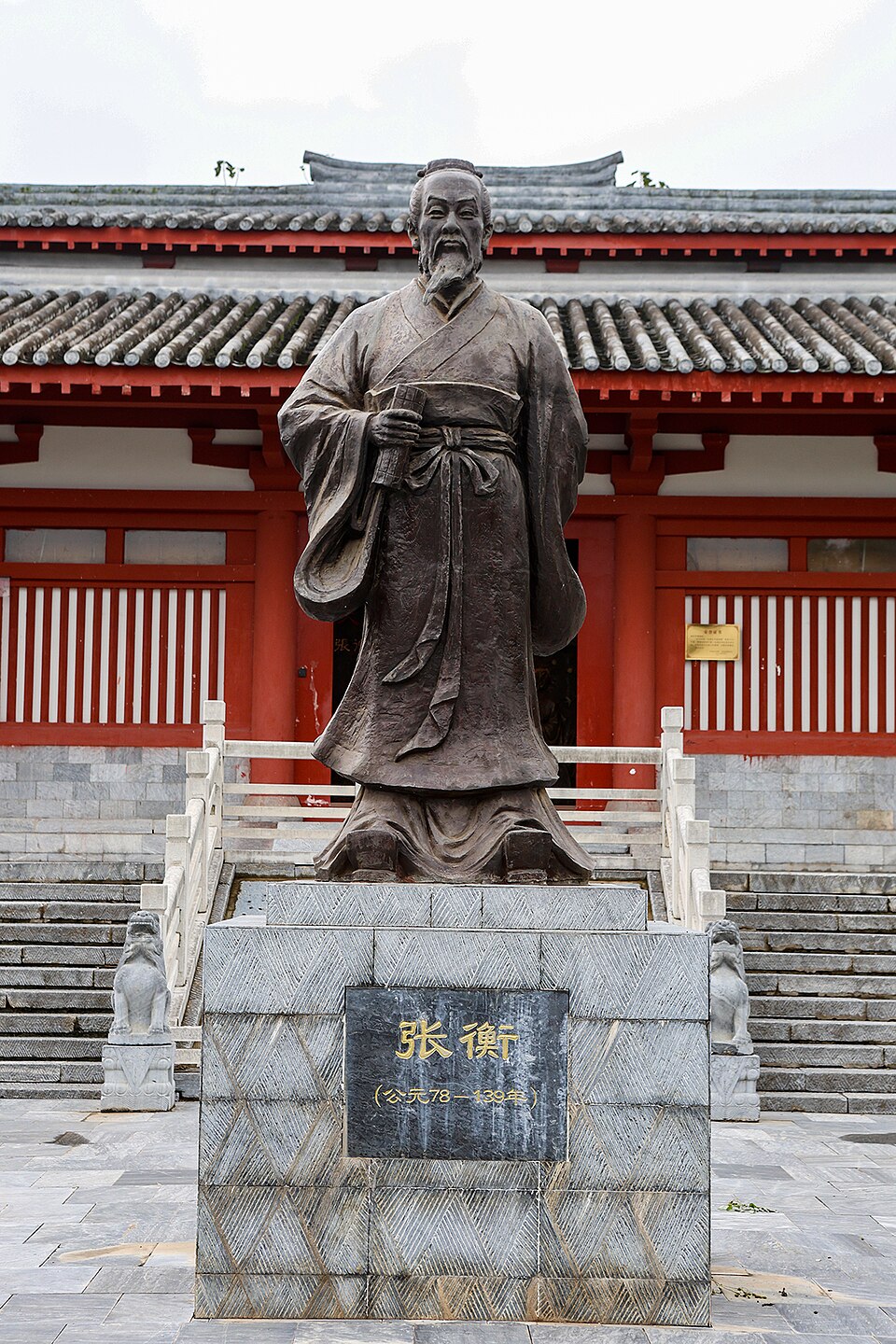
Zhang Heng (Chinese: 張衡; AD 78 - 139), courtesy name Pingzi, formerly romanized Chang Heng, was a Chinese polymathic scientist and statesman who lived during the Eastern Han dynasty. Educated in the capital cities of Luoyang and Chang'an, he achieved success as an astronomer, mathematician, seismologist, hydraulic engineer, inventor, geographer, cartographer, ethnographer, artist, poet, philosopher, politician, and literary scholar.
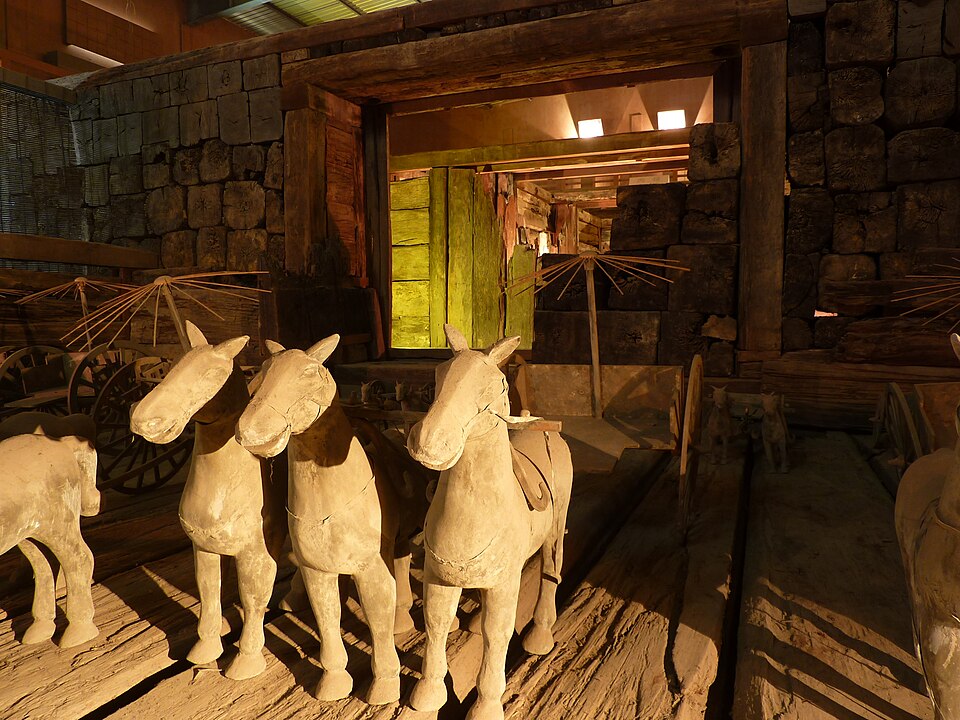
Zhang Heng began his career as a minor civil servant in Nanyang. Eventually, he became Chief Astronomer, Prefect of the Majors for Official Carriages, and then Palace Attendant at the imperial court. His uncompromising stance on historical and calendrical issues led to his becoming a controversial figure, preventing him from rising to the status of Grand Historian. His political rivalry with the palace eunuchs during the reign of Emperor Shun (r. 125-144) led to his decision to retire from the central court to serve as an administrator of Hejian Kingdom in present-day Hebei. Zhang returned home to Nanyang for a short time, before being recalled to serve in the capital once more in 138. He died there a year later, in 139.
Further reading
- A Biographical Dictionary of Later Han to the Three Kingdoms, (23-220 AD0 (Handbook of Oriental Studies, Section 4) · Rafe De Crespigny (2007)A biographical dictionary of the Later Han to Three Kingdoms period (23-220 AD), covering the era of Zhang Heng's life.Find a copy: AbeBooks · Amazon · WorldCat
- Artisans in Early Imperial China · Anthony J. Barbieri-low (2007)Covers artisans and craft in early imperial China, the technical setting of Han-era bronze work.Find a copy: AbeBooks · Amazon · WorldCat
Seismoscope is one of the 3D puzzles in World Artifacts: turn a cloud of broken pieces until it lines up. For iPhone, iPad, Apple Vision Pro and Android.

