World Artifacts › Atlas › China
South-Pointing Spoon
The first compasses did not point the way to anywhere; they were used to align buildings and graves. A lodestone spoon was spun on a polished bronze plate and settled with its handle to the south, which is the direction the Chinese named it for.
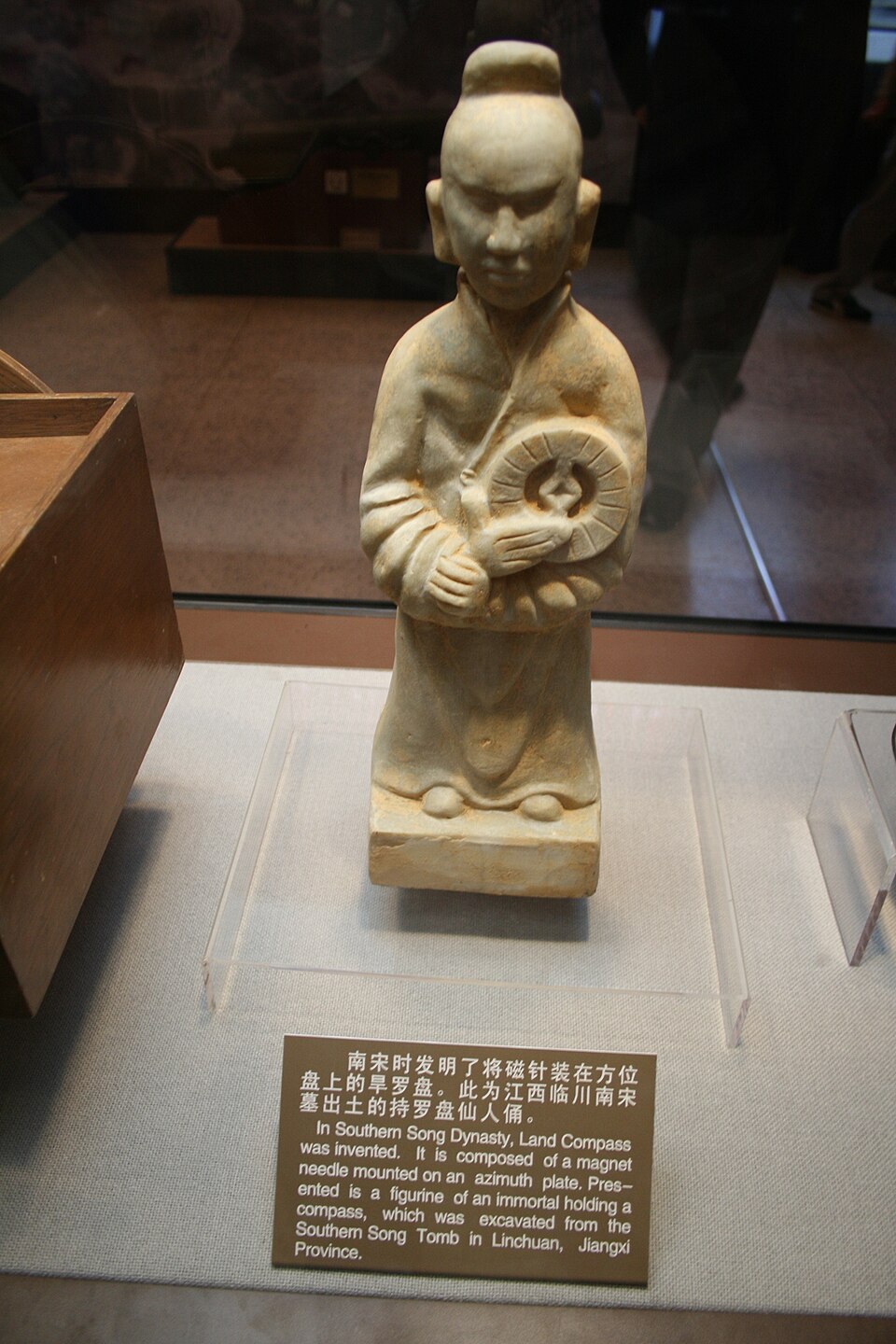
The compass is a magnetometer used for navigation and orientation that shows direction in regard to the geographic cardinal points. The structure of a compass consists of the compass rose, which displays the four main directions on it: East (E), South (S), West (W) and North (N). The angle increases in the clockwise position. North corresponds to 0°, east is 90°, south is 180° and west is 270°.
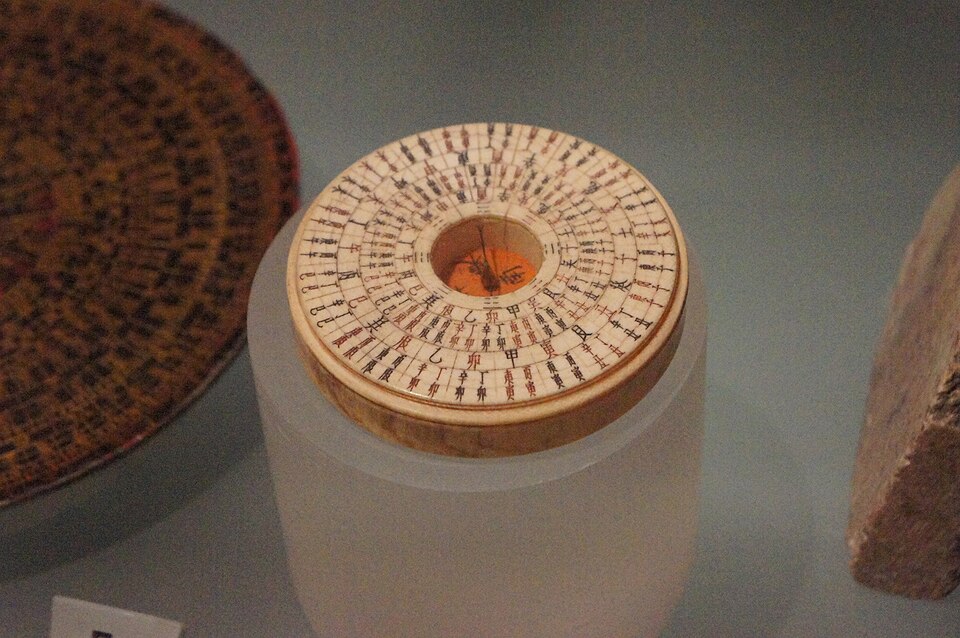
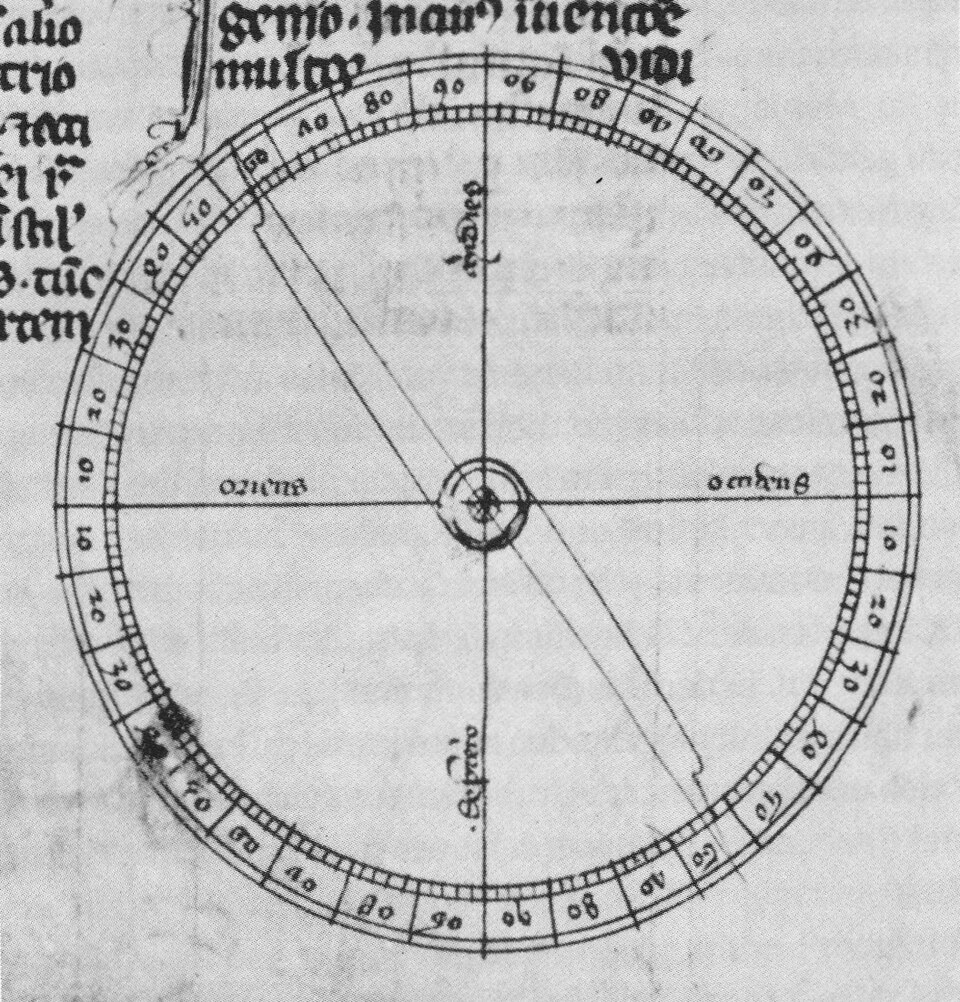
The history of the compass started more than 2,000 years ago during the Han dynasty (202 BC - 220 AD). The first compasses were made of lodestone, a naturally magnetized stone of iron, in Han dynasty China. It was called the "South Pointing Fish" and was used for land navigation by the mid-11th century during the Song dynasty (960-1279 AD). Shen Kuo provided the first explicit description of a magnetized needle in 1088 and Zhu Yu mentioned its use in maritime navigation in the text Pingzhou Table Talks, dated 1111-1117. Later compasses were made of iron needles, magnetized by striking them with a lodestone. Magnetized needles and compasses were first described in medieval Europe by the English theologian Alexander Neckam (1157-1217 AD). The first literary description of a compass in Western Europe was recorded in around 1190 and in the Islamic world 1232. Dry compasses begin appearing around 1269 in medieval Europe and 1300 in the medieval Islamic world. This was replaced in the early 20th century by the liquid-filled magnetic compass.
Further reading
- Science and civilisation in China · Joseph Needham (1954)Needham's multi-volume study of science, technology and civilization in China.Find a copy: AbeBooks · Amazon · WorldCat
- The Genius of China · Robert Temple (1989)Surveys Chinese science, technology and civilization.Find a copy: AbeBooks · Amazon · WorldCat
South-Pointing Spoon is one of the 3D puzzles in World Artifacts: turn a cloud of broken pieces until it lines up. For iPhone, iPad, Apple Vision Pro and Android.

