World Artifacts › Atlas › Colombia
Andean Cock-of-the-rock
Male cock-of-the-rocks gather at a display ground and perform together, bowing and calling, while the females walk through and choose. The males take no part in raising the young at all.
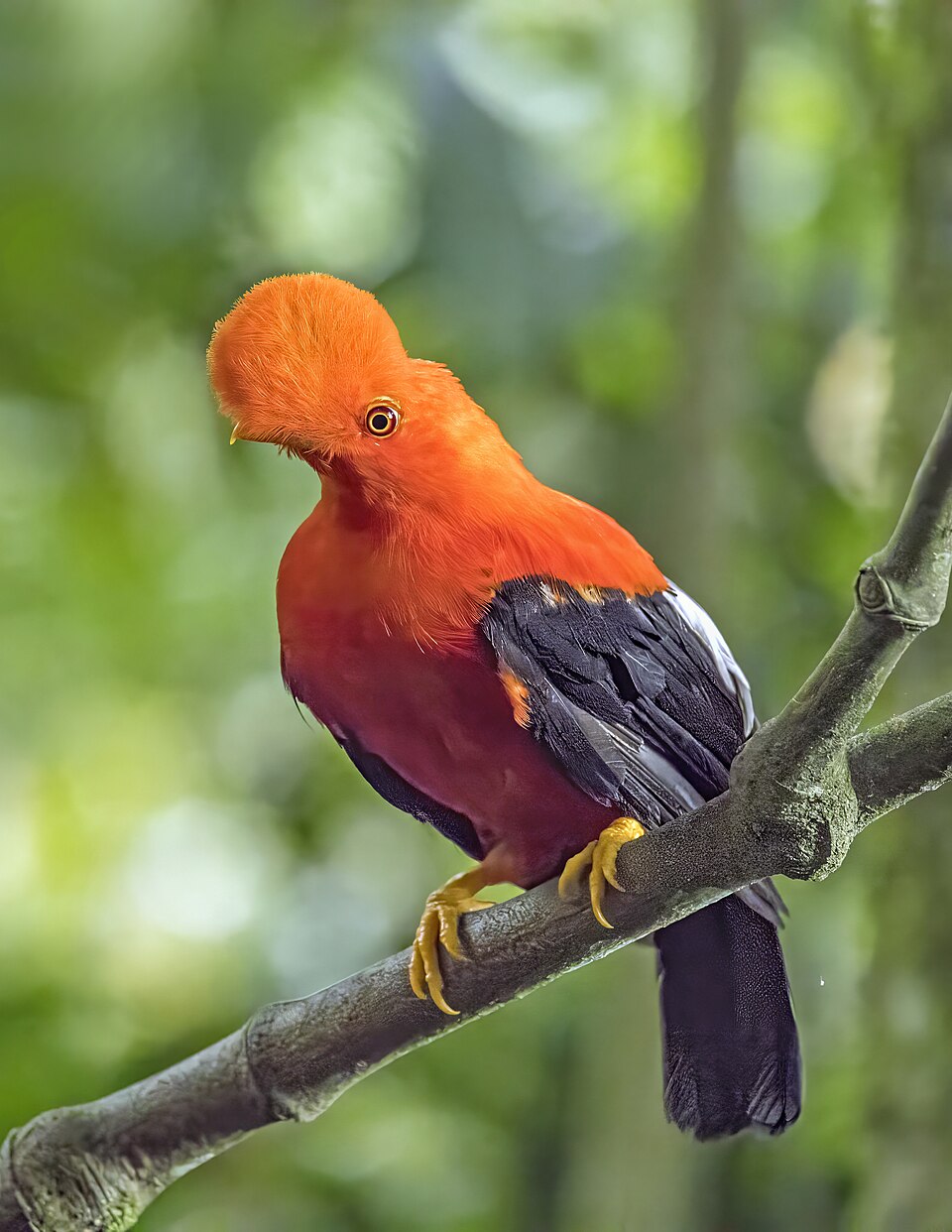
The Andean cock-of-the-rock (Rupicola peruvianus), also known as tunki (Quechua), is a large passerine bird of the cotinga family native to Andean cloud forests in South America. It is the national bird of Peru. It has four subspecies and its closest relative is the Guianan cock-of-the-rock.
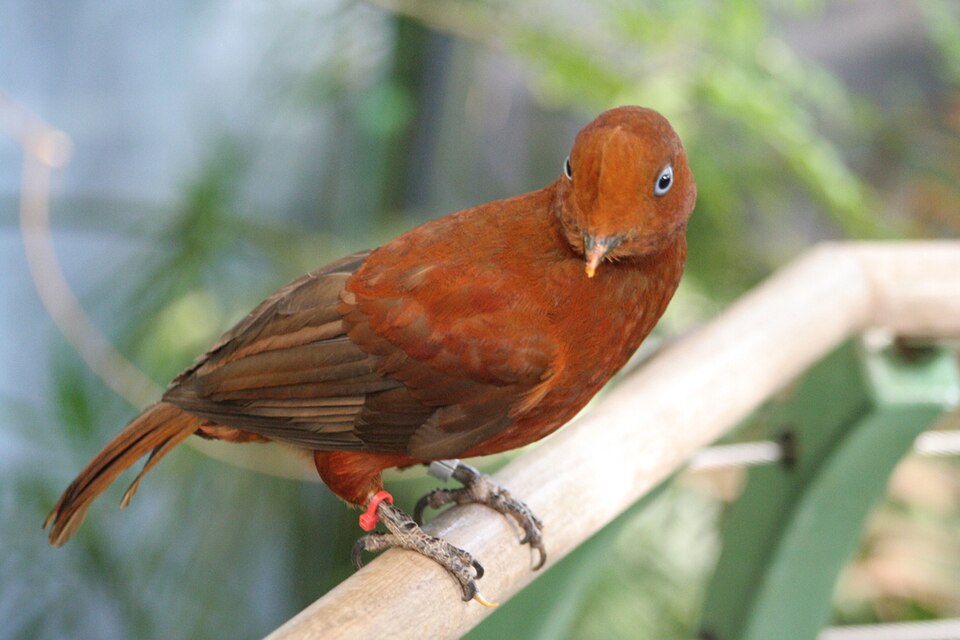
The Andean cock-of-the-rock exhibits marked sexual dimorphism; the male has a large disk-like crest and scarlet or brilliant orange plumage, while the female is significantly darker and browner. Gatherings of males compete for breeding females with each male displaying his colourful plumage, bobbing and hopping, and making a variety of calls. After mating, the female makes a nest under a rocky overhang, incubates the eggs, and rears the young by herself.
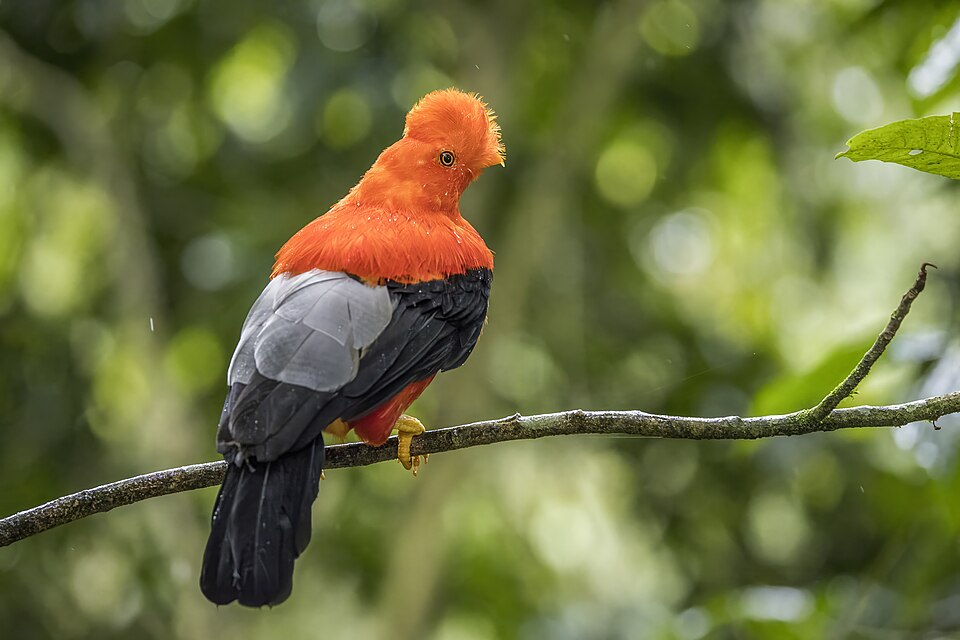
The Andean cock-of-the-rock eats a diet of fruit, supplemented by insect, amphibian, reptile, and smaller mice. It is distributed all across the cloud forest of the Andes, having a range of around 260,000 km2 (100,000 sq mi). Even though it is being affected by the destruction of its habitat, the Andean cock-of-the-rock is not classified as threatened.
Further reading
- The Cotingas · Snow, David (1982)David Snow's study of the Cotingidae, the bird family that includes the cock-of-the-rock, covering the family's classification.Find a copy: AbeBooks · Amazon · WorldCat
- A guide to the birds of Colombia · Steven L. Hilty (1986)A field guide to identifying the birds of Colombia, the country where this species lives.Find a copy: AbeBooks · Amazon · WorldCat
Andean Cock-of-the-rock is one of the 3D puzzles in World Artifacts: turn a cloud of broken pieces until it lines up. For iPhone, iPad, Apple Vision Pro and Android.

