World Artifacts › Atlas › Colombia
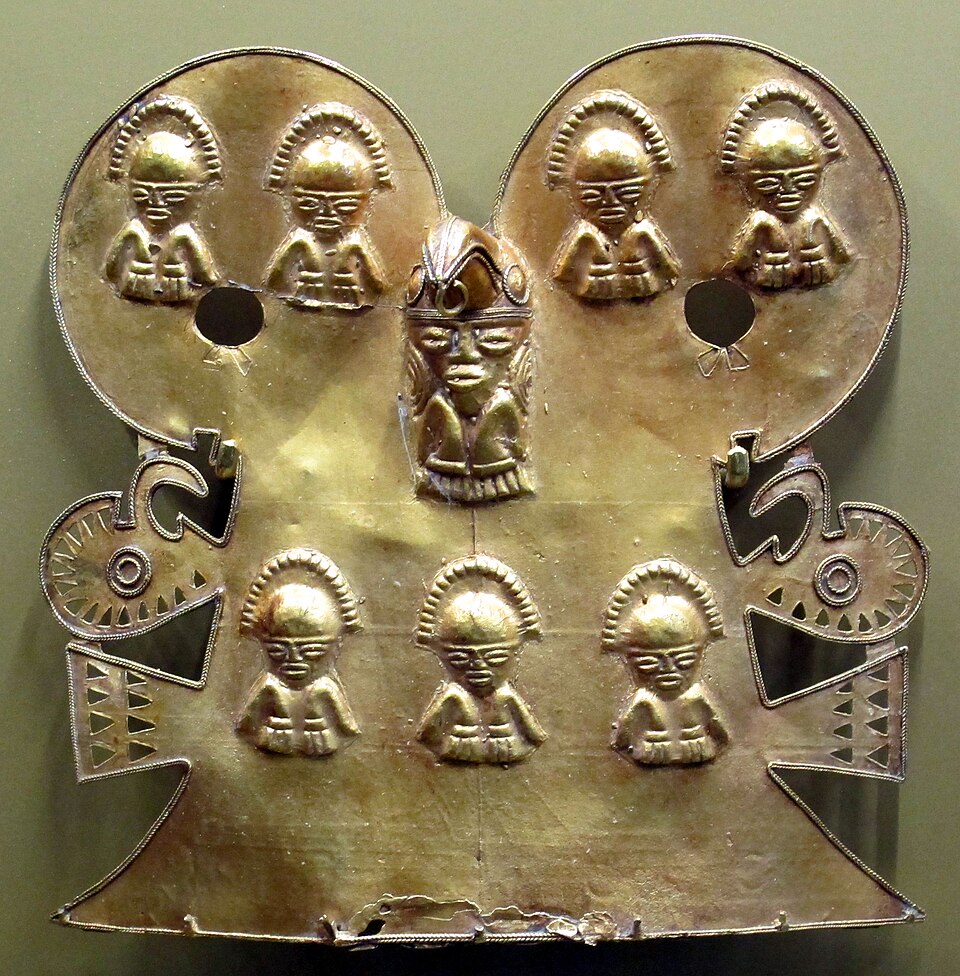
Tairona Gold Pendant
Tairona goldwork is usually tumbaga, an alloy of gold and copper, treated with acid to dissolve the copper at the surface so the object looks like solid gold. The technique produced more objects from less metal, which the Spanish read as evidence of unlimited wealth.
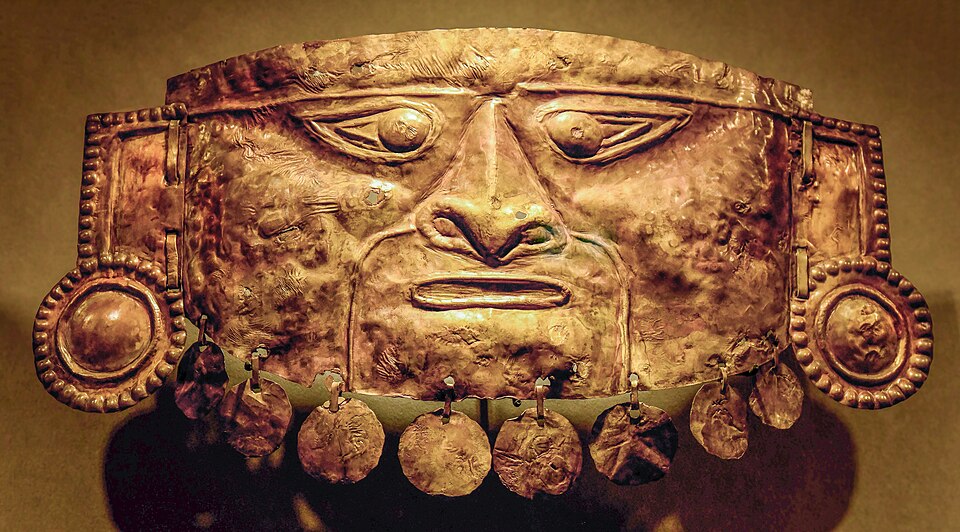
Tumbaga is the name given by Spanish Conquistadors for a non-specific alloy of gold and copper, and metals composed of these elements. Pieces made of tumbaga were widely found in pre-Hispanic Mesoamerica and the Philippines, South America, and Southeast Asia.
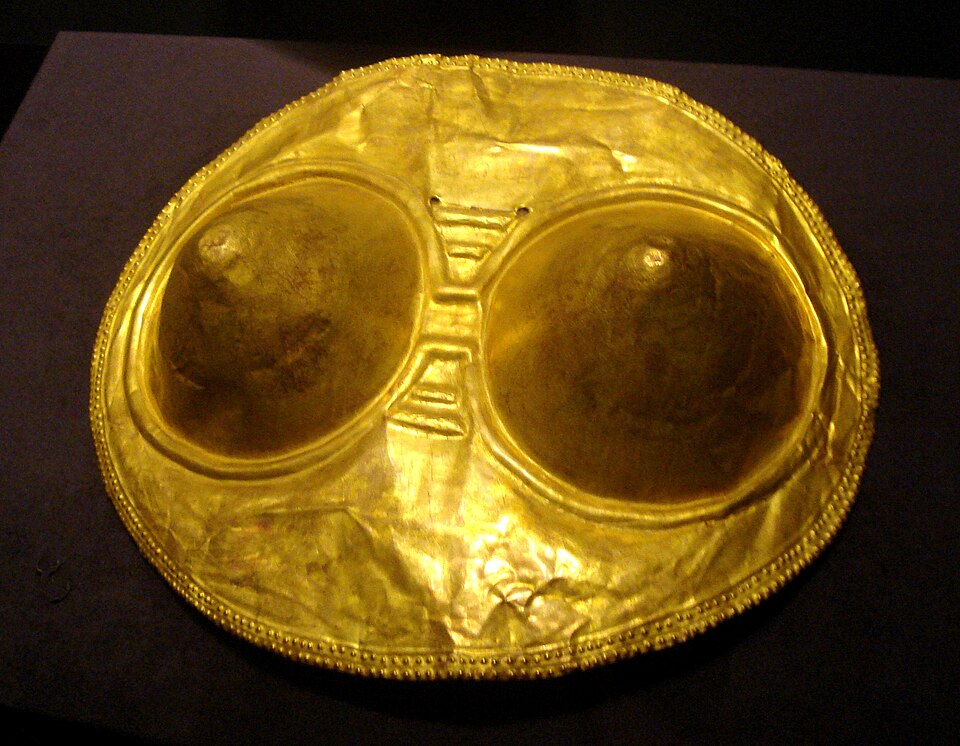
The term is a borrowing from the Tagalog tumbaga. This came from Malay tembaga, meaning 'copper' or 'brass'. It has also been spelled tumbago in literature.
Further reading
- Gold of El Dorado · Warwick Bray (1978)Catalogue of the Museo del Oro in Bogotá on Indian goldwork and goldsmithing of South America, the setting of Tairona gold.Find a copy: AbeBooks · Amazon · WorldCat
- Precolumbian Gold · Colin McEwan (2000)Congress volume on precolumbian goldwork of Central and South America.Find a copy: AbeBooks · Amazon · WorldCat
Tairona Gold Pendant is one of the 3D puzzles in World Artifacts: turn a cloud of broken pieces until it lines up. For iPhone, iPad, Apple Vision Pro and Android.

