World Artifacts › Atlas › N. Cyprus
Cyprus Flag
The white flag with the copper island and olive branches.
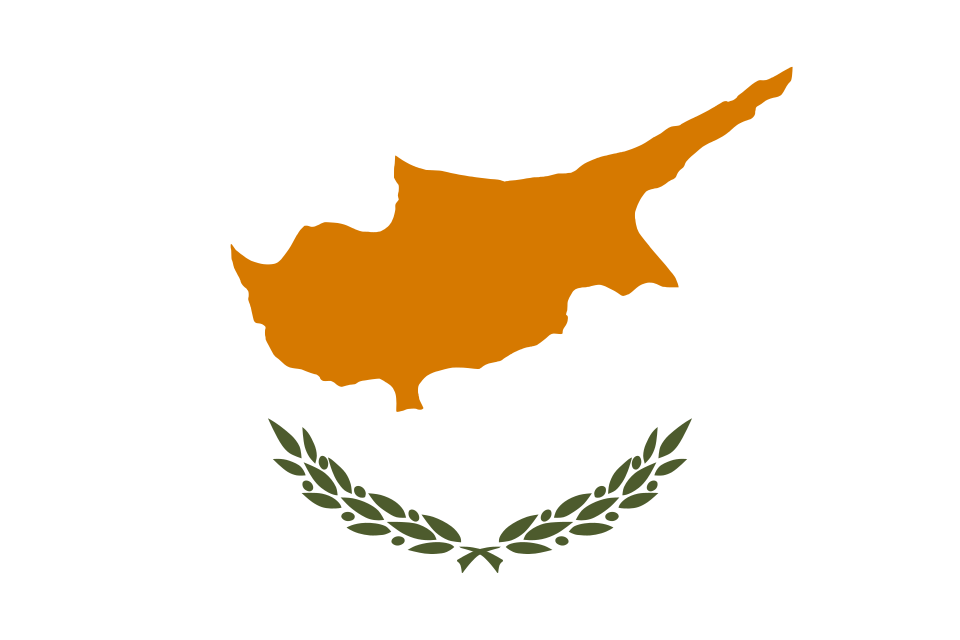
The flag of Cyprus (Greek: Σημαία της Κύπρου, romanized: Simaía tis Kýprou; Turkish: Kıbrıs bayrağı) came into use on 16 August 1960, under the Zürich and London Agreements, whereby a constitution was drafted and Cyprus was proclaimed an independent state. The flag was designed by Turkish Cypriot artist İsmet Güney. The design of the flag deliberately employs peaceful and neutral symbols in an attempt to indicate harmony between the Greek and Turkish Cypriot communities, an ideal that has not yet been realised. In 1963, Greek Cypriot and Turkish Cypriot communities separated because of Cypriot intercommunal violence.

The national flag features the shape of the map, with two olive branches below (a symbol of peace between the island's two communities) on white (another symbol of peace). The olive branches signify peace between the Greek and Turkish Cypriots. The map on the flag is a copper-orange colour, symbolising the large deposits of copper ore on the island, from which it may have received its name.
Cyprus Flag is one of the 3D puzzles in World Artifacts: turn a cloud of broken pieces until it lines up. For iPhone, iPad, Apple Vision Pro and Android.

