World Artifacts › Atlas › Czechia
Easter Pomlázka
On Easter Monday men and boys braid willow switches and lightly whip women, who give them a decorated egg or a shot of spirits in return. It is supposed to pass on the vitality of the young willow, and the custom is now genuinely argued about in Czech media every spring.
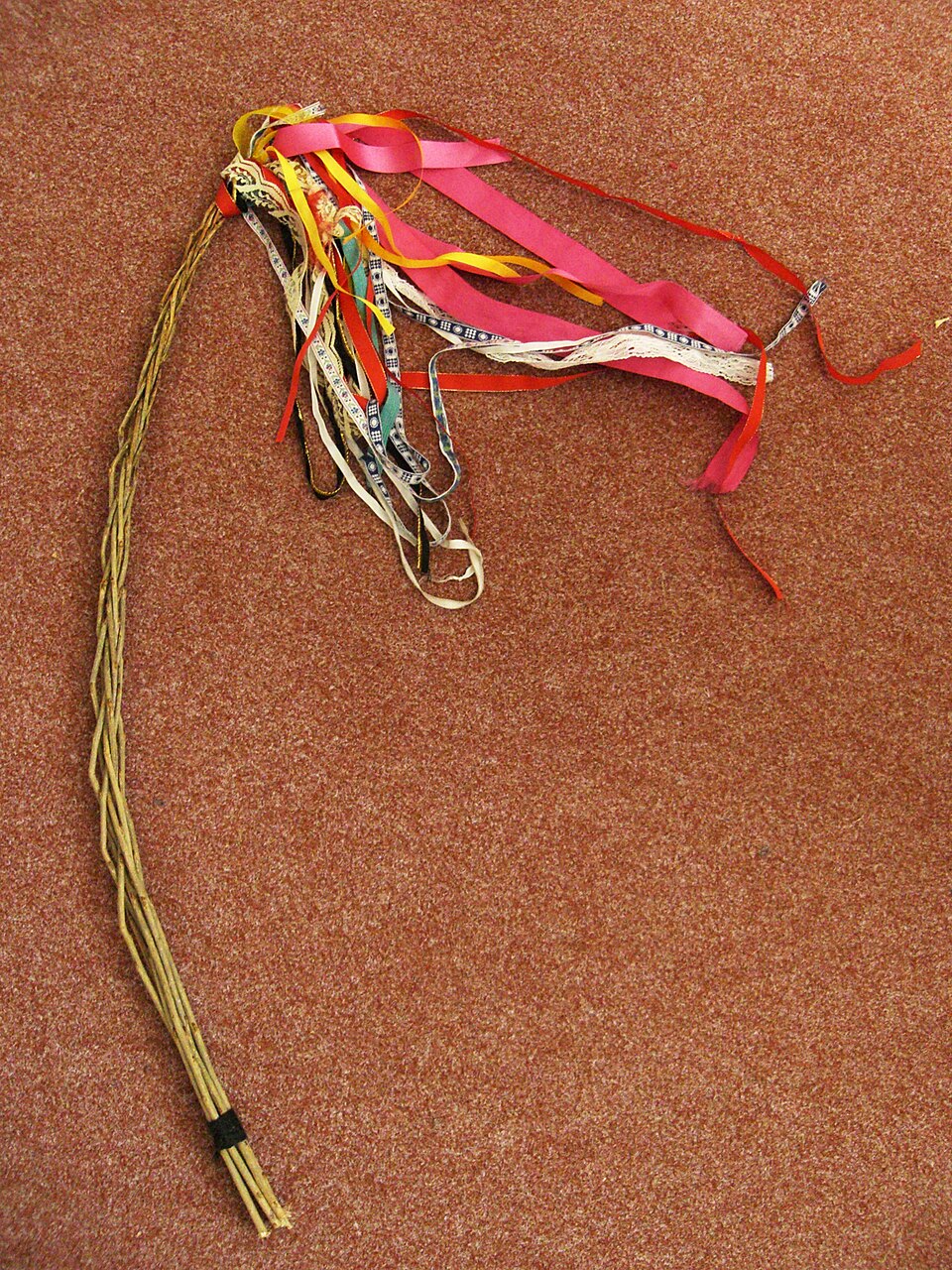
In the Czech Republic, Slovakia, and parts of Hungary, the Easter whip is used as part of an Easter Monday tradition in which men strike women with a decorated willow whip or splash them with water.
The custom generally takes place on the morning of Easter Monday and involves a handmade whip or switch known as a pomlázka or karabáč in Czech; korbáč, šibák, or šibačka in Slovak; and siba or korbács in Hungarian. A pomlázka is typically made from four to twenty-four willow rods, measures between approximately half a metre and two metres in length, and is often decorated with coloured ribbons at the end.
Practices vary by locality. Participants may wear additional layers of clothing to lessen the impact of the whipping. In some areas, women traditionally respond to men who arrive after midday by throwing cold water on them. Other regional variants involve men spraying women with water or perfume (Śmigus-dyngus).
When visiting houses, men may recite or sing rhymes concerning eggs, spring, fertility, or generosity. Women traditionally give them decorated eggs or other gifts in return. In some versions of the custom, a woman is struck on the legs with the willow whip. The practice is traditionally understood as symbolic rather than as corporal punishment, although the force with which the whip is used varies.
Easter Pomlázka is one of the 3D puzzles in World Artifacts: turn a cloud of broken pieces until it lines up. For iPhone, iPad, Apple Vision Pro and Android.

