World Artifacts › Atlas › Czechia
Rusalka
Rusalka is a water nymph who gives up her voice for a human prince, and Dvořák's opera about her contains the song Czechs know best. The story ends badly, as the original folk versions insist it must.
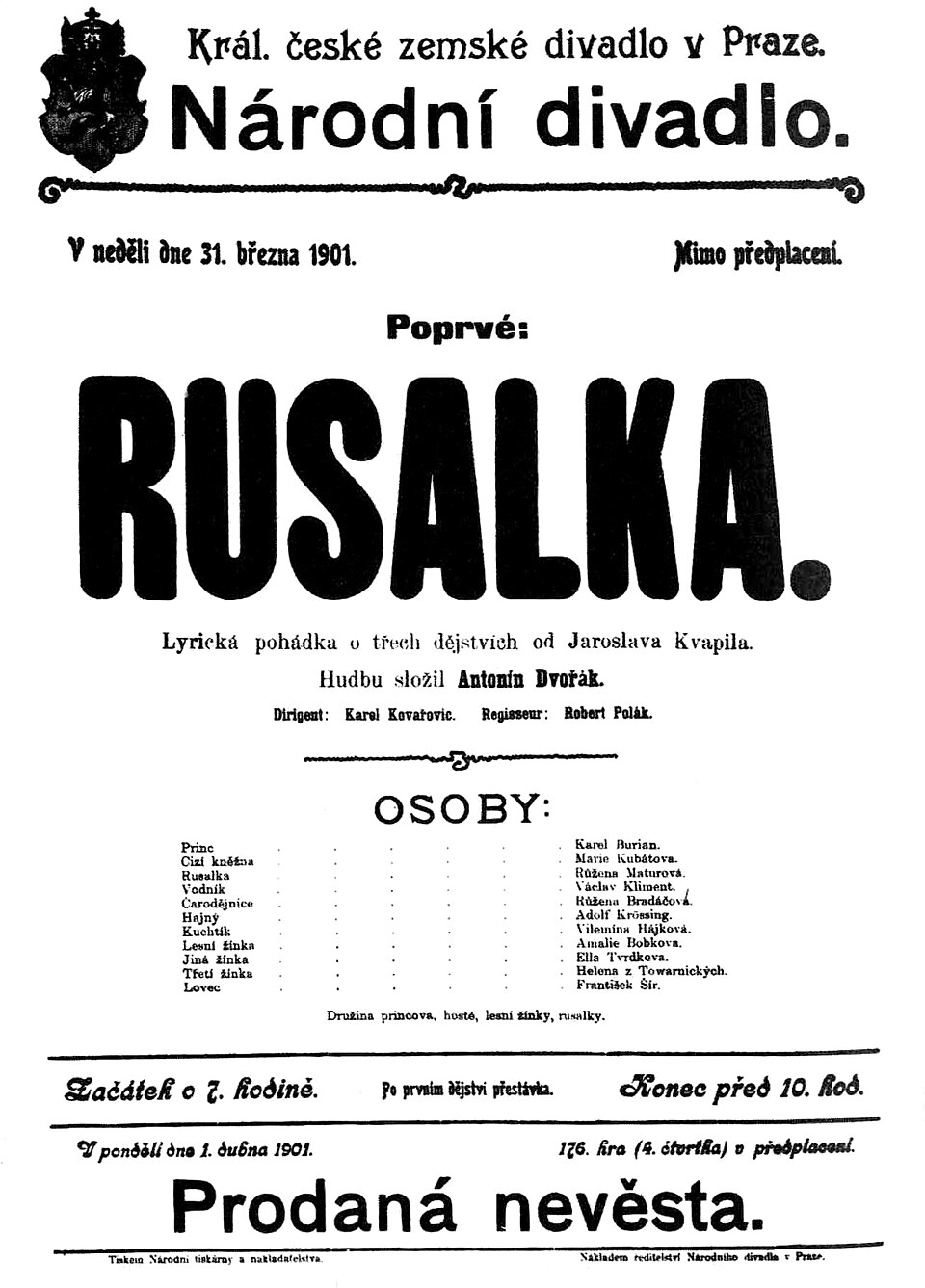
Rusalka (pronounced [ˈrusalka] ), Op. 114, is an opera ('lyric fairy tale') by Antonín Dvořák. His ninth opera (1900-1901), it became his most successful, frequenting the standard repertoire worldwide. Jaroslav Kvapil wrote the libretto on Karel Jaromír Erben's and Božena Němcová's fairy tales. The rusalka is a water sprite from Slavic mythology; it usually inhabits a lake or river.
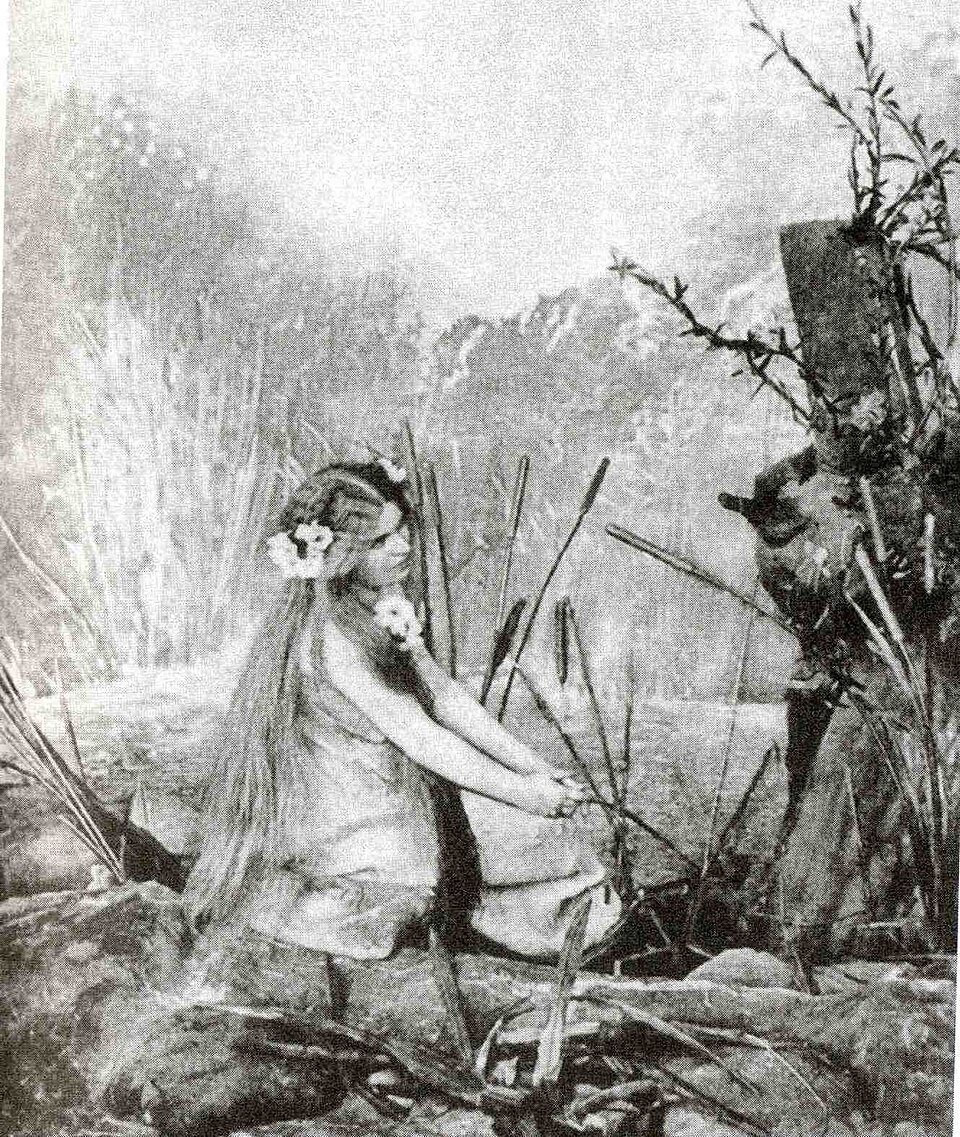
For many years unfamiliarity with Dvořák's operas outside the Czech lands helped reinforce a perception that composition of operas was a marginal activity, and that despite the beauty of its melodies and orchestral timbres Rusalka was not a central part of his output or of international lyric theatre. In recent years it has been performed more regularly by major opera companies. It is performed by opera companies worldwide far more than all of Dvořák's other operas combined.
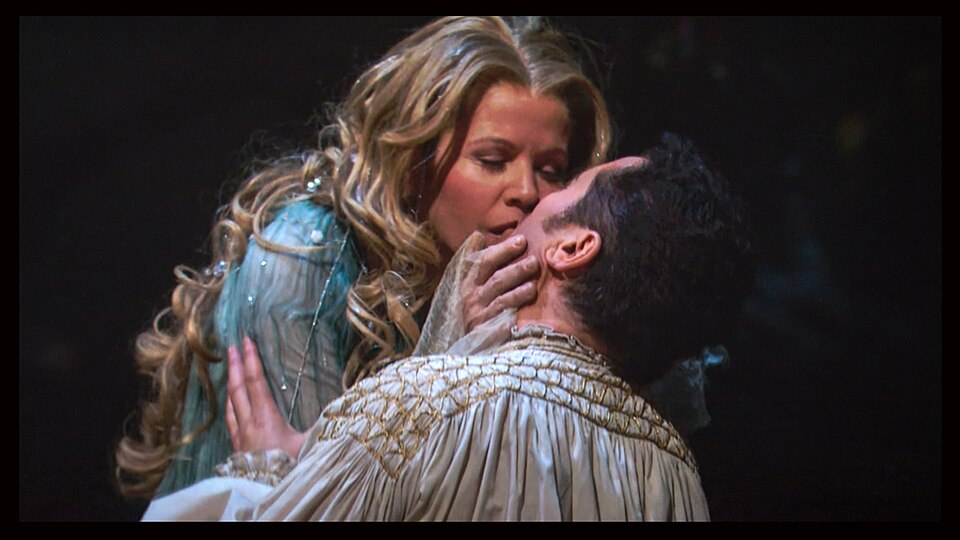
The most popular excerpt from Rusalka is the soprano aria, the "Song to the Moon" ("Měsíčku na nebi hlubokém") for the title character in act 1, which is often performed in concert and recorded separately. It has also been arranged for violin and used on film soundtracks.
Further reading
Rusalka is one of the 3D puzzles in World Artifacts: turn a cloud of broken pieces until it lines up. For iPhone, iPad, Apple Vision Pro and Android.

