World Artifacts › Atlas › Czechia
Stork
White storks nest on chimneys and poles across Moravia, and a village with a nest treats it as luck. They winter in Africa and come back to the same nest, which is repaired rather than rebuilt each spring.
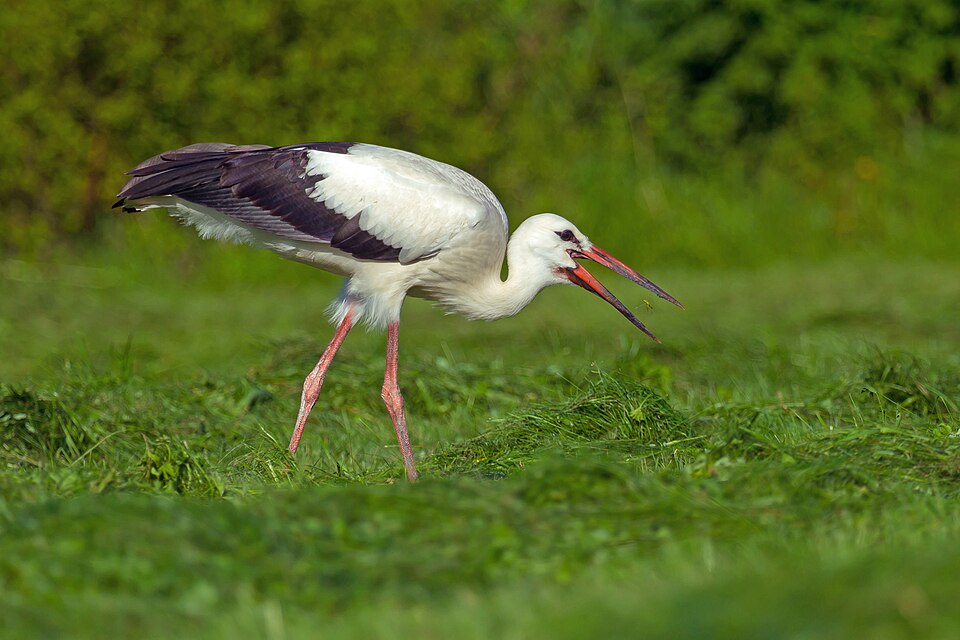
The white stork (Ciconia ciconia) is a large bird in the stork family, Ciconiidae. Its plumage is mainly white, with black on the bird's wings. Adults have long red legs and long pointed red beaks, and measure on average 100-115 cm (39-45 in) from beak tip to end of tail, with a 155-215 cm (61-85 in) wingspan. The two subspecies, which differ slightly in size, breed in Europe north to Finland, northwestern Africa, Palearctic east to southern Kazakhstan and southern Africa. The white stork is a long-distance migrant, wintering in Africa from tropical Sub-Saharan Africa to as far south as South Africa, or on the Indian subcontinent. When migrating between Europe and Africa, it avoids crossing the Mediterranean Sea and detours via the Levant in the east or the Strait of Gibraltar in the west, because the air thermals on which it depends for soaring do not form over water.
Further reading
Stork is one of the 3D puzzles in World Artifacts: turn a cloud of broken pieces until it lines up. For iPhone, iPad, Apple Vision Pro and Android.

