World Artifacts › Atlas › Germany
Cologne Cathedral
Building began in 1248 and stopped for three hundred years with a crane left standing on the unfinished tower; it was completed in 1880. It survived the war partly because bomber crews used the spires to navigate.
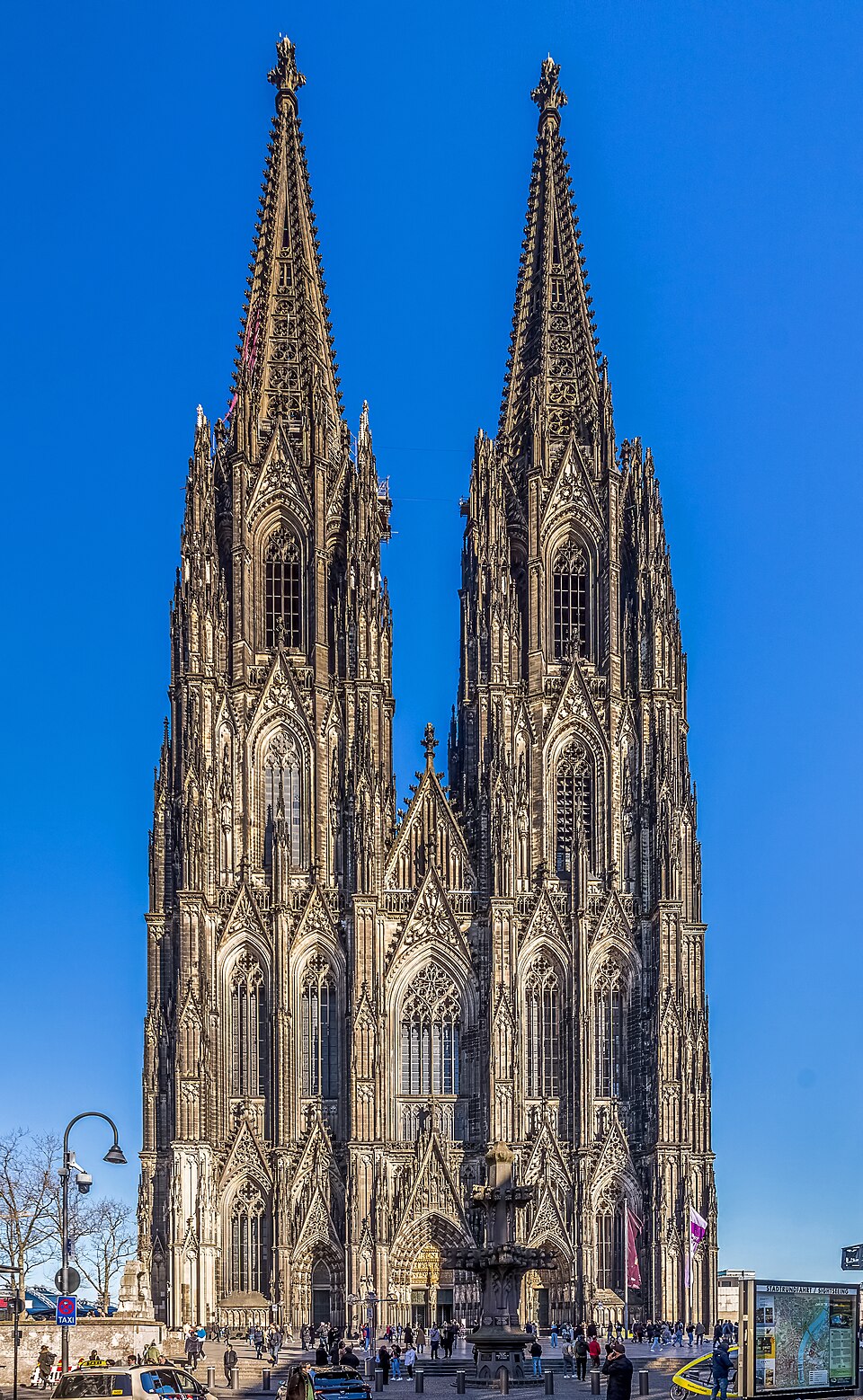
Cologne Cathedral (German: Kölner Dom, pronounced [ˌkœlnɐ ˈdoːm] ) is a Catholic cathedral in Cologne, North Rhine-Westphalia, Germany. It is the seat of the Archbishop of Cologne and of the administration of the Archdiocese of Cologne. It is a renowned monument of German Catholicism and Gothic architecture and was declared a World Heritage Site in 1996. It is Germany's most visited landmark, attracting an average of 6 million people a year. At 157 m (515 ft), the cathedral is the tallest twin-spired church in the world, the third tallest church in Europe after Sagrada Família and Ulm Minster, and the tallest cathedral in the world.
Construction of Cologne Cathedral began in 1248, but was halted in the years around 1560. Attempts to complete construction began around 1814, but the project was not properly funded until the 1840s. The edifice was completed to its original medieval plan in 1880. The towers for its two huge spires give the cathedral the largest façade of any church in the world.
Further reading
Cologne Cathedral is one of the 3D puzzles in World Artifacts: turn a cloud of broken pieces until it lines up. For iPhone, iPad, Apple Vision Pro and Android.

