World Artifacts › Atlas › Germany
Neuschwanstein Castle
Ludwig II never finished it and slept there about a hundred and seventy nights. He was declared insane and died days later, and the castle was opened to paying visitors within six weeks to recover the debts.
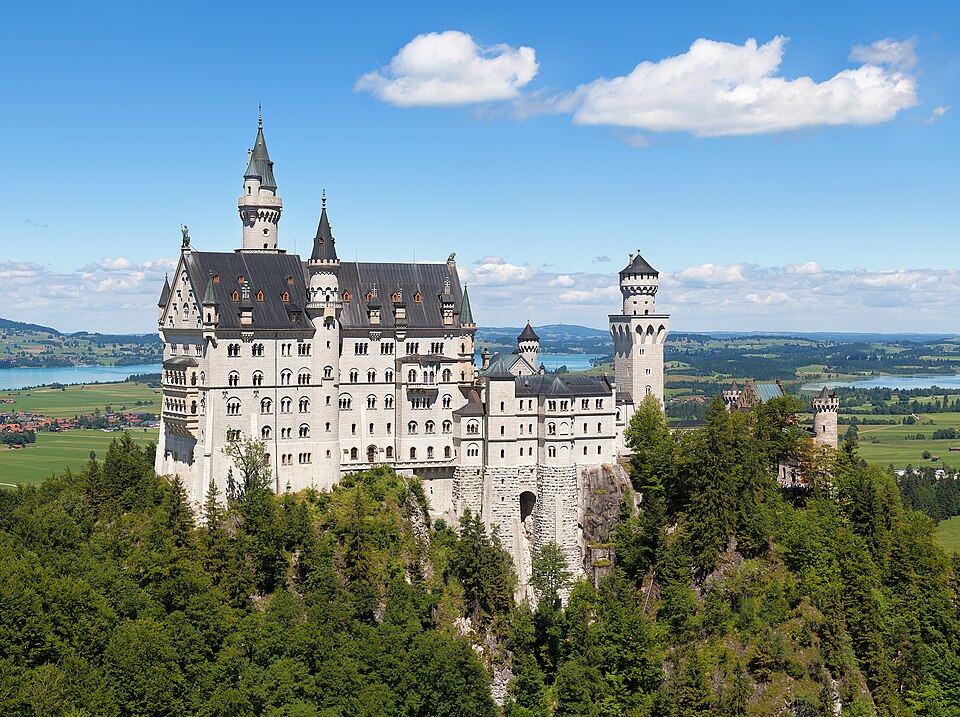
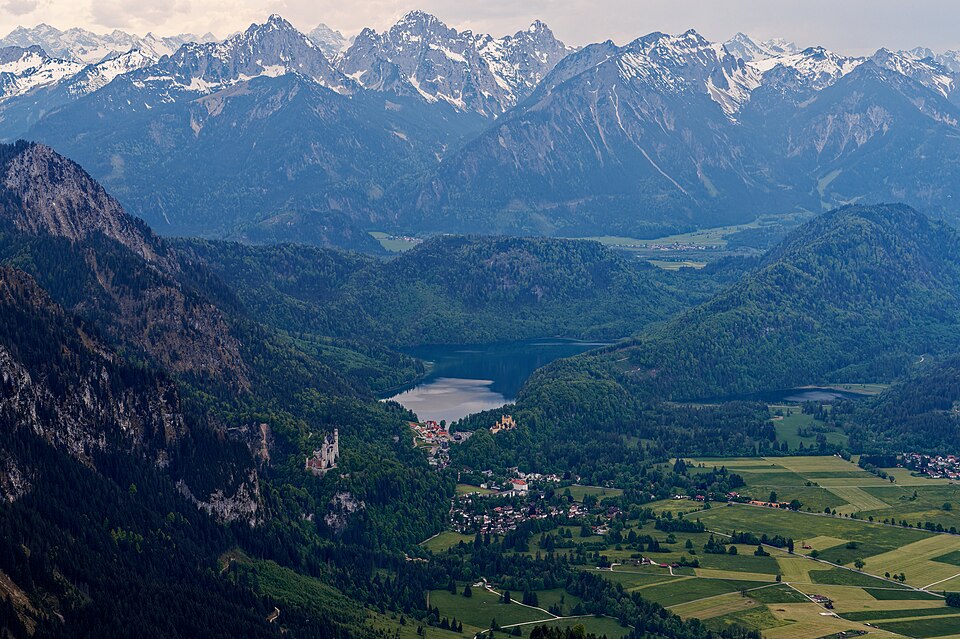
Neuschwanstein Castle (German: Schloss Neuschwanstein, pronounced [ˈʃlɔs nɔʏˈʃvaːnʃtaɪn]; Southern Bavarian: Schloss Neischwanstoa; lit. 'Newswanstone') is a 19th-century historicist palace on a rugged hill of the foothills of the Alps in the very south of Germany, near the border with Austria. It is located in the Swabia region of Bavaria, in the municipality of Schwangau, above the incorporated village of Hohenschwangau, which is also the location of Hohenschwangau Castle. The closest larger town is Füssen. The castle stands above the narrow gorge of the Pöllat stream, east of the Alpsee and Schwansee lakes, close to the mouth of the Lech into Lake Forggensee. Since 2025, the castle has been part of the UNESCO World Heritage Site "The Palaces of King Ludwig II of Bavaria: Neuschwanstein, Linderhof, Schachen and Herrenchiemsee". According to Guinness World Records, at 65 metres (213 feet), it is the tallest castle in the world.
Further reading
Neuschwanstein Castle is one of the 3D puzzles in World Artifacts: turn a cloud of broken pieces until it lines up. For iPhone, iPad, Apple Vision Pro and Android.

