World Artifacts › Atlas › Germany
Trabant
The Trabant's body was made of Duroplast, a resin stiffened with cotton waste, because East Germany had no steel to spare. The waiting list ran to more than ten years, so a used one cost more than a new one.
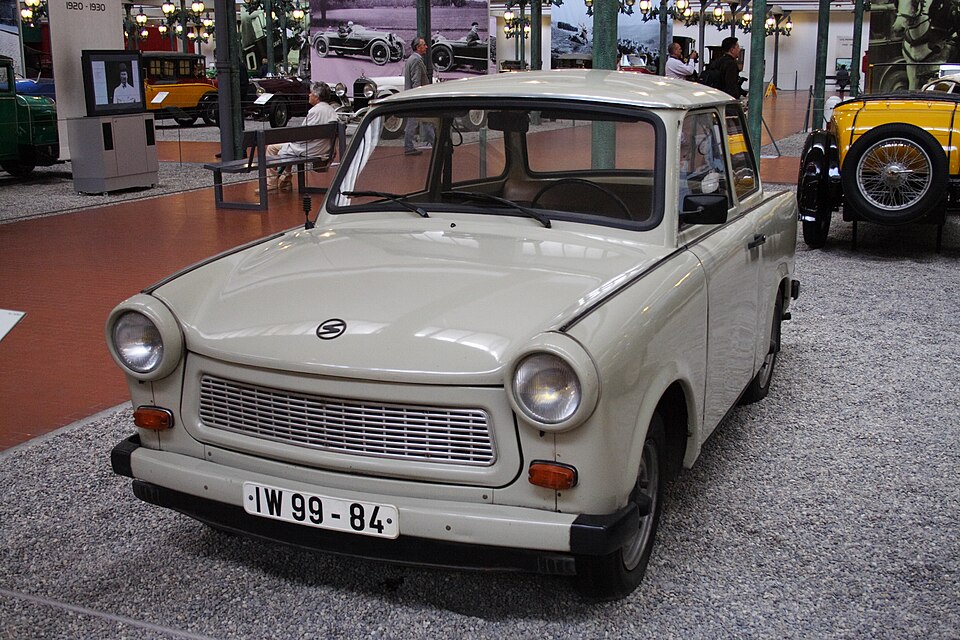
Trabant (German: [tʁaˈbant] ) is a series of small cars produced from 1957 until 1991 by former East German car manufacturer VEB Sachsenring Automobilwerke Zwickau. Four models were made: the Trabant 500, Trabant 600, Trabant 601, and the Trabant 1.1. The first model, the 500, was a relatively modern car when it was introduced.
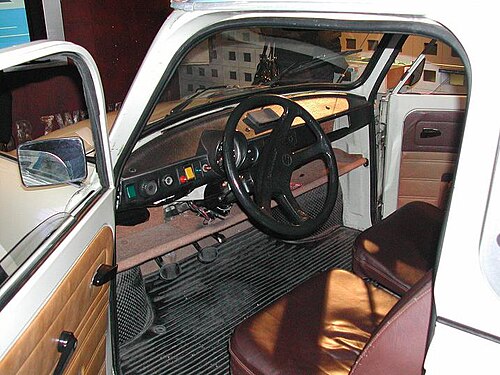
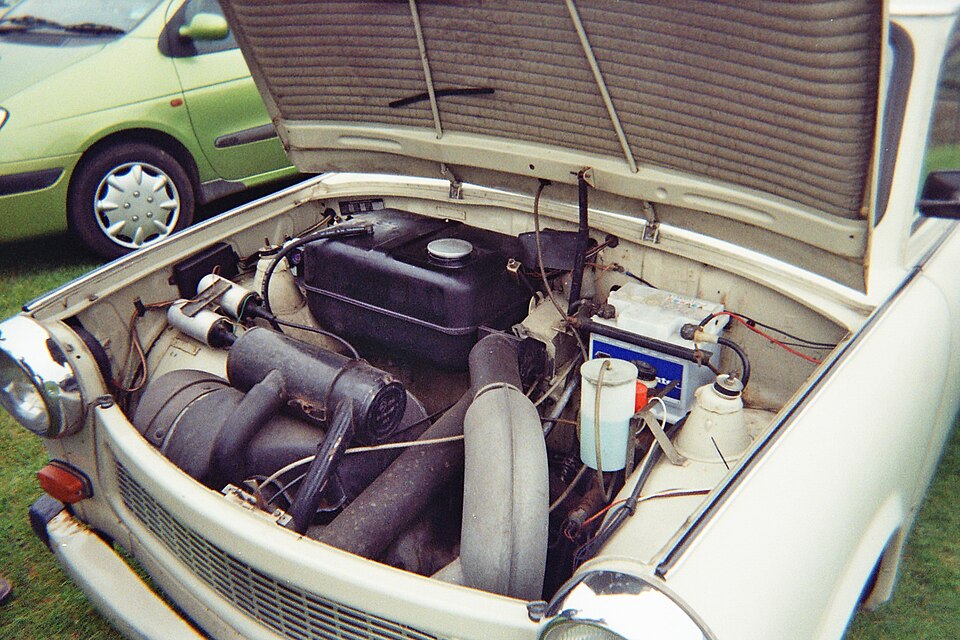
It featured detachable duroplast body panels on a galvanized steel unibody chassis, front-wheel drive, a transverse two-stroke engine, and independent suspension. Because this 1950s design remained largely unchanged until the introduction of the last model, the Trabant 1.1 in 1990, the Trabant became symbolic of the former East Germany's stagnant economy and the collapse of the Eastern Bloc in general. Called "a spark plug with a roof", 3,096,999 Trabants were produced. Older models have been sought by collectors in the United States due to their low cost and fewer restrictions on the importation of antique cars. The Trabant also gained a following among car tuning and rallying enthusiasts.
Further reading
- Synthetic socialism · Eli Rubin (2009)Examines East German consumer culture and the plastics industry under socialism.Find a copy: AbeBooks · Amazon · WorldCat
- The collapse · Mary Elise Sarotte (2014)A history of the fall of the Berlin Wall and the end of East Germany's politics.Find a copy: AbeBooks · Amazon · WorldCat
Trabant is one of the 3D puzzles in World Artifacts: turn a cloud of broken pieces until it lines up. For iPhone, iPad, Apple Vision Pro and Android.

