World Artifacts › Atlas › Denmark
Gundestrup Cauldron
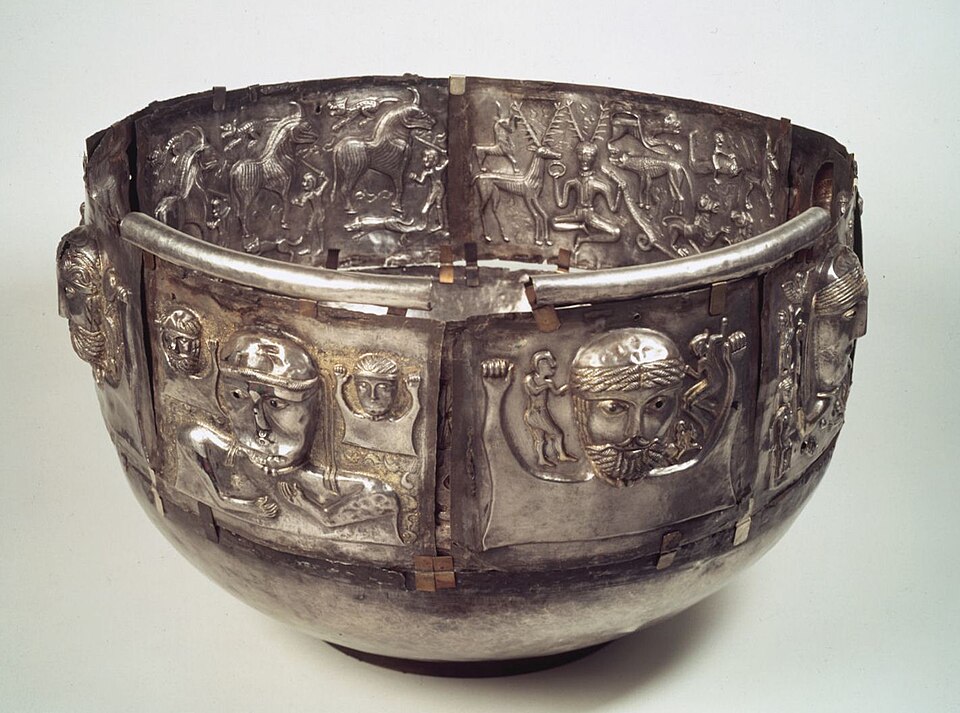
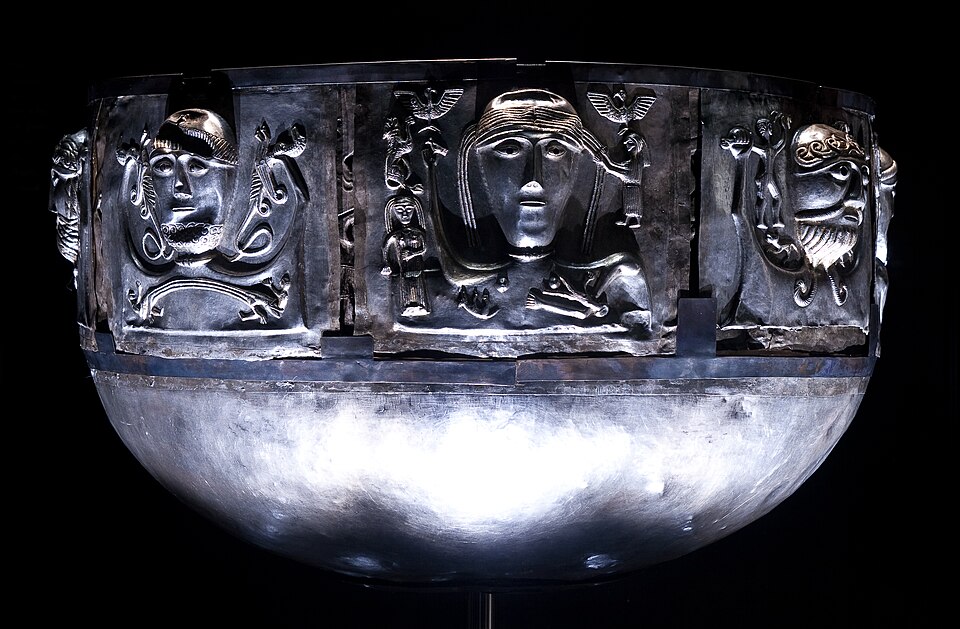
The great silver cauldron was found dismantled in a bog and shows gods and animals from a world that is not Danish: the workmanship and the imagery point to the Balkans. How it got to a Jutland bog is unknown.
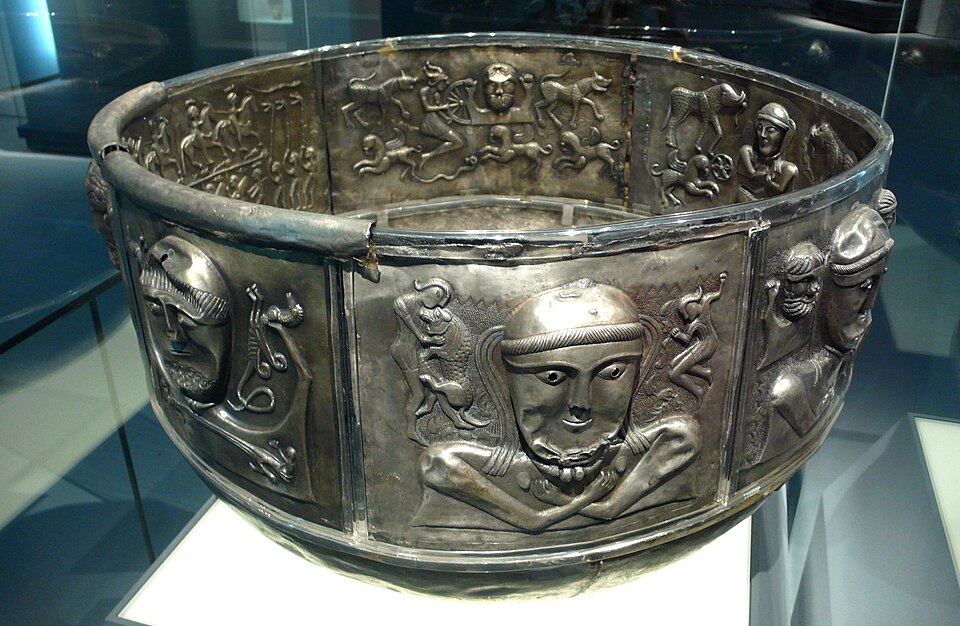
The Gundestrup cauldron is a richly decorated silver vessel, thought to date from between 200 BC and 300 AD, or more narrowly between 150 BC and 1 BC. This places it within the late La Tène period or early Roman Iron Age. The cauldron is the largest known example of European Iron Age silver work (diameter: 69 cm (27 in); height: 42 cm (17 in)). It was found dismantled, with the other pieces stacked inside the base, in 1891, in a peat bog near the hamlet of Gundestrup in the Aars parish of Himmerland, Denmark (). It is now usually on display in the National Museum of Denmark in Copenhagen, with replicas at other museums; it was in the UK on a travelling exhibition called The Celts during 2015-2016.
Further reading
- The Gundestrup cauldron · Garrett S. Olmsted (1976)A study devoted to the Gundestrup cauldron and its Celtic antiquities, art and civilization.Find a copy: AbeBooks · Amazon · WorldCat
- Symbol and Image in Celtic Religious Art · Miranda Green (1992)Looks at symbol and image in Celtic religious art, relevant to the cauldron's divine figures.Find a copy: AbeBooks · Amazon · WorldCat
Gundestrup Cauldron is one of the 3D puzzles in World Artifacts: turn a cloud of broken pieces until it lines up. For iPhone, iPad, Apple Vision Pro and Android.

