World Artifacts › Atlas › Dominica
Sperm Whale
The square-headed whale.
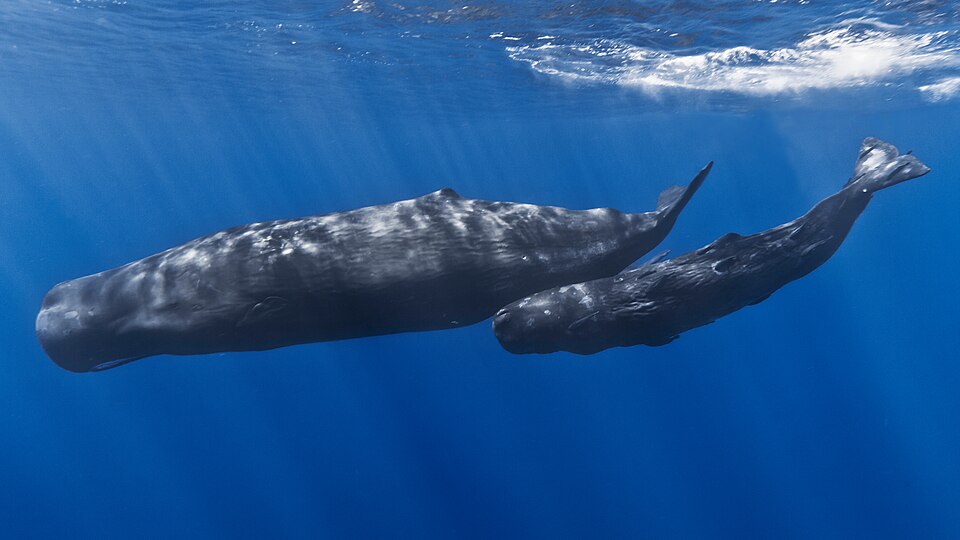
The sperm whale or cachalot (Physeter macrocephalus) is the largest of the toothed whales and the largest toothed predator. It is the only living member of the genus Physeter and one of three extant species in the sperm whale superfamily Physeteroidea, along with the pygmy sperm whale and dwarf sperm whale of the genus Kogia.
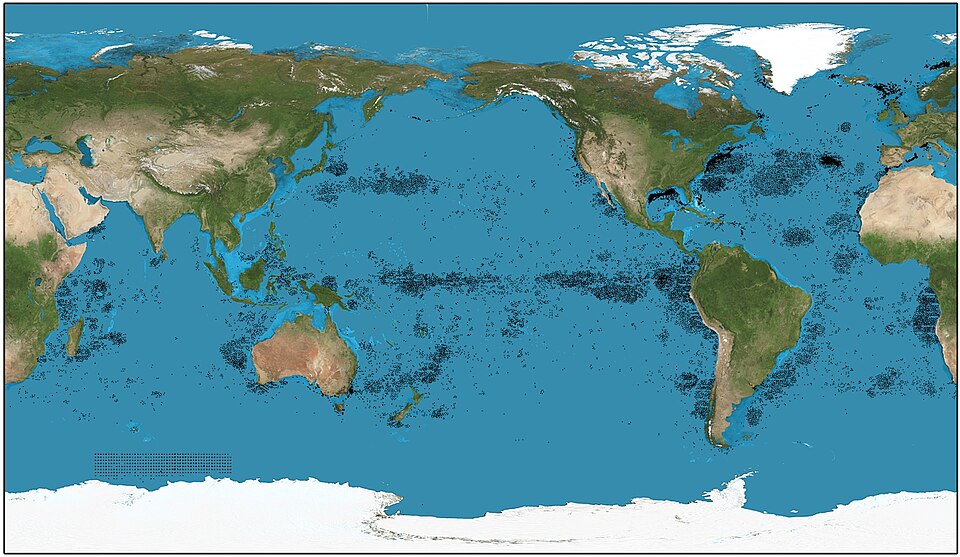
The sperm whale is a pelagic mammal with a worldwide range, and will migrate seasonally for feeding and breeding. Females and young males live together in groups, while mature males (bulls) live solitary lives outside of the mating season. The females cooperate to protect and nurse their young. Females give birth every four to twenty years and care for the calves for more than a decade. A mature, healthy sperm whale has no natural predators, although calves and weakened adults are sometimes killed by pods of orcas.
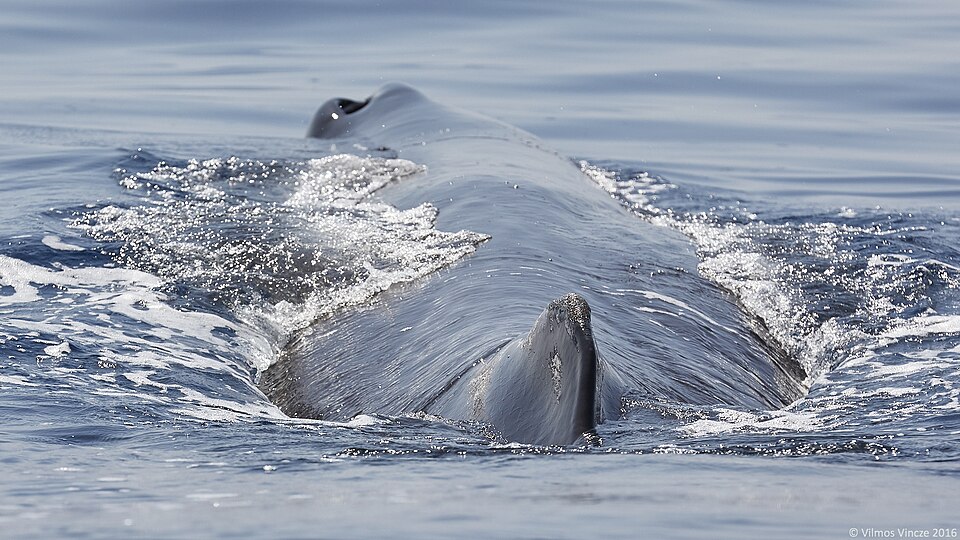
Mature males average 16 metres (52 ft) in length, with the head representing up to one-third of the animal's length. Plunging to 2,250 metres (7,380 ft), it is the third deepest diving mammal, exceeded only by the southern elephant seal and Cuvier's beaked whale. The sperm whale uses echolocation and vocalization with source level as loud as 236 decibels (re 1 μPa m) underwater, the loudest of any animal. It has the largest brain on Earth, more than five times heavier than a human's. Sperm whales can live 70 years or more.
Further reading
- Sperm Whales · Hal Whitehead (2003)Scientific study of sperm whale ecology, social behavior and evolution.Find a copy: AbeBooks · Amazon · WorldCat
- In the Heart of the Sea · Nathaniel Philbrick (2000)The story of the whaleship Essex and the sperm whale, a National Book Award winner.Find a copy: AbeBooks · Amazon · WorldCat
Sperm Whale is one of the 3D puzzles in World Artifacts: turn a cloud of broken pieces until it lines up. For iPhone, iPad, Apple Vision Pro and Android.

