World Artifacts › Atlas › Algeria
Ghardaïa
The stepped M'zab town with a pointed minaret.
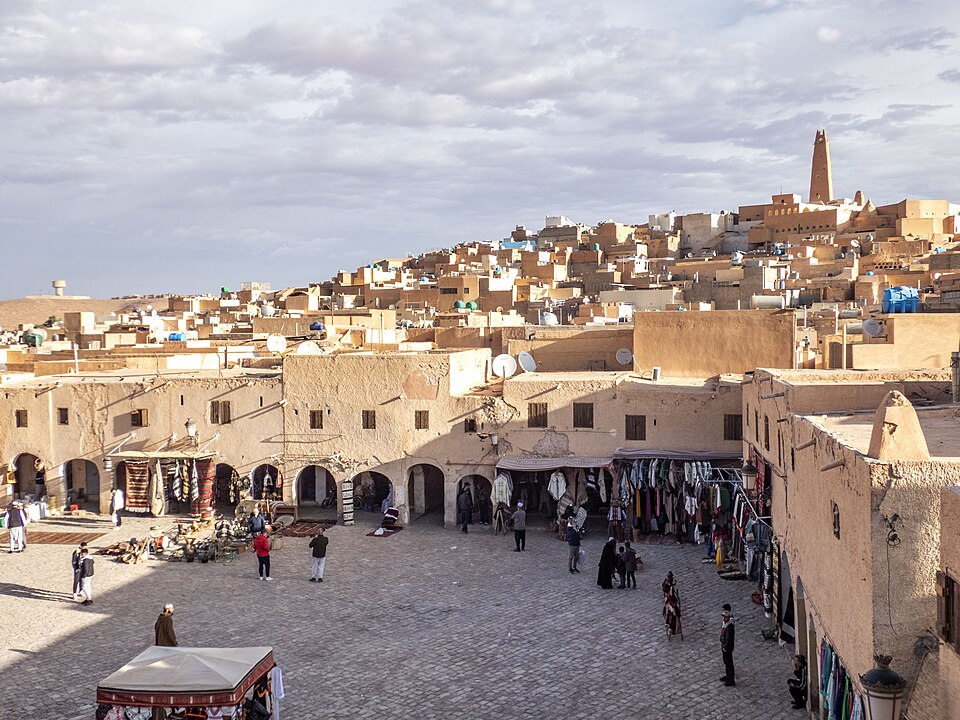
Ghardaïa (Arabic: غرداية, Tumzabt: Taɣerdayt) is the capital city of Ghardaïa Province, Algeria. The commune of Ghardaïa has a population of 93,423 according to the 2008 census, up from 87,599 in 1998, with an annual growth rate of 0.7%., up to 477953 in 2019 with an annual growth rate of 0.7%.
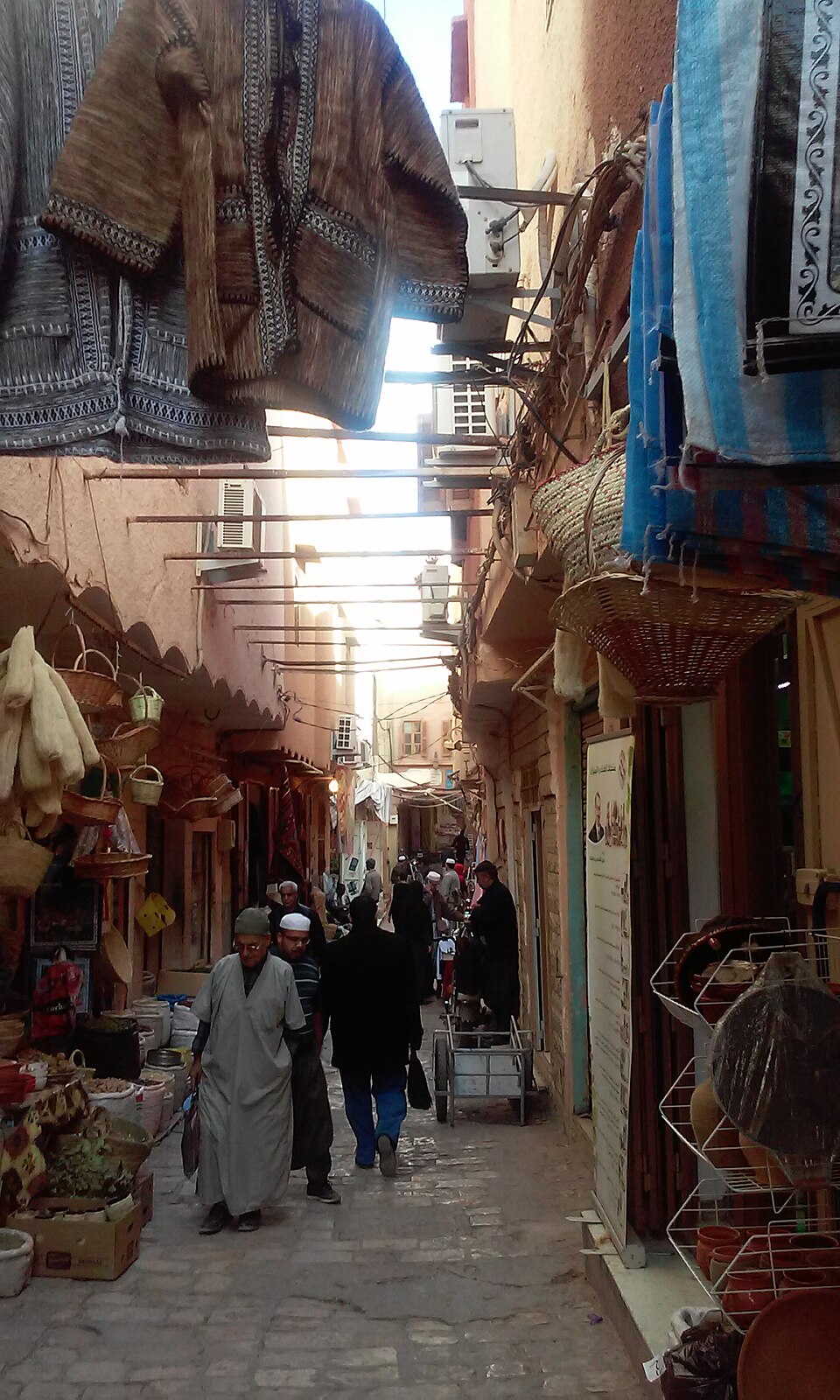
It is located in northern-central Algeria in the Sahara and lies along the left bank of the Wadi Mzab. The M'zab in the Ghardaïa Province was made a World Heritage Site in 1982, as a cultural property evaluated under the criteria II (for its settlement affecting urban planning even to the present century), III (for its Ibadi cultural values), and V (a settlement culture which has prevailed to the present century).
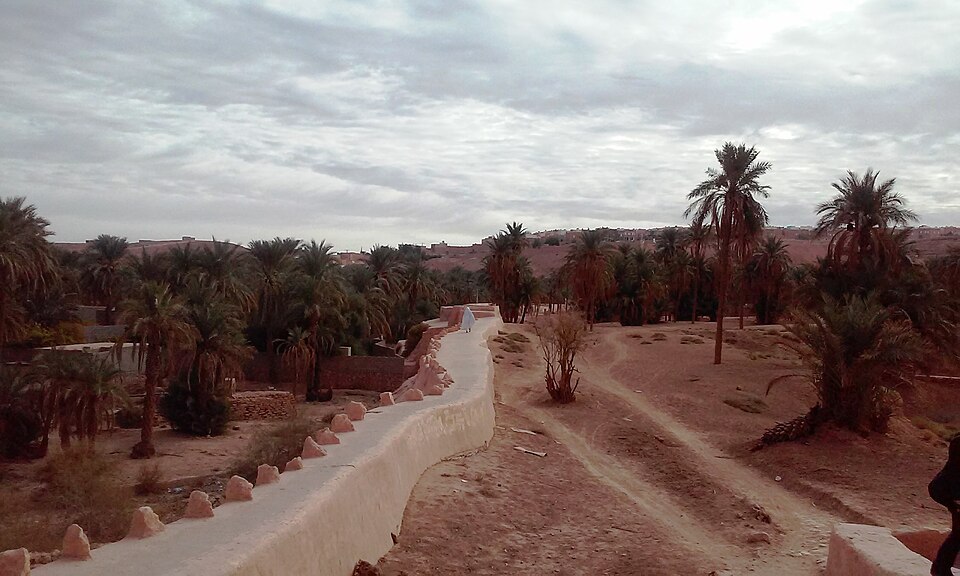
Ghardaïa is part of a pentapolis, a hilltop city amongst four others, built almost a thousand years ago in the M’Zab valley. It was founded by the Mozabites, an Ibadi sect of the Berber Muslims.
It is a major centre of date production and the manufacture of rugs and cloths. Divided into three walled sectors, it is a fortified town. At the centre is the historical Mʾzabite area, with a pyramid-style mosque and an arcaded square. Distinctive white, pink, and red houses, made of sand, clay and gypsum, rise in terraces and arcades.
In her 1963 book, La Force des choses, the French existentialist philosopher Simone de Beauvoir described Ghardaïa as "a Cubist painting beautifully constructed".
Ghardaïa is one of the 3D puzzles in World Artifacts: turn a cloud of broken pieces until it lines up. For iPhone, iPad, Apple Vision Pro and Android.

